 Bradenton Siding
 Two Fiber Cement Brands, One Local Standard
If you've gotten a few siding quotes in Manatee County, you've probably noticed that not every contractor installs the same fiber cement brand. Allura and James Hardie both make fiber cement lap siding, panels, and trim, and on paper the products look similar: both are cement, sand, and cellulose fiber pressed into boards, both resist fire and rot better than wood, and both hold paint or factory finish longer than vinyl. We get asked fairly often why we standardized on James Hardie and turned down jobs where a homeowner specifically wanted Allura installed. This page lays out the honest reasoning, not a sales pitch against a competitor's product.
Fiber cement as a category is the right call for a house in Bradenton. Between hurricane-season wind and wind-driven rain, the relentless UV load we get almost year-round, and the salt air rolling in off Sarasota Bay and the Gulf, this climate is hard on exterior materials. The question isn't fiber cement versus vinyl or wood — it's which fiber cement manufacturer's engineering, quality control, and warranty backing we're willing to put our name on.
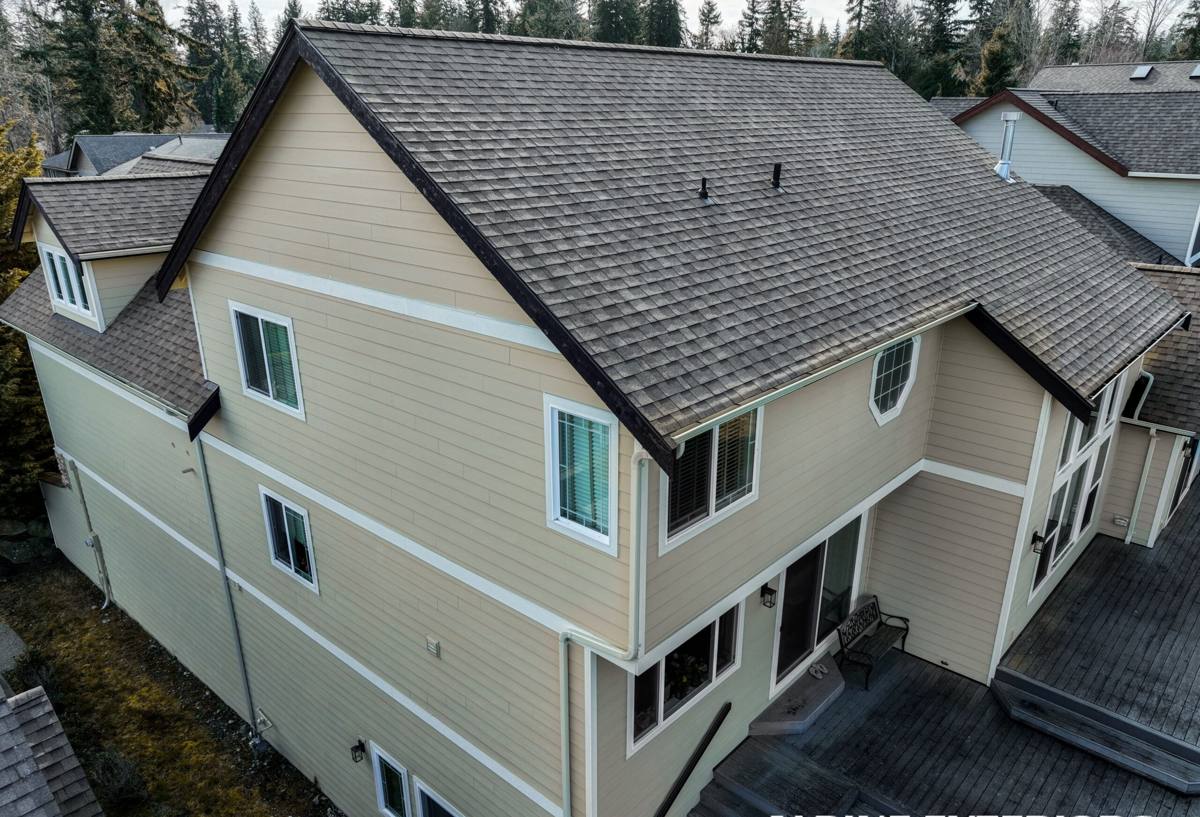
What Allura Gets Right
To be fair, Allura is a legitimate fiber cement manufacturer, not a knockoff product. It's manufactured in North America, it's non-combustible, it holds up to insects and rot the way all cement-based siding does, and it's a real step up from vinyl or untreated wood for a coastal Florida home. Allura also tends to come in at a lower material cost than Hardie, which is the main reason it gets specified — either by a homeowner comparing line items, or by a builder trying to hit a target price on new construction.
None of that is a knock on the raw material. Cement, sand, and cellulose fiber behave similarly regardless of whose factory pressed them. Where the products diverge is in the finishing process, the regional engineering, the installation tolerances, and — critically for a Gulf Coast property — the warranty paper trail if something goes wrong five or ten years down the road.
Where the Gap Shows Up
- Factory-applied finish technology and how well it resists fading under sustained Florida UV
- Whether the product line is engineered specifically for high-wind, high-moisture coastal regions or sold as one general-purpose board nationwide
- Depth and clarity of the installer network, technical support, and manufacturer field guidance
- How the warranty is structured if a claim involves both material defect and installation questions
Bradenton's Climate Doesn't Forgive Shortcuts
Manatee County siding takes a beating that inland markets never see. Hurricane-force gusts test every fastener and every joint. Wind-driven rain gets pushed sideways into laps and seams that a calm-weather install might never expose. UV exposure here runs close to twelve months a year, not a seasonal spike, which accelerates fading and chalking on any factory finish that isn't formulated for it. And salt air corrodes fasteners and trim faster the closer a property sits to the water — which around here can mean most of the county.
Fiber cement siding is inherently good at handling this environment: it doesn't rot, it doesn't attract termites, and it's rated for high-wind zones when installed correctly. But "installed correctly" is doing a lot of work in that sentence, and it's where product-specific engineering and installer familiarity start to matter more than the spec sheet.
Climate-Engineered Product Lines
James Hardie sells region-specific product lines — its HZ5 formulation, for example, is engineered for the moisture and humidity swings of the Gulf and Atlantic coasts, as opposed to a single national board sold everywhere from Bradenton to Minneapolis. That regional engineering affects how the board handles moisture cycling, how it takes fasteners, and how consistently it performs over decades of Florida humidity. We don't install products where we can't verify that level of climate-specific formulation, because a board engineered for a drier, more moderate climate is being asked to do a job it wasn't specifically built for once it's on a house three miles from the bay.
Factory Finish and UV Fade
Any painted exterior surface in this part of Florida is fighting a losing battle against UV unless the finish was built for it. This is the single biggest factor in how a fiber cement job looks in year eight versus year one.
James Hardie's ColorPlus finish is a baked-on, factory-cured finish system backed by its own dedicated warranty against fading and chipping, applied under controlled conditions before the boards ever reach the job site. Field-painted siding — whether that's Allura installed unfinished and painted on-site, or a factory finish with a thinner warranty behind it — depends much more heavily on paint quality, application conditions, and the number of coats, all of which vary by installer and by the day the crew happened to be painting. In a market with this much sun, we don't want to gamble a homeowner's ten-year curb appeal on field-applied paint holding up the way a factory-baked finish does.
Installation Sensitivity
Fiber cement is not a forgiving material to install badly, and this is true across every brand, not just Allura. Improper fastener spacing, wrong caulk at butt joints, insufficient clearance at the ground line or roofline, and skipped flashing details all show up eventually as moisture intrusion — and in a hurricane-prone county, a poorly fastened board is also a wind liability. The manufacturer's installation manual is the standard we get held to if there's ever a warranty claim, and the more thoroughly our crews know a specific product's manual, tolerances, and quirks, the fewer surprises there are.
We chose to build deep, specific expertise around one manufacturer's installation requirements rather than switching between brands project to project. That's a business decision as much as a technical one, but it's also the reason we can stand behind an install with confidence instead of hedging.
Warranty Structure: What Actually Backs the Board
Warranty language matters more than the marketing page implies, especially for a coastal home where a claim is more likely to eventually get tested. Here's how the general shape of the two compares:
| Factor | James Hardie | Allura |
|---|---|---|
| Product coverage | Long-term, transferable non-prorated substrate warranty | Warranty coverage on the fiber cement substrate itself |
| Finish coverage | Separate ColorPlus finish warranty against fade/chipping, factory-applied | Finish warranty terms depend on whether pre-finished or field-painted |
| Transferability | Transferable to a new owner if the home sells | Varies by product line and documentation |
| Installer network depth | Large network of Hardie-trained, Preferred/Elite contractors nationwide | Smaller regional installer base in most Florida markets |
A transferable warranty matters in a market like Bradenton, where homes change hands regularly and a documented, brand-recognized warranty is a real selling point at resale — buyers and their inspectors know what James Hardie siding is and what it's backed by.
Cost Is a Real Factor — Just Not the Whole Picture
We're not going to pretend material cost doesn't matter. Allura generally runs a bit less per square foot than James Hardie, and for a large project that difference adds up. If budget is the deciding factor, that's a legitimate conversation to have, and there are situations where a homeowner reasonably prioritizes the lower number.
What we won't do is install a product our crews aren't deeply trained on and stand behind it the same way. If a homeowner wants Allura specifically, we'll say so honestly and point them toward contractors who specialize in it, rather than installing it ourselves without the same depth of product-specific experience we've built with Hardie.
What to Check Before You Choose a Siding Product
- Ask whether the product line is formulated for coastal, high-humidity climates or sold as one nationwide board
- Ask whether the finish is factory-applied and separately warrantied, or field-painted
- Get the actual warranty document, not just the sales sheet — read the transferability and prorating terms
- Ask how many of that specific product's installations the crew has completed, not just fiber cement in general
- Confirm fastener and flashing specs match the manufacturer's published install manual for your wind zone
- Check whether the installer is manufacturer-certified for that specific brand
Why We Standardized on James Hardie
We install one fiber cement brand because it lets us do the job the same disciplined way every time: the same fastener schedule, the same flashing details, the same finish system, and a warranty we understand completely and can explain clearly to a homeowner before we ever start work. In Manatee County, where a siding job has to survive hurricane wind loads, sustained UV, and salt air without a repaint every few years, that consistency is worth more to us than shaving a few dollars off the material cost. James Hardie's climate-specific HZ engineering, the ColorPlus factory finish, and a transferable warranty backed by a manufacturer with a deep local installer network are the reasons it's the only board we put on a house.
If you're weighing siding options for a home in Bradenton or anywhere else in Manatee County, we're happy to walk through what we'd actually recommend for your house and why — no pressure, no obligation. Reach out for a free estimate and we'll give you a straight answer.