 Bradenton Siding
 Cemplank Is a Real Fiber Cement Product — That's Not the Issue
We want to start by being fair: Cemplank is fiber cement, not vinyl, and fiber cement as a category is a good choice for Gulf Coast homes. It's made from the same basic recipe as most fiber cement siding — Portland cement, sand, and cellulose fibers pressed into planks. It resists fire, holds paint or factory finish reasonably well, and doesn't rot the way wood trim does. If a homeowner in Bradenton asks us "what's wrong with Cemplank," the honest answer isn't that it's a bad material. It's that after years of installing fiber cement siding on homes across Manatee County, we made a business decision to install one brand, to one spec, backed by one manufacturer's engineering and warranty desk — and that brand is James Hardie.
This page explains the specific, practical reasons we made that call, so you can weigh them for your own home instead of just taking our word for it.
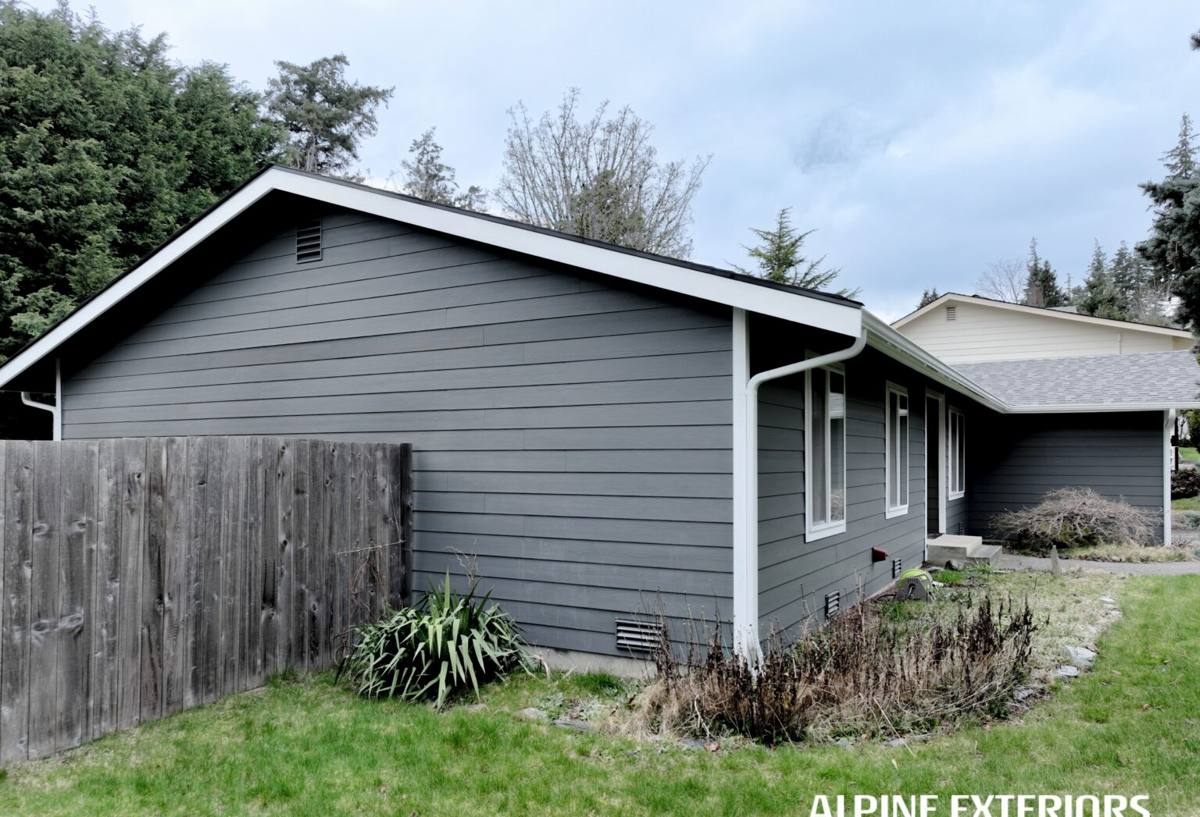
Where Cemplank and James Hardie Actually Diverge
On paper, the two products look similar. In the field, over a 15- to 30-year ownership window in a hot, humid, hurricane-exposed county, the differences show up in ways that matter to a homeowner's wallet and peace of mind.
| Factor | Cemplank | James Hardie |
|---|---|---|
| Climate-specific engineering | General-purpose fiber cement line | HZ10 humid-climate formulation engineered specifically for Gulf/Southeast exposure |
| Factory finish | Primed or painted options vary by distributor | ColorPlus baked-on finish with a dedicated finish warranty |
| Manufacturer support network | Regional distribution, thinner installer training pipeline | National installer certification program and dedicated warranty claims process |
| Local track record | Less common on Manatee County re-sides we've inspected | Widely installed and well documented in Florida coastal markets |
| Warranty transferability | Varies by product line | Non-prorated limited warranty, transferable to a new owner if the home sells |
The Factory Finish Question
Fiber cement fails or lasts based largely on what happens at the surface, not the core. Bradenton gets intense, near-constant UV exposure, salt-laden air off Tampa Bay and the Gulf, and wind-driven rain that hits siding sideways during summer storms and hurricane season. A finish that chalks, fades unevenly, or lets moisture track behind it will undercut an otherwise solid product.
James Hardie's ColorPlus finish is applied and cured in a controlled factory environment, with multiple coats baked on before the plank ever ships. It's backed by its own dedicated finish warranty, separate from the substrate warranty. Cemplank's finish options depend more on the specific distributor and product line — sometimes factory-primed for field painting, sometimes pre-finished — which means the long-term finish performance is less consistent from job to job. For a coastal-adjacent home, we don't want "it depends" as the answer to how the paint job will hold up in year eight.
Why This Matters More Here Than Inland
A siding job in a drier, milder climate can tolerate more finish variability because the assembly isn't being tested as hard. In Manatee County, between hurricane season winds, salt air, and near year-round UV load, the finish is doing real work every single day. That's exactly the condition James Hardie engineered its HZ10 line and ColorPlus system to handle.
Installation Sensitivity and Manufacturer Specs
Fiber cement siding, generally, is not a forgiving product to install poorly — gaps, wrong fastener patterns, or missed clearances at grade will shorten its life regardless of brand. Two things pushed us toward standardizing on one manufacturer's system rather than mixing products:
- James Hardie publishes detailed, climate-specific installation specs (fastener spacing, clearances, flashing details) and backs them with an installer certification program our crews have gone through.
- A single-manufacturer approach means our crews aren't mentally switching between two different fastening schedules, two different caulking/sealant compatibility charts, and two different warranty paperwork trails on the same week of jobs — which is where installation mistakes creep in.
- Warranty coverage on fiber cement siding is conditional on installation matching the manufacturer's published method. Standardizing on one system means one crew training standard, not two.
None of this means a Cemplank installation can't be done correctly by a crew that specializes in it. It means we chose to put our training, our fastener inventory, and our warranty relationship behind one system instead of splitting focus.
Local Availability and Long-Term Support
Siding is a 20- to 40-year decision. At some point down the road, a homeowner may need a repair panel after storm damage, a color match for an addition, or warranty service. James Hardie has a large, well-established distribution and installer network across Florida, which makes matching plank profiles, colors, and trim details easier years after the original install. Cemplank's distribution footprint in our area is thinner, which can make future matching or warranty service more of a hassle for the homeowner — not because the product failed, but because fewer local suppliers stock and support it.
For a Manatee County homeowner, that's a practical, not theoretical, concern. Hurricane season brings the risk of isolated wind or debris damage almost every year. Being able to get a matching replacement panel quickly matters.
Warranty Structure, Side by Side
Warranty terms change over time and vary by specific product line, so always confirm current terms directly with the manufacturer before making a decision. In general, what we've found holds true:
| Warranty Feature | Typical Cemplank Terms | Typical James Hardie Terms |
|---|---|---|
| Substrate coverage | Limited warranty, varies by product line | Non-prorated limited warranty on the fiber cement itself |
| Finish coverage | Depends on whether factory-finished or field-painted | Separate ColorPlus finish warranty when factory-finished |
| Transferability to new owner | Varies | Transferable, which can support resale value |
| Claims process familiarity | Less common locally | Established, with contractors and adjusters used to the process |
Cost Factors Worth Understanding
Cemplank is sometimes positioned as a value alternative to James Hardie, and material cost differences do exist. But the real cost comparison over the life of the siding includes more than the initial material price:
- Material cost — Cemplank can run somewhat lower per square than Hardie's HZ10 lines, though pricing shifts with supply and specific product selection.
- Finish maintenance — a factory finish with a strong warranty reduces the odds of an early repaint, which is a real recurring cost on a coastal home.
- Repair and matching cost — thinner local distribution can mean higher freight or longer wait times for matching replacement panels after storm damage.
- Resale consideration — buyers and their inspectors increasingly recognize James Hardie by name; a well-documented, transferable warranty can be a small but real point in a home sale.
We'd rather a homeowner understand these trade-offs up front than discover them at year twelve.
Why We Standardized on James Hardie
Our decision comes down to consistency and accountability. When every job uses the same climate-engineered HZ10 substrate, the same ColorPlus finish system, the same fastening and flashing spec, and the same warranty desk, our crews get better at the one system they install every day, and homeowners get a predictable outcome backed by a manufacturer with a strong presence in Florida. That consistency is worth more to us — and we believe to our customers — than the flexibility of installing multiple fiber cement brands.
Hurricane-force wind events, sustained UV, wind-driven rain, and salt air don't give a siding assembly much room for inconsistency. We'd rather narrow our focus to one system we can install to spec every time than stretch across several.
Questions to Ask Before Choosing a Fiber Cement Product
- Is the product factory-finished, and is that finish covered by its own warranty, or will it need field painting?
- Is the specific product line engineered for humid, coastal climates, or is it a general-purpose formulation?
- How established is the local distribution network for future repairs or color matching?
- Is the warranty transferable if you sell the home?
- Is the installing contractor certified or specifically trained on that manufacturer's current installation spec?
- What does the manufacturer's published clearance and fastening spec require at grade, around windows, and at butt joints — and will the crew actually follow it?
If you're weighing siding options for a home in Bradenton or anywhere else in Manatee County, we're glad to walk through what we install, why, and what it would look like on your specific house. Reach out for a free, no-pressure estimate — there's no obligation, and we'll give you a straight answer even if part of that answer is explaining trade-offs like the ones above.