 Bradenton Siding
 Why We Only Install One Brand of Siding
Most siding contractors carry two or three product lines and let the homeowner pick based on price. We don't. Every job we do uses James Hardie fiber cement siding, and nothing else leaves our trucks. That's not a marketing gimmick — it's a decision we made after years of watching which products actually hold up on homes in Bradenton and the rest of Manatee County, and which ones create callbacks, maintenance headaches, or early failures once the Gulf Coast climate gets a few years to work on them.
This page walks through the reasoning honestly. We're not going to tell you vinyl siding or LP SmartSide are junk, because they're not — they're engineered products that perform reasonably well in a lot of climates. We're going to explain the specific trade-offs that led us to stop installing them here, and why James Hardie is what we stand behind instead.
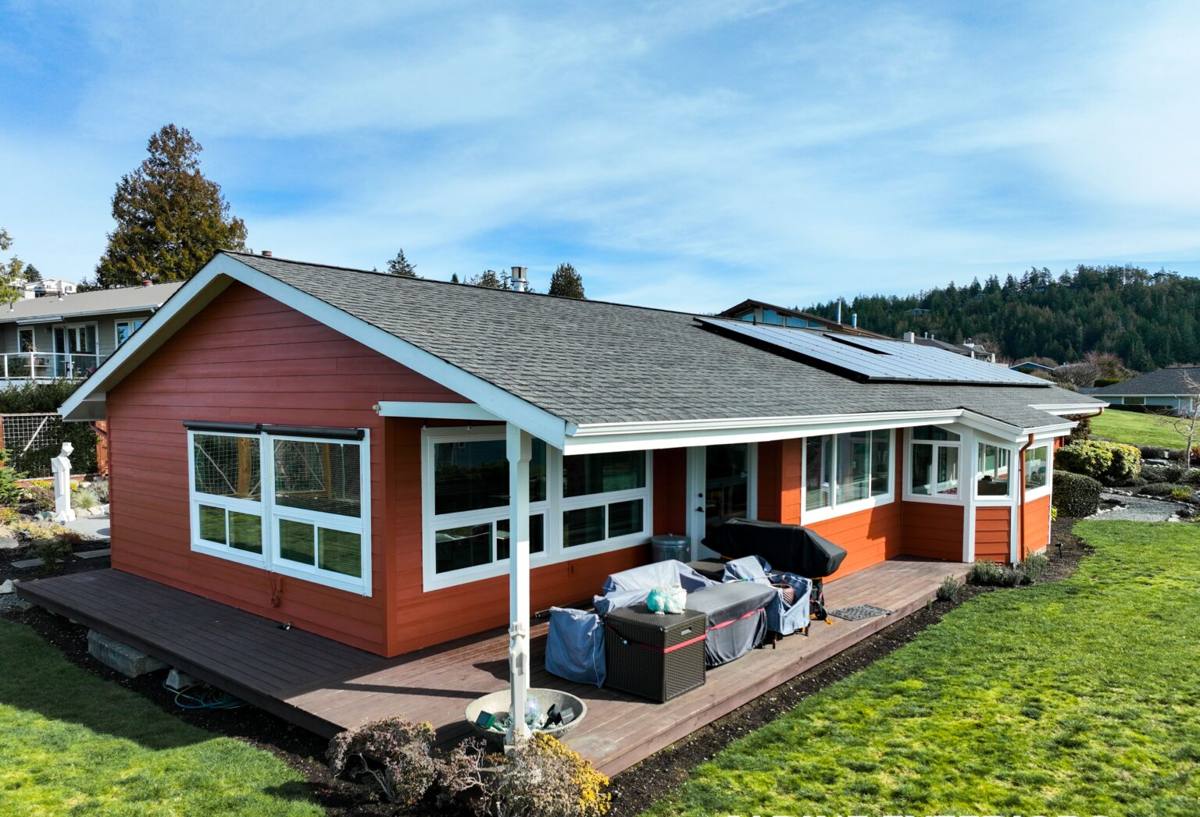
What Fiber Cement Is, and Why It Matters Here
Fiber cement siding is made from a mix of Portland cement, sand, and cellulose fiber, cured into dense, dimensionally stable boards and panels. Unlike vinyl, it doesn't soften, warp, or become brittle as temperatures swing. Unlike wood or wood-composite products, it isn't made from an organic material that can absorb moisture and feed rot or pest damage. It's also non-combustible, which matters in a state where lightning strikes and wildfire exposure are both realities homeowners have to think about.
How That Plays Out on a House
The practical result is a siding that holds paint and factory finish far longer than wood, doesn't dent and crack the way brittle vinyl can in a wind-driven debris event, and doesn't rely on an unbroken paint film to keep water out the way primed wood products do. For a house sitting a short drive from Sarasota Bay and the Gulf, those properties aren't cosmetic extras — they're the difference between siding that looks the same in year twelve and siding that needs attention by year five.
What Sets James Hardie Apart From Other Fiber Cement
Not all fiber cement is engineered the same way, and this is where a lot of the "why only Hardie" question actually gets answered. James Hardie builds region-specific formulations — its HZ5 product line is engineered for climates like Florida's, with humidity, moisture cycling, and storm exposure built into the formula rather than treated as an afterthought.
Product Lines We Work With
- HardiePlank lap siding — the standard horizontal siding look, in several bevel profiles
- HardieShingle — staggered or straight-edge shingle panels for accent gables and coastal-style homes
- HardiePanel — vertical panel siding, often used with battens for a board-and-batten look
- HardieTrim — fascia, frieze, and trim boards that match the siding's durability instead of relying on wood trim that will fail before the field siding does
ColorPlus Factory Finish
James Hardie's ColorPlus finish is baked on at the factory in a controlled process, which produces a more consistent, more UV-resistant surface than siding painted on site. In a market with as much year-round sun as Bradenton gets, that finish durability is one of the bigger practical reasons we standardized on this product — it holds color and resists chalking longer than field-applied paint on comparable siding.
Why We Don't Install the Alternatives
We get asked regularly why we won't quote vinyl, LP SmartSide, Cemplank, Allura, or primed wood siding. Here's the honest breakdown, product by product, framed around trade-offs rather than defects.
Vinyl Siding
Vinyl is inexpensive and low-maintenance in mild climates, and there's nothing wrong with it as a product on its own terms. In a hurricane-exposed coastal county, though, vinyl's impact resistance and heat tolerance are real limitations — panels can crack under wind-driven debris impact and can visibly warp or sag in prolonged high heat against dark colors. It's also a petroleum-based product with a thinner, less design-flexible profile than fiber cement, which limits the architectural styles we can deliver.
LP SmartSide and Other Wood-Composite Products
LP SmartSide is a legitimate engineered wood product with real strengths in drier, more temperate climates. Its core is still wood strand, though, which means its long-term performance depends heavily on unbroken caulking, flashing, and paint film at every cut edge and seam. In a climate with this much humidity and wind-driven rain, that's a maintenance burden we don't want to hand a homeowner, and a callback risk we don't want to carry as a contractor.
Cemplank, Allura, and Other Fiber Cement Competitors
These are genuine fiber cement products, and technically comparable to Hardie in raw composition. Where we see the difference is in climate-specific engineering, factory finish consistency, and — importantly — the depth and clarity of the warranty and the manufacturer's track record standing behind installations at scale. We standardized on one supply chain, one training system for our crews, and one warranty structure, and James Hardie is the one we chose.
Primed Spruce and Cedar
Solid wood siding has real aesthetic appeal, and some homeowners specifically want it. But it's the most maintenance-intensive option on this list — it requires the most frequent repainting, is the most vulnerable to moisture and insect damage, and in a humid coastal county that maintenance schedule tends to slip, which is exactly when problems start.
| Factor | Vinyl | Wood Composite (LP) | James Hardie Fiber Cement |
|---|---|---|---|
| Wind-driven debris resistance | Moderate — can crack on impact | Good if intact | Strong, dense board |
| Moisture/rot vulnerability | Low (not organic) | Higher — wood core | Low (cement-based) |
| Finish durability in high UV | Can fade/chalk over time | Depends on paint upkeep | Factory ColorPlus, longer color hold |
| Combustibility | Combustible | Combustible | Non-combustible |
| Typical maintenance cycle | Low, but limited repair options | Frequent recaulk/repaint | Longer intervals between refinishing |
Manatee County's Climate Is the Real Reason for This Standard
Bradenton sits in a part of Florida that takes a genuine beating from the elements. Hurricane-force winds are a when-not-if reality here, not a hypothetical. UV exposure runs high nearly year-round, which is hard on any painted or coated surface. Wind-driven rain during storms forces water sideways into wall assemblies in a way that milder climates never test. And salt air off the Gulf and the bay accelerates corrosion and finish breakdown on materials that aren't built to resist it.
Any one of those factors alone is manageable for most siding products. All four, together, year after year, is what separates siding that performs from siding that becomes a maintenance project. That combination is exactly what pushed us toward a single, climate-engineered product rather than offering homeowners a menu of options with very different long-term outcomes.
The Warranty Difference
James Hardie backs its siding with a strong, transferable limited warranty — a meaningful detail if you plan to sell the home down the road, since it can pass to the next owner rather than expiring with your ownership. Just as important as the paper warranty, though, is installation to manufacturer specification: proper clearances, fastening patterns, flashing, and joint treatment. A product with a strong warranty installed incorrectly still fails — which is why we train our crews specifically to Hardie's installation requirements rather than treating fiber cement installation as generic siding work.
What Correct Installation Actually Involves
A lot of the real-world performance difference between a siding job that lasts and one that doesn't comes down to installation details that aren't visible once the job is done. Before we start a project, here's what we're checking and controlling for:
- Proper ground and roofline clearance to keep board bottoms out of standing moisture
- Correct fastener type, spacing, and penetration depth into structural framing
- Weather-resistant barrier and flashing detail at every window, door, and penetration
- Joint and butt seam treatment sized and sealed to the manufacturer's specification
- Field-cut edges sealed before installation, not left exposed to weather
- Correct panel and lap orientation for the specific wind-load conditions of the site
Skipping any one of these doesn't usually show up as a problem in year one — it shows up in year five or eight, as water intrusion, finish failure, or fastener corrosion. That's a large part of why "which siding" and "who installs it" are really the same question.
What This Means for Your Project
If you're planning a siding replacement or new build in Bradenton or elsewhere in Manatee County, our recommendation is going to be James Hardie fiber cement — not because it's the only thing we sell, but because it's the product we're willing to put our own warranty and reputation behind after seeing how the alternatives perform once the Florida climate has a few years to work on them. We're happy to walk through profiles, colors, and product lines and explain exactly what correct installation looks like on your specific home.
If you'd like to talk through your project, we offer free, no-pressure estimates — use the form below to get started.