 Bradenton Siding
 Holmes Beach sits on the Gulf side of Anna Maria Island, and that location shapes everything about how a home's exterior should be built and maintained. Homes here take on a different set of stresses than houses just a few miles inland in Bradenton proper — more direct salt spray, more sustained wind exposure, and a UV load that doesn't let up for most of the year. If you own a home in Holmes Beach, your siding, roofing, windows, and deck are working harder than the same materials would be working almost anywhere else in Manatee County.
We're a Bradenton-based crew that works this barrier island regularly, and we've built our approach around what actually holds up out here — not what looks good in a showroom in a climate-controlled part of the country. This page walks through what Holmes Beach homes typically face, how our exterior work is suited to that environment, and why the products we choose to install (and the ones we don't) reflect what we've seen perform over time on the coast.
What Barrier Island Homes Face in Holmes Beach
Holmes Beach is exposed on multiple sides to Gulf winds and salt air, and that combination creates a harsher exterior environment than most of the mainland experiences. A few things stand out:
Salt Air and Corrosion
Airborne salt doesn't just affect metal fasteners and hardware — it accelerates the breakdown of paint films, caulking, and lower-grade siding materials. Homes closer to the water see this first, but salt-laden air moves across the whole island, so even homes set back from the beach are affected over time. Anything installed on a Holmes Beach exterior needs fasteners and flashing rated for a marine-adjacent environment, not standard interior-grade hardware.
Sustained Wind Load
Barrier islands see stronger, more consistent wind than sheltered inland areas, and during hurricane season that wind can arrive at damaging speeds with very little to break it up before it reaches a house. Roofing, siding, and window systems all need to be rated and installed to hold up under wind pressure, not just look right on a calm day. Fastening patterns, nailing schedules, and product wind ratings matter more here than almost anywhere else in the region.
Wind-Driven Rain
Wind and rain rarely arrive separately on the island — they come together, and wind-driven rain gets pushed sideways into seams, laps, and penetrations that would stay dry in a calmer storm. Siding systems, window flashing, and roof-to-wall transitions all need to be detailed with that reality in mind, or water finds its way behind the exterior cladding long before anyone notices a problem on the surface.
Year-Round UV Exposure
Florida sun is intense everywhere, but a Gulf-front or near-Gulf location gets that exposure with less shade and more reflected light off open water. UV breaks down paint finishes, dries out caulking, and degrades lower-quality siding substrates faster than in shadier, more inland settings. A finish that's rated to hold color and integrity under constant sun exposure is not optional out here — it's the baseline.
Siding Built for This Environment
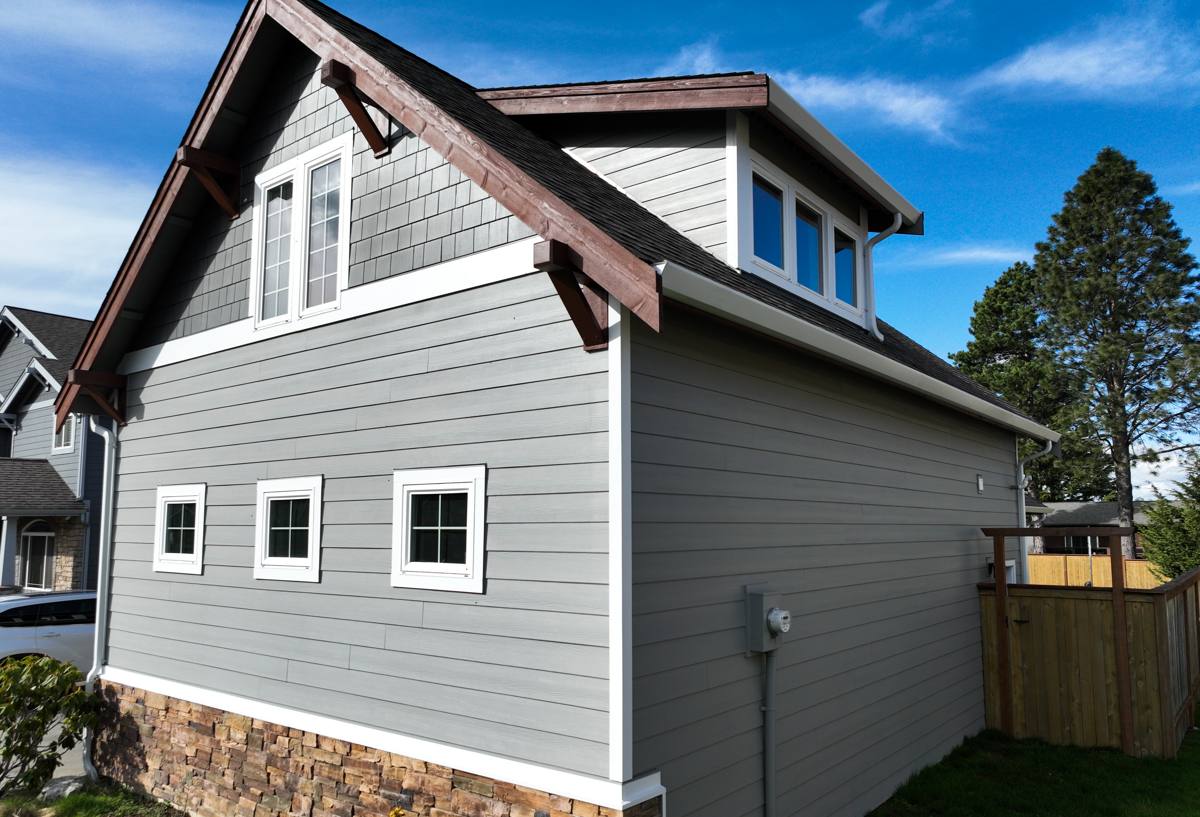
We install James Hardie fiber cement siding exclusively, and on a barrier island like Holmes Beach, that's not a brand preference — it's a practical decision based on what we've watched perform (and fail) in coastal Florida conditions.
Fiber cement is non-combustible, doesn't absorb water the way wood-based products can, and doesn't warp or buckle the way vinyl can under sustained heat and wind pressure. James Hardie's HZ5 product line is engineered specifically for high-humidity, storm-prone climates like ours, and the factory-applied ColorPlus finish is baked on and warrantied against fading — which matters enormously in a location that gets this much direct and reflected sun.
We don't install vinyl siding, LP SmartSide, Cemplank, Allura, primed spruce, or cedar. Each of those products has situations where it's a reasonable choice somewhere in the country. On a barrier island exposed to salt air, high wind, and constant UV, we've found the trade-offs — moisture sensitivity in engineered wood products, heat distortion and impact vulnerability in vinyl, or the ongoing maintenance burden of painted wood — aren't worth it when a better-suited alternative exists. Hardie's density and factory finish hold up to this specific combination of stresses in a way we're comfortable standing behind.
| Factor | Why It Matters in Holmes Beach |
|---|---|
| Moisture resistance | Salt air and wind-driven rain push moisture into every seam and lap; fiber cement doesn't swell or rot the way wood-based products can |
| Wind rating | Sustained Gulf-facing wind exposure requires siding rated and fastened for real wind pressure, not just standard suburban installs |
| UV/color stability | Factory-baked finishes resist fading under constant sun in a way field-applied paint typically can't match over the same years |
| Fire rating | Non-combustible fiber cement adds a layer of protection that combustible sidings don't offer |
| Long-term maintenance | Less repainting and caulk touch-up over the life of the siding, which matters when a home sees this much salt and sun |
Roofing for Gulf-Facing Homes
Roofing on a barrier island home has to handle the same wind and salt exposure as the siding, plus direct rain impact and UV breakdown on the roof surface itself. We evaluate roofs in Holmes Beach with a few coastal-specific priorities:
- Wind-rated shingle or metal systems appropriate for Gulf-facing exposure
- Corrosion-resistant fasteners and flashing at every penetration and edge
- Proper underlayment as a secondary water barrier against wind-driven rain
- Ventilation that accounts for the added heat load of reflected sun off open water
- Roof-to-wall and roof-to-siding transitions detailed to shed water, not trap it
A roof that's a few years old and was installed to a lower wind rating, or with standard (non-coastal) fasteners, is worth having inspected — problems here tend to show up first as small leaks or lifted shingle edges long before they become a full roof failure.
Windows That Hold Up to Coastal Pressure
Windows on a barrier island home take on wind load, wind-driven rain, and salt exposure all at once, and the seal around a window is often the first place a coastal home starts to show water intrusion. We look at a few things when we're assessing or replacing windows in Holmes Beach:
Impact and Wind Ratings
Depending on where a home sits relative to the coastline, local wind-borne debris and impact requirements may apply. We check the applicable rating for the specific property rather than assuming a blanket standard, since exposure varies even within a small area like Holmes Beach.
Flashing and Sealant Detail
Even a well-rated window will leak over time if the flashing and sealant around it aren't installed correctly for wind-driven rain. This is one of the most common failure points we see on coastal homes — not the window unit itself, but the installation detail around it.
Frame Material
Salt air is hard on lower-grade frame materials and hardware. We factor in corrosion resistance right alongside energy performance and impact rating when recommending window products for this environment.
Decks in a Salt Air, High-Sun Environment
Outdoor living spaces are part of why people choose to live in Holmes Beach in the first place, and decks here face the same combination of salt exposure and constant UV as the rest of the exterior. Fasteners and structural hardware need to be corrosion-resistant, decking materials need to hold up to sun exposure without excessive fading or surface breakdown, and railing systems need to handle wind load in addition to everyday use. We build and repair decks with those coastal-specific factors in mind rather than treating a barrier island deck like a standard inland project.
Why a Local Crew Matters Here
Holmes Beach and the rest of Anna Maria Island have their own permitting considerations, wind exposure categories, and installation realities that differ from mainland Bradenton and Manatee County work. A crew that regularly works this specific area understands:
- How exposure varies between Gulf-facing, bay-facing, and interior-lot homes even within the same small community
- What fastening and flashing details actually hold up under repeated wind-driven rain events, not just what passes a first inspection
- Which materials tend to age well on the island versus which ones show problems within a few years
- The realities of scheduling and material staging on a barrier island, where access and logistics differ from a typical mainland job site
We're not a national franchise working off a generic playbook — we're a Bradenton company that treats barrier island work as its own category, because the climate here genuinely calls for it.
Signs Your Exterior May Be Struggling With Coastal Exposure
Some warning signs are easy to miss until they've become bigger problems. Homeowners in Holmes Beach should keep an eye out for:
- Chalky, faded, or peeling paint on siding trim or fascia
- Soft spots or discoloration around window and door frames
- Corroded or rusted fasteners, hinges, or hardware on the exterior
- Lifted or curling shingle edges, especially on Gulf-facing roof slopes
- Visible gaps or cracking in caulk lines around windows, doors, or siding seams
- Soft or spongy decking boards, or corrosion on deck fasteners and connectors
Any of these are worth a professional look before they turn into water intrusion or structural repair, which is a far larger and more expensive job than routine maintenance or a planned replacement.
What a Coastal Exterior Assessment Involves
When we evaluate a Holmes Beach property, we're not just looking at what's visible from the curb. We check flashing details at every penetration, assess fastener condition, look for early signs of moisture behind the cladding, and evaluate whether the current siding, roofing, and window systems are rated appropriately for the specific wind exposure of that property's location on the island. That assessment is what informs an honest recommendation — whether that's targeted repairs, a partial replacement, or a full exterior overhaul, and it's specific to each individual home rather than a generic package.
If you own a home in Holmes Beach and you're noticing wear on your siding, roof, windows, or deck — or you simply want an honest read on how your exterior is holding up to island conditions — we're happy to take a look. Reach out for a free, no-pressure estimate, and we'll walk you through exactly what we see and what your options are.