 Bradenton Siding
 Building Decks for Lakewood Ranch's Climate, Not Just Its Look
Lakewood Ranch sits inland from Sarasota Bay but still lives under the same Gulf Coast weather that shapes every outdoor structure in this part of Florida. A deck here isn't just a place to put a grill and some chairs — it's an outdoor structure that has to survive intense year-round UV, sudden downpours, hurricane-force wind gusts, and the slow corrosive creep of salt-laden air that reaches well inland on a sea breeze. A deck built the way it might be built in a drier, cooler climate will show problems within a few seasons: cupped boards, rusted fasteners, loose railings, and a substructure that's quietly rotting or corroding underneath a deck that still looks fine on top.
We build decks in Bradenton and throughout Manatee County, including the neighborhoods and communities that make up Lakewood Ranch. That means we're not guessing at what holds up here — we know which materials, fasteners, and framing details actually survive a Florida summer and a Florida storm season, because we've seen what happens to the ones that don't.
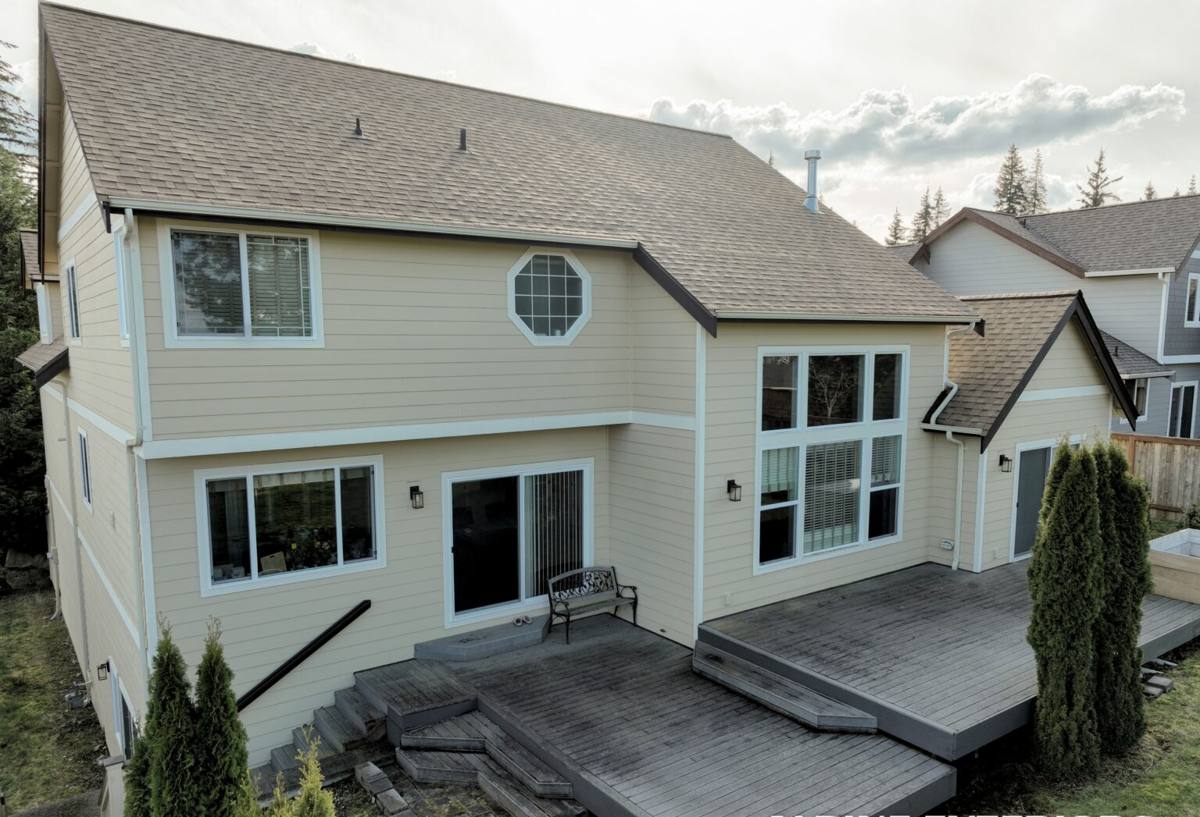
What Florida Weather Actually Does to a Deck
UV and Heat
Direct Florida sun breaks down the surface of untreated or poorly finished wood fast, causing graying, splintering, and checking. Composite and PVC decking resist this far better, but even those products vary widely in how well their color and surface hold up under sustained UV exposure — cheaper capped products can still fade or chalk over several years.
Wind-Driven Rain and Standing Water
Afternoon storms in Manatee County aren't gentle. Wind-driven rain gets pushed sideways into gaps, seams, and ledger connections that a calmer climate would never test. If a deck's boards, flashing, or drainage gaps aren't detailed correctly, water gets trapped against framing and fasteners instead of running off, and that's where rot and corrosion start.
Salt Air
You don't have to be beachfront for salt air to matter. Salt carried on Gulf breezes accelerates corrosion on any exposed metal — screws, joist hangers, bolts, railing hardware — and it works faster on decks with poor airflow underneath or minimal ventilation. Standard interior-grade or even basic exterior-rated hardware corrodes noticeably faster here than it would inland in a non-coastal state.
Hurricane-Force Wind Loads
A deck attached to a home has to handle uplift and lateral wind forces during storm season, not just support the weight of people standing on it. Ledger attachment, post anchoring, and railing post connections all need to be built to hold under wind loads that a lot of generic deck framing simply isn't designed for.
Choosing Decking Material for a Lakewood Ranch Home
There's no single "best" decking material — the right choice depends on budget, how much upkeep you're willing to do, and how the deck will be used. Here's how the common options actually compare in this climate:
| Material | UV/Fade Resistance | Moisture Behavior | Maintenance | Typical Lifespan Here |
|---|---|---|---|---|
| Pressure-treated wood | Fair — needs regular sealing | Absorbs water; prone to cupping/splitting if not maintained | Annual cleaning and re-sealing | 10–15 years with upkeep |
| Capped composite | Good to very good, varies by brand | Doesn't absorb water; won't rot | Occasional washing | 20–25+ years |
| PVC / cellular decking | Very good | Fully water-resistant, no core to rot | Minimal | 25+ years |
| Tropical hardwood (ipe, etc.) | Good, grays without oiling | Naturally dense and rot-resistant | Periodic oiling to keep color | 20–30 years |
Pressure-treated wood costs less up front and is a reasonable choice for homeowners who don't mind the maintenance schedule. Composite and PVC cost more initially but make sense for homeowners who want to spend weekends using the deck instead of sealing it. We'll walk through the honest trade-offs for your budget and how you plan to use the space — we're not going to push the most expensive option if a well-built treated-wood deck fits what you actually need.
What's Underneath Matters More Than What's On Top
The decking boards are what you see, but the framing and fasteners underneath determine whether the deck is actually safe and how long it lasts. A deck that looks great with cheap or mismatched hardware underneath is a deck that's going to fail early — usually somewhere you can't see until it's a real problem.
Ledger Attachment
The connection between the deck and the house is the single most safety-critical part of the build. It has to be properly flashed to keep water out of the house's wall structure and fastened with lag bolts or through-bolts sized for the load and spaced to code — not just a handful of screws.
Fasteners and Hardware
Given the salt air and humidity here, we use stainless steel or hot-dip galvanized fasteners and connectors rated for coastal exposure, not standard exterior-grade hardware that's fine in a drier climate but corrodes faster here. This is one of those details that costs a little more and matters a lot ten years down the road.
Post and Footing Depth
Footings need to be sized and set to Florida Building Code depth and diameter requirements for the soil conditions and the loads involved, with posts properly anchored — not just set in a shallow hole — so the structure can handle wind uplift during storms.
Permits and Lakewood Ranch HOA Requirements
Deck construction in Bradenton and unincorporated Manatee County generally requires a building permit, and the county will inspect framing and final construction. Beyond the county, many communities within Lakewood Ranch are governed by an HOA or community development district with its own architectural review process for exterior structures like decks — approval requirements, setback rules, and material or color guidelines vary by community. We handle the permitting process and can help you understand what your specific community requires, but every homeowner should confirm their HOA's architectural review process before work begins, since requirements differ from one Lakewood Ranch neighborhood to the next.
How We Build a Deck, Start to Finish
- On-site assessment: We look at your home's structure, the ground conditions, drainage, and sun/shade exposure to figure out what the deck actually needs to hold up.
- Design and material selection: We talk through layout, decking material, railing style, and budget honestly — including what each option will actually cost to own over time.
- Permitting: We pull the required Manatee County permit and coordinate with your HOA's architectural review process if one applies.
- Framing: Ledger attachment, footings, posts, beams, and joists are built to code, with coastal-rated fasteners and hardware throughout.
- Decking and railing installation: Boards and railings are installed with proper spacing for drainage and thermal movement, finished to spec.
- Final inspection and walkthrough: We pass the required county inspection and walk the finished deck with you before calling the job done.
Maintenance a New Deck in This Climate Actually Needs
Even low-maintenance materials benefit from a little seasonal attention in this climate. What that looks like depends on the material:
- Rinse off salt film, pollen, and organic debris every few weeks, especially after storms
- Keep gutters and downspouts clear so water isn't dumping onto or near the deck structure
- Check railing posts and stair connections annually for looseness
- For wood decks: re-seal on the manufacturer's recommended schedule, typically every 1–2 years in this climate
- For composite/PVC: wash with soap and water to prevent mildew buildup in shaded areas
- Keep vegetation and mulch pulled back from ground-level framing to reduce moisture and pest exposure
- Have fastener and hardware condition checked every few years, particularly on older or coastal-adjacent decks
Questions Worth Asking Before You Hire a Deck Builder
Not every contractor who builds decks in Florida builds them for Florida conditions. Before you hire anyone for a deck project in Lakewood Ranch or elsewhere in Manatee County, it's worth asking:
- Are you licensed to do this work in Florida, and can I see proof of insurance?
- Will you pull the Manatee County building permit, or is that left to me?
- What fastener and hardware grade do you use, and is it rated for coastal exposure?
- How is the ledger board flashed and attached to my house?
- What footing depth and post anchoring method do you use for wind resistance?
- Do you have experience with my community's HOA approval process?
- What's the warranty on labor, separate from the manufacturer's material warranty?
Why a Crew That Already Works Lakewood Ranch Makes a Difference
Working regularly in Bradenton and Manatee County means we already know the local permitting process, we've dealt with the HOA architectural review procedures common to Lakewood Ranch communities, and we've built and repaired enough decks in this climate to know exactly which shortcuts show up as problems in year three or four. A deck is a long-term structure attached to your home — it's worth having it built by a crew that treats the Gulf Coast climate as the standard to build for, not an afterthought.
If you're planning a new deck or replacing one that's past its prime, we'd be glad to take a look and give you a straightforward, no-pressure estimate. There's a form below — reach out and we'll set up a time to talk through what your property needs.