 Bradenton Siding
 Siding Built for Whitfield Estates' Coastal Conditions
Whitfield Estates sits in one of the older, established residential pockets of the greater Bradenton area, close enough to Sarasota Bay and the Gulf that salt-laden air and marine humidity are part of daily life for the homes here. Many of the houses in this part of Manatee County were built decades ago, often with mature tree canopy overhead and a mix of original exteriors and more recent updates. That combination — older wall assemblies, coastal exposure, and shade-and-sun cycling from the tree cover — puts specific demands on siding that a generic exterior product isn't always built to handle.
We're a Bradenton-based crew, and we treat neighborhoods like Whitfield Estates the way we'd treat our own street: we know what the Gulf Coast does to a house over ten, twenty, thirty years, and we install accordingly. That's also why we made a decision a lot of homeowners ask us about — we only install James Hardie fiber cement siding. Not vinyl, not LP SmartSide, not primed wood. We'll explain why below, but the short version is that our climate doesn't leave much room for products that cut corners on moisture resistance or UV stability.
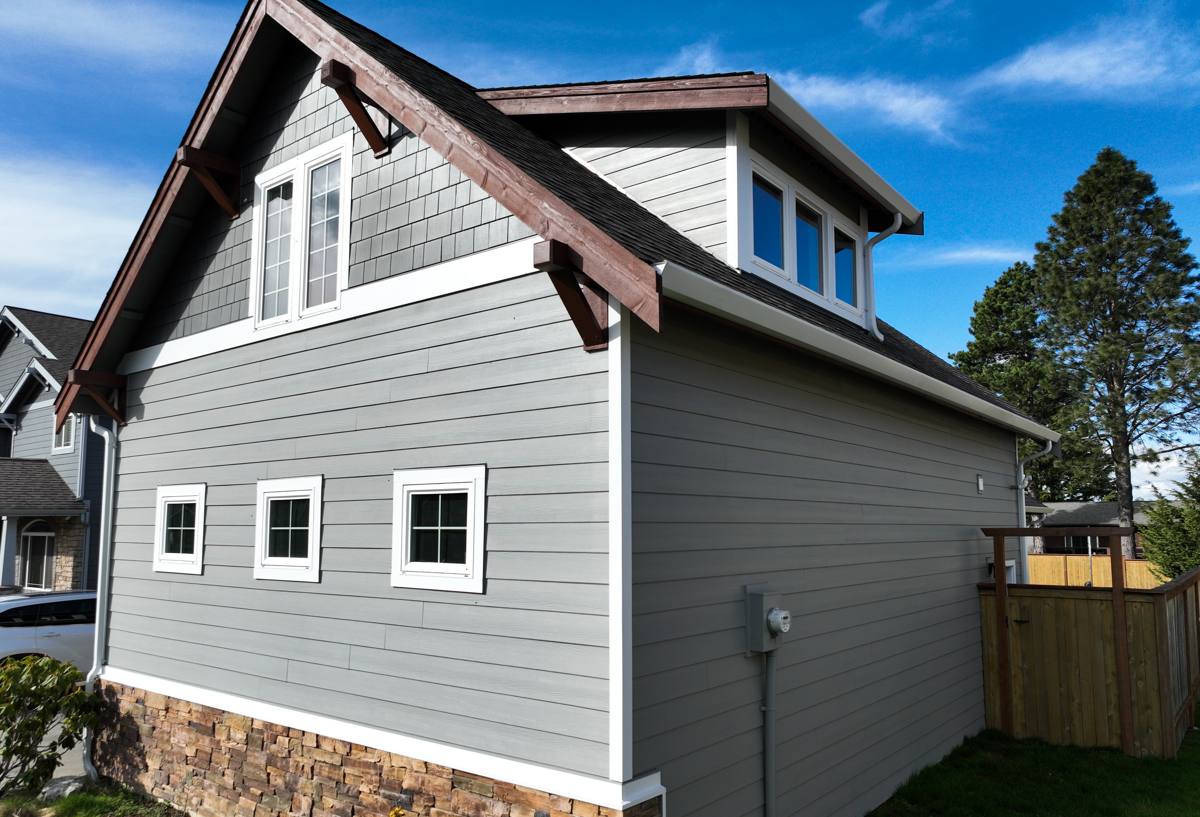
What This Climate Actually Does to a House
Hurricane-Force Wind
Bradenton sits in a hurricane-prone stretch of the Gulf Coast, and even in years without a direct hit, tropical systems and seasonal squalls send sustained high winds and wind-driven rain through Manatee County. Siding that isn't rated for wind exposure, or that wasn't fastened to spec, can lift, crack, or separate at the seams during a storm — and once wind gets behind a panel, water intrusion follows fast.
Year-Round UV
Florida doesn't give siding an off-season. Constant, intense sun bleaches paint, breaks down resins in composite products, and accelerates the aging of anything not engineered for it. On a shaded lot like many in Whitfield Estates, you also get uneven sun exposure across a single elevation — full blast on the south and west walls, dappled shade elsewhere — which can cause inconsistent fading on lower-grade products.
Wind-Driven Rain and Humidity
Rain here rarely falls straight down. Wind pushes it sideways into wall assemblies, testing every seam, joint, and piece of flashing. Combined with Gulf Coast humidity, that's a recipe for moisture getting trapped behind siding that swells, delaminates, or holds water instead of shedding it.
Salt Air
Proximity to Sarasota Bay and the Gulf means airborne salt is a constant, low-grade corrosive presence — on fasteners, on trim, and on any exterior material that isn't formulated to resist it. Salt exposure is one of the most underestimated factors in how fast a home's exterior wears out on this side of the state.
Why We Only Install James Hardie
James Hardie fiber cement is non-combustible, dimensionally stable, and formulated with a factory-applied ColorPlus finish that's baked on and warrantied against fading and peeling — a real advantage in a climate that beats down UV twelve months a year. Hardie's HZ5 product line is engineered specifically for climates like ours: hot, humid, storm-exposed. It resists moisture intrusion far better than wood-based composites, it won't rot, and it holds up to wind-driven rain without the swelling or delamination risk that comes with engineered wood siding.
We've made the call not to install LP SmartSide, vinyl, Cemplank, Allura, or primed wood siding. That's not us saying those products have no place anywhere — it's us saying that for Gulf Coast exposure specifically, the maintenance burden, moisture sensitivity, and installation tolerances of those alternatives don't match what we're willing to put our name behind. Vinyl can warp and crack under sustained high heat and impact stress. Engineered wood products are more sensitive to moisture at cut edges and joints if installation isn't precise. Fiber cement alternatives to Hardie can be solid products, but we've standardized on Hardie because of its track record, its factory finish warranty, and the transferable warranty homeowners get with it.
How Hardie Compares to Common Alternatives
| Factor | James Hardie Fiber Cement | Vinyl Siding | Engineered Wood (LP SmartSide) |
|---|---|---|---|
| Moisture/rot resistance | High — cement composite, doesn't rot | Won't rot, but seams can trap water | Moderate — vulnerable at cut edges if not sealed correctly |
| UV/fade resistance | ColorPlus factory finish, long fade warranty | Can fade and chalk over time | Depends on field-applied paint quality |
| Wind/impact performance | Rigid, holds up well when installed to spec | Can crack or blow off in high wind | Solid, but seams/edges are the weak point |
| Combustibility | Non-combustible | Combustible | Combustible |
| Salt air durability | Strong, cement-based composition | Generally stable but can become brittle | More exposure-sensitive over time |
How We Approach a Whitfield Estates Project
Every siding job starts with an honest look at what's underneath the current exterior. In an area with a mix of older and newer homes, that matters — original wall sheathing, old flashing details, and prior repairs all affect what a proper Hardie installation needs to look like. We don't just tear off and re-nail the same details that may have contributed to a problem in the first place.
- On-site inspection of existing siding, trim, and any signs of past moisture intrusion
- Assessment of flashing, house wrap, and water management details before new siding goes up
- Installation to James Hardie's published specifications for fastener pattern, clearance, and joint treatment
- Attention to caulking and sealant points that matter most in wind-driven rain
- Color and profile selection suited to the home's style and the neighborhood's character
- A walkthrough at completion so you know exactly what was done and why
Correct installation is what actually determines how well fiber cement performs here — even the best material underperforms if it's hung wrong. That's why we send a crew that installs Hardie day in and day out, not a rotating team learning as they go.
More Than Siding: A Full Exterior Team
Siding rarely fails in isolation from the rest of the exterior. A compromised roof edge, an aging window, or a deck exposed to the same salt air and UV can all feed moisture or damage back into wall assemblies. We handle roofing, windows, and decks alongside siding, which means we can look at a Whitfield Estates home as one connected system instead of treating each component separately.
Where This Matters Most
If your roofline is due for attention, addressing it alongside a siding project avoids opening up a wall and then dealing with a leak from above later. Same with windows — old window flashing is one of the more common hidden causes of siding damage near openings. Bundling this work with one local crew also means fewer separate contractors touching your home, fewer scheduling headaches, and one point of accountability.
What Siding Replacement Typically Involves
Cost Factors Homeowners Should Understand
| Factor | Why It Matters |
|---|---|
| Home size and elevation count | More wall area and complex rooflines mean more material and labor |
| Existing condition underneath | Rot, old sheathing, or moisture damage found during tear-off adds scope |
| Trim and detail work | Corner boards, window trim, and fascia detailing affect both cost and final look |
| Access and site conditions | Tree cover, tight lot lines, or landscaping can affect crew logistics |
| Product line and profile | HZ5 lap siding, shingle-style panels, and board-and-batten all price differently |
We don't quote broad numbers over the phone without seeing the house — too many of these factors are specific to your property. What we can tell you upfront is that we price and install one product line, so you're never comparing us against ourselves on a cheaper, thinner-spec alternative.
Signs Your Siding May Need Attention
- Visible warping, buckling, or separation at seams
- Soft spots or give when pressed near the base of walls or around window trim
- Persistent staining or streaking that doesn't wash off
- Paint that's peeling, chalking heavily, or fading unevenly across elevations
- Higher cooling bills that may point to compromised wall insulation behind failing siding
- Visible gaps or cracks after a storm season
If you're seeing any of these on a Whitfield Estates home, it's worth having someone look before the next storm season rather than after.
Why a Local Bradenton Crew Matters
A crew that works Manatee County exteriors regularly knows how differently coastal exposure, tree cover, and older construction methods play out street to street. We're not flying in a regional install team that installs three products across five counties. We install one siding system, we know how it performs against this specific climate, and we're accountable locally if something needs a follow-up.
If you're weighing a siding, roofing, window, or deck project for your Whitfield Estates home, we're happy to take a look and walk you through what we see — no pressure, no obligation. Reach out for a free estimate using the form below.