 Bradenton Siding
 Siding Built for Southgate's Climate, Not Just Its Curb Appeal
Southgate sits inside Bradenton, in Manatee County, which means every home here deals with the same set of exterior stresses that define West Central Florida living: long stretches of intense UV exposure, humidity that never really lets up, wind-driven rain during summer storm season, and the slow, steady corrosion that comes with being close enough to the Gulf and Tampa Bay to catch salt-laden air. None of these factors are dramatic on any given day. They're cumulative. A siding product that looks fine in year one can start showing real problems by year five or six if it wasn't chosen or installed with this climate in mind.
We install James Hardie fiber cement siding exclusively, and we don't say that as a sales pitch — it's a standard we've held ourselves to because we've seen what Florida weather does to lesser-suited materials over time. This page walks through what Southgate homeowners specifically should know about their siding, their roof, their windows, and their decks, and how we approach exterior work in this part of Bradenton.
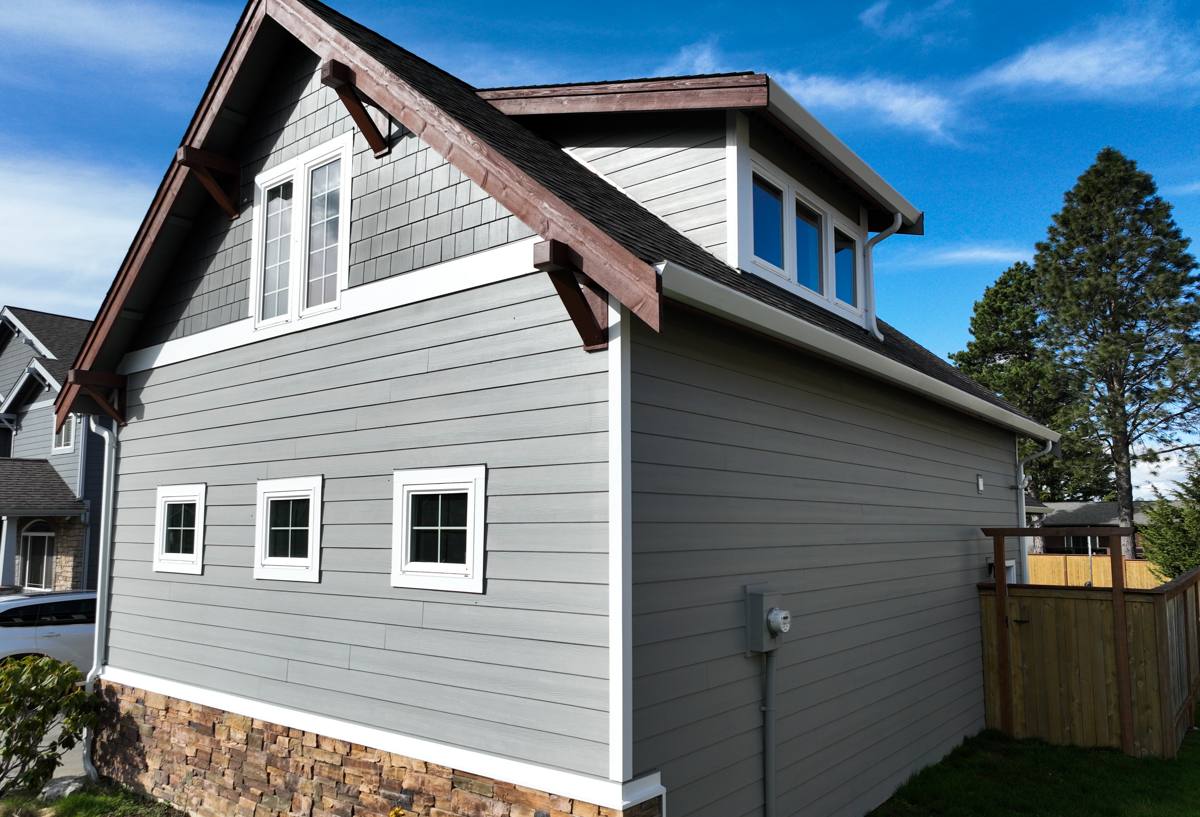
What Southgate Homes Are Up Against
Heat and UV
Bradenton gets sun exposure that most siding materials simply weren't engineered for. Vinyl siding, for example, is a petroleum-based product that softens, warps, and can visibly fade or "chalk" under sustained UV and heat — sometimes within a decade, sometimes sooner on south- and west-facing walls. Fiber cement doesn't have that vulnerability; it's a cement-and-cellulose composite that holds its shape and, with a factory-applied finish, its color under the same sun exposure.
Humidity and Moisture Cycling
Southgate homes go through constant humidity swings — muggy mornings, afternoon downpours, and a general moisture load in the air that wood-based products absorb over time. Any siding with a wood component (primed spruce, cedar, or engineered wood products like LP SmartSide) depends on an intact factory coating and diligent field-applied sealing at every cut edge, joint, and fastener to keep moisture out. Miss one spot, and moisture gets in behind the finish, leading to swelling, delamination, or rot that isn't visible until it's already advanced.
Wind-Driven Rain
During Florida's storm season, rain rarely falls straight down — it's pushed sideways into walls, soffits, and window and door openings. This is where installation quality matters as much as the product itself. Flashing details, weather-resistant barriers, and proper overlap at seams determine whether wind-driven rain stays outside the wall assembly or works its way in.
Salt Air
Southgate isn't beachfront, but Bradenton's proximity to Tampa Bay and the Gulf means salt content in the air is a real factor, not just a coastal-zone concern. Salt accelerates corrosion on exposed metal fasteners and can contribute to the breakdown of certain coatings over time. Material choice and fastener selection both matter here.
Why We Standardized on James Hardie
We used to get asked to install a range of siding products — vinyl, LP SmartSide, Cemplank, Allura, and various wood options. We stopped installing all of them, not because they're bad products in every application, but because after years of exterior work on Gulf Coast homes, we found they consistently created more callbacks, more maintenance conversations, and more disappointed homeowners in this specific climate than fiber cement from James Hardie.
What Sets James Hardie Apart Here
- Non-combustible core: Fiber cement doesn't burn, which matters for insurance considerations and general peace of mind.
- Climate-engineered product lines: Hardie's HZ10 formulation is specifically engineered for hot, humid, high-moisture climates like ours — it's not a one-size-fits-all national product.
- ColorPlus factory finish: The color is baked on in a controlled factory environment, which holds up to UV far better than field-applied paint and typically carries its own finish warranty.
- Dimensional stability: Fiber cement doesn't expand, contract, or warp with heat and humidity the way vinyl or wood-based products can.
- Strong transferable warranty: Hardie's warranty structure is well documented and transfers to a new owner if the home sells, which matters for resale in a market like Bradenton.
We're upfront that fiber cement costs more upfront than vinyl and is heavier and more labor-intensive to install than most engineered wood products. That's a real trade-off. Our position is that the lower long-term maintenance burden and the material's proven performance in this exact climate make it worth that upfront difference for most Southgate homeowners planning to stay in their home more than a few years.
How a Siding Project Works, Start to Finish
1. On-Site Assessment
We walk the exterior, check the condition of the current siding and the wall assembly underneath (where accessible), and look at problem areas — corners, window and door trim, areas with prior water staining, and anywhere the existing material shows sun damage or moisture intrusion.
2. Removal and Substrate Check
Old siding comes off and we inspect the sheathing underneath. This is often where hidden problems surface — soft or water-damaged sheathing needs to be addressed before new siding goes on, not covered up.
3. Weather-Resistant Barrier
A proper house wrap or weather-resistant barrier goes down correctly lapped, which is one of the most important — and most commonly rushed — steps in the entire process for wind-driven rain resistance.
4. Flashing at Every Penetration
Windows, doors, and any wall penetration get flashed to direct water outward, not into the wall cavity. This is a detail-heavy step that separates a durable installation from one that fails early.
5. Hardie Installation to Manufacturer Spec
Proper fastener spacing, correct nailing patterns, and correct clearances (from grade, roofline, and other transitions) all affect both performance and warranty validity. James Hardie's warranty can be affected by installation that doesn't follow their published specifications, which is part of why installer experience matters as much as the product choice.
6. Caulking, Trim, and Final Finish
Joints and trim get sealed with appropriate sealants, and everything gets a final inspection before we call the job done.
Comparing Siding Options for a Gulf Coast Home
| Factor | Vinyl | Engineered Wood (LP-type) | James Hardie Fiber Cement |
|---|---|---|---|
| UV / fade resistance | Weak — softens and fades over time | Moderate, coating-dependent | Strong, factory ColorPlus finish |
| Moisture / rot risk | Low rot risk, but warps | Higher — wood-based core | Very low — cement-based core |
| Fire resistance | Combustible | Combustible | Non-combustible |
| Wind performance | Can crack or blow off in high wind | Good when installed correctly | Strong, engineered for wind zones |
| Upfront cost | Lowest | Mid-range | Higher |
| Long-term maintenance | Low, but limited lifespan | Moderate — sealing/repainting | Low — factory finish holds up |
Beyond Siding: Roofing, Windows, and Decks in Southgate
Siding rarely fails in isolation from the rest of the exterior envelope. A roof with aging or damaged shingles lets moisture into the attic and top plate, which can work its way down behind siding at the roofline. Windows with failed seals or old flashing are one of the most common sources of wall moisture intrusion regardless of what siding is installed. And decks exposed to the same sun and rain cycles need materials and fastening appropriate to the climate, just like the walls of the house.
We handle all four — siding, roofing, windows, and decks — because exterior problems are connected. A homeowner dealing with a stained interior wall may actually have a flashing issue at a window, not a siding defect, and a full exterior assessment catches that instead of treating symptoms one at a time.
Signs an Exterior Assessment Is Worth Scheduling
- Visible fading, chalking, or warping on current siding
- Soft spots, staining, or bubbling paint near the base of exterior walls
- Gaps or cracked caulking around windows and doors
- Missing, curling, or granule-shedding shingles
- Deck boards that feel spongy, cupped, or show gray weathering
- Higher-than-expected cooling bills, which can point to compromised insulation behind damaged siding
Why a Local Crew Matters for Southgate Homes
Manatee County building requirements, wind-load considerations, and the practical realities of installing exterior products in this climate aren't the same everywhere in the country. A crew that works Bradenton and the surrounding area regularly understands the storm patterns, the humidity load, and the kind of substrate conditions common to homes in this part of Florida. That local familiarity shows up in the details — the flashing choices, the fastener selection, the sequencing of a job around Florida's rainy season — that a homeowner may never see directly but will feel in how the exterior performs five and ten years down the road.
What to Ask Before Hiring an Exterior Contractor
Whether you go with us or someone else, a few questions separate a contractor who takes installation seriously from one who doesn't:
- Are you a certified or trained installer for the specific siding product you're proposing?
- Will you inspect and address the sheathing and weather barrier, not just install over what's there?
- What's your approach to flashing at windows, doors, and roof transitions?
- Does the manufacturer's warranty stay valid with your installation method, and can you explain how?
- Can you walk me through why you recommend this specific product for a Gulf Coast home?
If a contractor can't give a clear, specific answer to the last question, that's worth noting.
Get a Free, No-Pressure Estimate
If your Southgate home's siding, roof, windows, or deck are showing signs of wear, or you're simply planning ahead, we're happy to take a look and give you an honest assessment — no pressure, no obligation. Fill out the form below to schedule a free estimate.