 Bradenton Siding
 Deck Building in Parrish: What the Climate Actually Demands
Parrish has grown fast over the last several years, and a lot of that growth means new backyards, new pools, and new decks going in on lots that didn't have them before. Whether you're building fresh or replacing an aging deck, the same reality applies: this is Manatee County, Florida, and a deck built to "look right" on day one isn't the same as a deck built to hold up through a decade of Florida seasons.
The climate here works against wood and fasteners in a few specific ways. Intense, near-constant UV breaks down surface finishes and dries out wood fiber, which leads to cracking, splintering, and graying faster than in northern climates. Wind-driven rain gets pushed sideways into ledger boards, railing posts, and any gap where water can collect instead of shed. And when hurricane-force wind events come through, a deck that's only fastened "well enough" for calm weather can rack, twist, or pull away from the house. None of this means you can't have a beautiful deck in Parrish — it means the details that don't show up in a photo are the details that matter most.
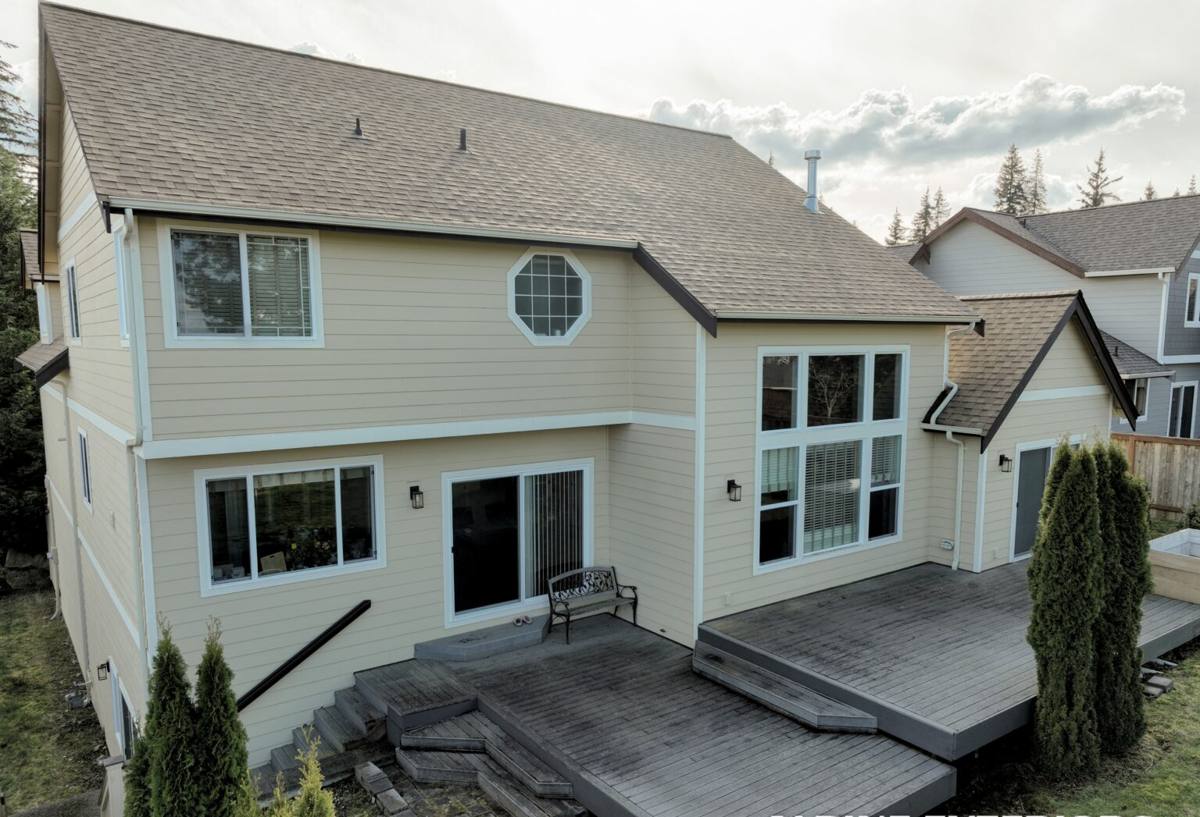
Where Parrish Fits in the Bigger Picture
Parrish sits inland relative to the Gulf coastline, which means the day-to-day salt exposure on fasteners and metal hardware is generally lighter than it is for homes right along the water in Bradenton or on the barrier islands. That's a real advantage — but it's not a reason to cut corners. Manatee County still sees the same wind-driven storm systems, the same summer humidity, and the same UV load as the rest of the region, and hardware-grade corrosion protection is cheap insurance either way. A deck built here still needs to be engineered for wind uplift and built with fasteners rated for exterior, moisture-exposed use — the calculus is about margin of safety, not about whether it's needed at all.
Choosing Deck Materials That Actually Hold Up Here
Every decking material has trade-offs. The right choice depends on your budget, how much upkeep you're willing to do, and how the deck will be used.
| Material | Upfront Cost | Maintenance | How It Handles Florida Climate |
|---|---|---|---|
| Pressure-treated pine | Lowest | Annual sealing/staining recommended | Affordable and strong, but needs consistent upkeep to resist UV drying, cracking, and moisture cycling |
| Composite decking | Mid to higher | Occasional cleaning, no sealing/staining | Resists rot and doesn't need refinishing; quality matters — cheaper composites can fade or warp under constant sun |
| PVC/capped polymer | Highest | Lowest ongoing maintenance | Fully sealed surface handles UV and moisture well over the long term; higher material cost offsets the low upkeep |
| Tropical hardwoods | High | Periodic oiling for appearance | Naturally dense and durable, but installation and fastening require experience to do correctly |
We don't push one material as "the only right answer" because it isn't — a pressure-treated deck that's properly built and maintained can last for decades, and plenty of Parrish homeowners prefer that lower upfront cost and the traditional wood look. What we do insist on is being honest about the maintenance commitment each option carries before you sign off on it, so there are no surprises two summers in.
What a Correctly Built Deck Involves
Footings and Structure
Everything starts underground. Footings need to be sized and set to the depth Manatee County's building code requires for the soil conditions on your lot, not just poured to "what usually works." Undersized or shallow footings are one of the most common reasons an older deck starts to feel spongy, uneven, or shows movement at the posts.
Ledger Attachment and Flashing
Where a deck attaches to the house is the single most important connection on the structure — it's also the most common source of water intrusion if it's done wrong. Proper flashing directs wind-driven rain away from the house sheathing instead of letting it wick behind the ledger board and cause rot you won't see until it's a real problem.
Fasteners and Hardware
Every screw, bolt, joist hanger, and post base needs to be rated for exterior, treated-lumber contact. Mismatched or bargain-grade hardware corrodes faster in Florida's humidity and heat, and corroded fasteners are a structural weak point exactly where you don't want one — especially in wind.
Spacing for Movement
Wood and composite boards both expand and contract with heat and humidity. Board spacing that's too tight leads to buckling and cupping over time; spacing that's too loose looks sloppy and catches debris. Getting this right is a small detail that separates a deck that stays flat for years from one that starts looking rough after one summer.
Our Deck Building Process
- On-site consultation to walk the space, discuss layout, and talk through material options honestly — including the maintenance trade-offs
- Design and written estimate covering materials, structural details, and realistic timeline
- Permit pulled and plans submitted to Manatee County before any digging starts
- Footings set to code depth for your soil conditions
- Framing built with hardware rated for exterior and treated-lumber use
- Ledger flashing installed correctly at the house attachment point
- Decking, railing, and stairs installed with proper board spacing for expansion
- Final walkthrough and county inspection sign-off
We don't skip the permit step, and we won't quote a job that skips it either. It protects you — with your homeowner's insurance and at resale — and it's the only way to confirm the structure actually meets Manatee County's wind load requirements before it's built.
Permitting and Wind Load in Manatee County
Manatee County requires a permit for new deck construction and most major deck repairs, and the structure has to meet current wind load requirements — this isn't optional paperwork, it's an engineering check. A permitted, inspected deck also matters when you go to sell the home; an unpermitted structure can become a negotiating problem or an insurance issue down the road. We handle the permitting process as part of the job rather than leaving it for the homeowner to sort out.
Railings, Stairs, and Attachments
Railings and stair stringers take direct wind load and repeated stress from everyday use, so they get the same attention as the deck frame itself — proper post-to-frame connections, code-compliant baluster spacing, and hardware that won't corrode prematurely. A deck that's solid underfoot but has a wobbly rail isn't finished correctly, and it's one of the first things people notice.
Maintenance That Actually Matters in This Climate
Whatever material you choose, a few habits go a long way in Manatee County's climate:
- Rinse off pollen, dirt, and organic debris regularly so it doesn't trap moisture against the surface
- Check fastener heads and railing connections once or twice a year for early signs of corrosion or loosening
- For wood decks, reseal or restain on the schedule the product calls for — UV exposure here is more intense than the can's "typical" recommendation often assumes
- Keep an eye on the area where the deck meets the house; that's the first place to catch a flashing or moisture issue before it spreads
Why Hire a Crew That Already Works in Parrish
A deck built to a generic national code minimum isn't the same as one built by a crew that knows what Manatee County inspectors actually check, what soil and drainage conditions look like on local lots, and how quickly UV and humidity here can expose a shortcut. We've done this work throughout the Bradenton area, and we bring the same standards — correct footings, correct flashing, correct hardware — to every deck, whether it's a straightforward platform off the back door or a larger multi-level build with stairs and railing.
Cost Factors to Expect
| Factor | Why It Moves the Price |
|---|---|
| Size and shape of the deck | More square footage and complex angles mean more framing, more cuts, more labor |
| Material choice | Pressure-treated is the lowest upfront cost; composite and PVC cost more but reduce long-term upkeep |
| Height and stairs | Elevated decks need more substantial footings, posts, and stair structure than ground-level builds |
| Railing style | Basic code-compliant railing costs less than upgraded or custom railing systems |
| Site access and soil conditions | Difficult access or poor drainage can add labor for footings and material staging |
We won't give you a number over the phone without seeing the site — too many of these factors are specific to your lot — but we're upfront about where the cost is going once we do walk it.
If you're planning a new deck or need to replace one that's showing its age, we'd be glad to take a look and walk you through your options. Request a free, no-pressure estimate using the form below and we'll set up a time to come out.