 Bradenton Siding
 Parrish has grown fast over the last decade, with new subdivisions going up alongside older farmhouses and rural homesteads along the Manatee River corridor in northeastern Manatee County. That mix means we see everything from builder-grade windows installed during the last building boom to older single-pane units in homes that predate today's energy codes entirely. Whatever the starting point, the same regional facts apply to all of them: Gulf Coast humidity and heat drive air conditioning costs most of the year, hurricane-force wind events are a real design load and not a hypothetical, and constant Florida sun breaks down cheap window components faster than almost anywhere else in the country. Energy-efficient windows done right in Parrish have to solve for comfort and utility bills and hold up structurally through storm season. Treating those as two separate problems is where a lot of window jobs go wrong.
Why Parrish Homes Need a Climate-Specific Approach
A window that performs well in a mild, dry climate can be a poor fit here. Manatee County's combination of long, humid summers and active hurricane seasons puts different — and sometimes competing — demands on a window than a standard efficiency-focused product line is built for. Newer Parrish subdivisions often came with entry-level dual-pane windows that meet minimum code but don't do much to block solar heat gain, which shows up directly on the electric bill during the hottest months. Older homes in the area, particularly ones built before more recent energy and wind codes, may still have single-pane glass or aluminum frames that lose conditioned air constantly and offer little resistance to wind-driven rain. Either way, an energy-efficient window replacement here isn't just a glass upgrade — it's a chance to correct for both comfort and durability at the same time.
We treat every Parrish quote as a real assessment of the home's specific windows, orientation, and construction age rather than a one-size answer. A west-facing wall of windows catching full afternoon sun needs different glass performance than a shaded, east-facing bedroom window, even on the same house.
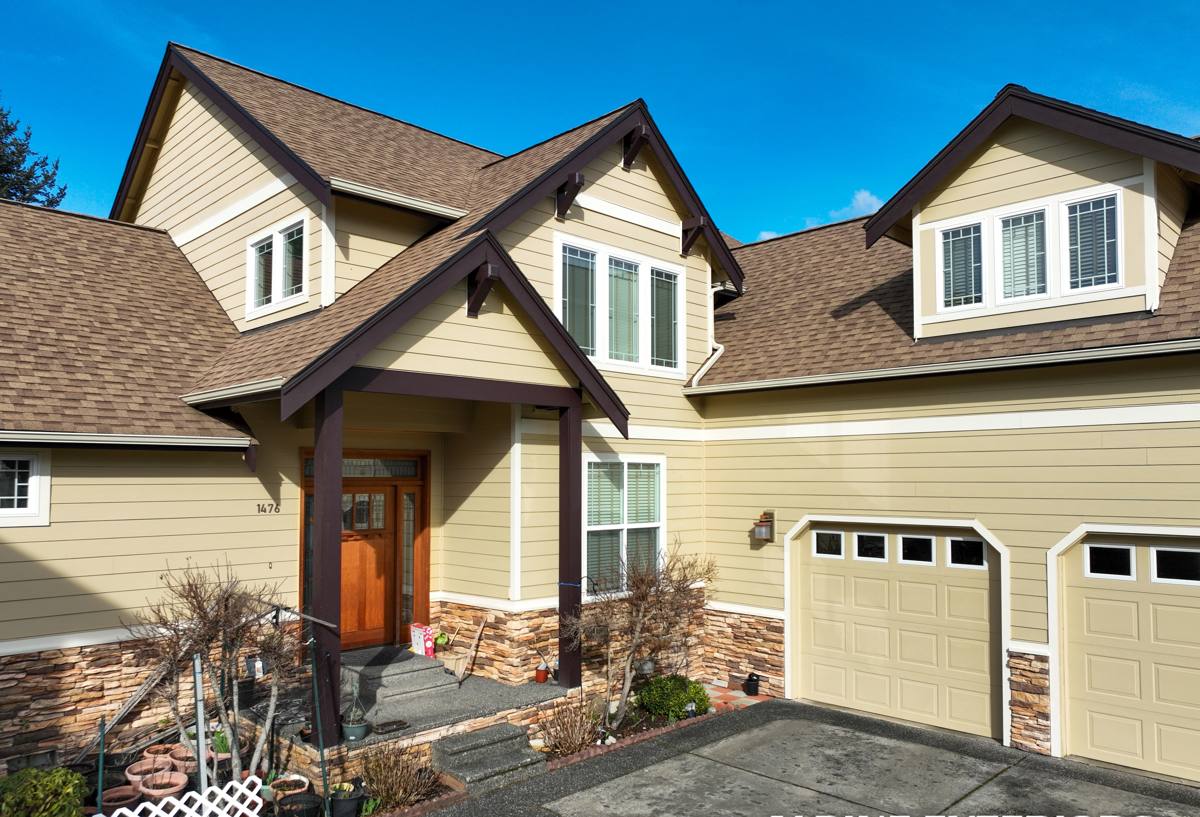
What the Regional Climate Actually Does to Windows Here
Four things drive most of the window problems we see in this part of Manatee County. Intense, near year-round UV breaks down lower-grade vinyl, weatherstripping, and sealants faster than in more temperate climates, which is why a builder-grade window that looked fine at ten years old can be visibly degraded by fifteen. Hurricane-force wind events put real pressure loads on glass and framing, and on an older or poorly installed window, that pressure finds the weakest point in the seal or the anchoring. Wind-driven rain during storms and even routine summer squalls pushes water sideways and tests flashing and weatherstripping in ways that a light, straight-down rain never will. And while Parrish sits well inland from the immediate coastline, salt-carrying air off Tampa Bay and the Gulf still reaches this part of the county on prevailing winds, which slowly works on hardware, screen frames, and fasteners even without direct beachfront exposure.
Where Energy Loss Actually Starts
On most older or lower-grade windows, heat gain and air leakage don't start at the center of the glass — they start at the edges. A worn weatherstrip, a sealant joint that's dried out and cracked from UV exposure, or a frame that's warped slightly from years of heat cycling all create a path for conditioned air to escape and outside heat and humidity to get in. That's why a window that still looks intact can still be a significant energy drain. The failure is happening at the perimeter, not necessarily in the glass itself.
Signs Your Parrish Home's Windows Are Costing You Money
- Rooms near certain windows feel noticeably hotter than the rest of the house during peak afternoon sun
- You can feel air movement or a draft near the window frame even with it fully closed
- Cooling costs have climbed year over year without a corresponding rate increase from your utility
- Condensation regularly forms between the panes, which usually means a failed seal on a dual-pane unit
- Frames show visible warping, chalking, or discoloration from sustained UV exposure
- Hardware and locks feel stiff, corroded, or don't latch as tightly as they used to
- Outside noise carries in more than it used to, which often tracks with the same seal failures causing air loss
What Makes a Window Actually Energy-Efficient in This Climate
Glass and Coatings
In Manatee County, solar heat gain is usually the bigger cost driver than winter heat loss, so the glass package matters more here than in a heating-dominated climate. Low-E coatings reduce how much solar heat passes through the glass while still letting in visible light, and the right coating package for a west- or south-facing Parrish window can meaningfully cut peak-afternoon heat gain compared to a basic dual-pane unit. Insulated glass units with an argon or krypton gas fill between the panes add another layer of thermal performance beyond what the coating alone provides.
Frame Material
Frame material affects both energy performance and how well the window holds up to this climate over time. Vinyl and fiberglass frames generally resist heat-driven warping and UV degradation better than lower-grade aluminum, and they don't conduct heat the way metal frames do, which matters on a wall that gets hours of direct Florida sun. We'll walk through the honest trade-offs for your specific home rather than defaulting to one material for every job.
Installation Quality
A high-efficiency window installed with a rushed or incomplete seal will underperform a mid-grade window installed correctly. This is true everywhere, but it matters more here because the installation also has to hold up to real wind load and wind-driven rain, not just look finished on day one. Flashing, sealant, and anchoring quality determine whether the efficiency rating on the label actually shows up on your utility bill.
Energy-Efficient Window Options We Install
- Low-E dual-pane windows — the standard baseline for cutting solar heat gain on most Parrish homes, in a range of frame materials and price points
- Impact-rated energy-efficient units — combine wind and debris protection with efficient glass packages, often the right call depending on your home's wind exposure category
- Argon- or krypton-filled insulated glass — an added thermal performance step above standard dual-pane, worth it on rooms with the heaviest sun exposure
- Vinyl and fiberglass frame systems — lower-maintenance, UV- and heat-stable options that suit most new-construction and replacement work in this area
- Custom and non-standard sizing — for older Parrish homes with openings that predate current standard window dimensions
Our Process, Start to Finish
- On-site assessment — we look at each window's orientation, condition, and construction age, and evaluate the home's wind exposure
- Honest recommendation — glass package, frame material, and whether impact-rated units make sense for your specific home, explained plainly
- Ordering and lead time — a realistic timeline, especially for impact-rated or custom-sized units built to order
- Removal and opening prep — old units come out carefully, with any hidden rot, framing, or flashing issues addressed before new windows go in
- Installation and sealing — new units set, anchored, and sealed to standards built for wind load and wind-driven rain, not just a finished look
- Final check and cleanup — operation, seals, and hardware tested before we walk you through the finished work
Cost Factors: What Affects Energy-Efficient Window Pricing
| Factor | What Changes the Price |
|---|---|
| Glass package | Basic Low-E dual-pane costs less than argon-filled or triple-coated glass built for heavy afternoon sun |
| Impact rating | Impact-rated units cost more than standard glass but can reduce or eliminate the need for separate storm protection |
| Frame material | Vinyl generally costs less upfront than fiberglass; both typically cost less to maintain long-term than aluminum or wood exteriors in this climate |
| Window size and shape | Oversized, custom, or non-rectangular openings cost more to order and install than standard sizes |
| Opening condition | Rot, prior leaks, or out-of-square framing on older homes add repair work before new units go in |
| Number of windows | A full-home replacement typically has better per-unit pricing than a handful of one-off swaps |
Quick Checklist Before You Order
- Confirm each window's proposed glass package matches its actual sun exposure, not a single default spec for the whole house
- Ask whether impact-rated units make sense for your home's wind exposure and location within the county
- Get the frame material trade-offs explained, especially for heavily sun-exposed walls
- Ask about the flashing and sealing plan, not just the window unit itself
- Confirm hardware and fasteners are corrosion-resistant, not standard-grade
- Get a realistic lead time in writing, especially for impact-rated or custom-sized orders
Why Hiring a Crew That Already Works Parrish Matters
Manufacturer specs and efficiency ratings are tested under standard conditions, and a lot of what determines real-world performance in this part of Manatee County happens on the job, not on the label. A crew that doesn't regularly work this climate can spec a solid glass package and still miss the details that make it perform — how a sealant joint needs to be detailed to survive constant UV cycling, when a flashing lap needs extra attention because of wind-driven rain, which anchoring pattern actually holds up to real wind load versus the code minimum on paper. Those are judgment calls made in the field, informed by having seen how windows in this area actually age.
We work Parrish and the surrounding Bradenton area regularly, so we're not guessing at how a given orientation, frame material, or installation detail holds up here over a few Florida summers and hurricane seasons. That experience is what separates a window that still performs and seals tight five years in from one that starts leaking air, fogging between the panes, or showing UV damage well before it should.
Ready When You Are
If your Parrish home's windows are driving up cooling costs, showing their age, or you're planning ahead of hurricane season, it's worth having someone assess your specific windows and exposure before you start pricing units. We offer free, no-pressure estimates for energy-efficient window projects in Parrish and the greater Bradenton area — use the form below to get a time on the schedule.