 Bradenton Siding
 Asphalt Shingle Roofing Built for Southgate Homes
Southgate homes deal with a specific combination of stress that a lot of shingle roofs simply aren't installed to handle: hurricane-force wind gusts during storm season, relentless UV exposure nearly every month of the year, wind-driven rain that finds every weak seam, and a steady drift of salt air off the Gulf that speeds up corrosion on anything metal. None of these factors alone is unusual for Florida. Together, on a roof that was installed to a minimum-code standard rather than a Southgate-appropriate standard, they shorten the life of a shingle roof by years.
We install and repair asphalt shingle roofing for homeowners throughout this part of Manatee County, and the approach we take here is shaped by what actually fails on local roofs — not generic manufacturer talking points. This page walks through what a shingle roof needs to hold up in Southgate, what a correct installation involves, and how we run the job from first look to final inspection.
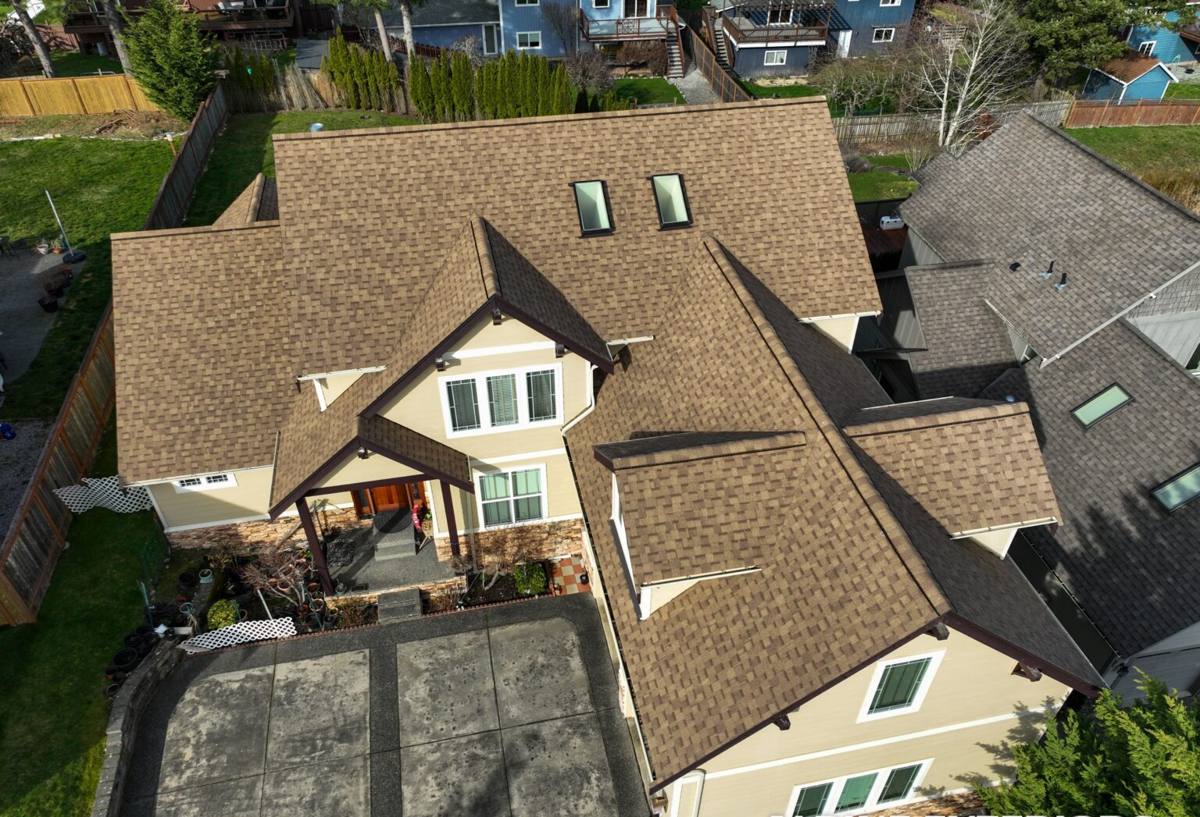
Why Southgate's Climate Is Hard on Shingle Roofs
Wind Uplift
Asphalt shingles are rated for wind resistance, but that rating only means something if every shingle is fastened correctly, with the right nail pattern and the right number of fasteners for the exposure the roof actually sees. A roof that looks fine in a light storm can lose shingles in a strong one if the original install cut corners on nailing or sealant activation. Once wind gets under one loose shingle tab, it usually takes the neighboring shingles with it.
UV and Heat Cycling
Florida sun bakes asphalt shingles nearly year-round. UV breaks down the asphalt binders over time, and the daily heat-up/cool-down cycle stresses the shingle mat and the sealant strips that hold tabs down. Roofs here age faster than the same product would in a milder climate — it's part of why we don't sell shingle roofing with unrealistic lifespan promises.
Wind-Driven Rain
In a straight-down rain, a roof's shingle layer does most of the work. In wind-driven rain — which is the normal pattern during Manatee County storms — water gets pushed sideways and upward under shingle edges, at valleys, and around any roof penetration. This is where underlayment, flashing, and valley detailing matter as much as the shingles themselves.
Salt Air Corrosion
Southgate's proximity to coastal air means faster corrosion on exposed metal: nail heads, flashing, vent stacks, and drip edge. Standard fasteners and lower-grade flashing corrode faster here than they would further inland, which is why material selection matters as much as installation technique.
What a Correct Shingle Roof Install Includes
A shingle roof is a system, not a single product layer nailed to plywood. Skipping or downgrading any layer below is where most premature failures start.
- Deck inspection and repair — soft, delaminated, or water-stained decking gets replaced before anything goes down, not covered over.
- Underlayment — a synthetic or self-adhering underlayment rated for wind-driven rain exposure, installed with proper laps.
- Starter strip — a dedicated starter course along eaves and rakes, not cut-up field shingles, so the first row has full sealant contact and wind resistance.
- Field shingles — correct nail count and placement for the roof's wind exposure, following manufacturer specs, not the minimum code allowance.
- Valleys and flashing — properly lapped valley metal or woven valleys, plus corrosion-resistant step and counter-flashing at walls and chimneys.
- Penetration flashing — vent stacks, pipe boots, and roof penetrations sealed with materials that hold up to UV, not just standard rubber boots that crack within a few years.
- Ridge and hip cap — proper ridge cap installation with correct fastening for wind uplift resistance.
- Ventilation — intake and exhaust balanced so the attic isn't trapping heat and moisture against the underside of the deck.
Choosing the Right Shingle for a Southgate Roof
Not every shingle product sold for this market is a good fit for this climate. We steer homeowners toward higher wind-rated architectural shingles with strong sealant strips and a manufacturer wind warranty that actually matches Manatee County's exposure requirements — rather than economy three-tab products that carry lower wind ratings and shorter realistic service life here. This isn't a claim that lower-tier shingles are defective; it's a straightforward trade-off between upfront cost and how the product performs under sustained coastal wind and UV load. We'll walk you through the honest difference so you're choosing based on your roof and your budget, not a sales pitch.
| Factor | Economy 3-Tab Shingle | Architectural / High-Wind Shingle |
|---|---|---|
| Typical wind rating | Lower end of rated range | Higher rated, better suited to coastal exposure |
| Expected local lifespan | Shorter, accelerated by UV and heat cycling | Longer, thicker mat resists UV degradation better |
| Appearance | Flat, uniform | Dimensional, heavier look |
| Upfront cost | Lower | Moderate premium |
| Warranty structure | Typically shorter, more prorated | Usually longer, often better wind coverage |
Our Process for Southgate Roofing Jobs
1. On-Site Inspection
We start with a full roof and attic inspection — deck condition, existing ventilation, flashing points, and any signs of past leaks or wind damage. We'll tell you plainly what we find, including if a repair is more sensible than a full replacement.
2. Written Scope and Estimate
You get a clear, itemized estimate before any work starts — materials, scope, and timeline. No verbal promises that don't show up on paper.
3. Tear-Off and Deck Prep
Old roofing comes off down to the deck so we can actually see what we're working with, not roofing over hidden problems.
4. System Installation
Underlayment, flashing, starter strip, field shingles, ridge cap, and ventilation components go in as a complete system, built to hold up against wind uplift and wind-driven rain.
5. Cleanup and Final Walkthrough
We clear the site of debris and nails, then walk the job with you so you know exactly what was done and what to expect going forward.
Roof Repair vs. Replacement in Southgate
Not every roof issue means a full replacement. If the deck is sound, the shingles are relatively young, and the damage is isolated — a few wind-lifted shingles, a failed pipe boot, a damaged valley section — a targeted repair is usually the right call. Replacement makes more sense when the shingles are broadly past their service life, when there's widespread granule loss, or when repeated leak points suggest the underlayment and flashing system underneath is failing, not just the surface layer. We'll give you a straight recommendation either way, based on what the inspection actually shows.
Signs a Southgate Roof Needs Attention
- Shingles that are curling, cupping, or losing granules faster on south- and west-facing slopes (the sides that take the most direct sun)
- Missing or lifted shingle tabs after a windy stretch of weather
- Dark streaking or staining that doesn't wash off with rain
- Soft spots or sagging when walked, which points to deck issues underneath
- Rust staining or visible corrosion around vent stacks and flashing
- Water stains on interior ceilings, especially near valleys or chimneys
- Daylight visible through the attic decking at any point
Why It Matters to Hire a Crew That Already Works in Southgate
Roofing crews that work coastal Manatee County regularly know which fastening patterns actually hold up to the wind exposure here, which flashing materials resist salt-air corrosion instead of failing early, and which shingle products are worth the upfront cost versus which ones just look similar on a sample board. That local pattern recognition is the difference between a roof that's built to spec and a roof that's built for what this specific area actually throws at it. We also stand behind our work with warranty coverage on the installation itself, not just whatever the shingle manufacturer offers on paper.
What a Fair Estimate Should Include
When you're comparing roofing quotes, make sure each one spells out the same details — it's the only way to actually compare them apples to apples.
- Specific shingle brand, line, and wind rating — not just "architectural shingles"
- Underlayment type
- Whether deck repair is included or billed separately if damage is found
- Flashing and valley material and method
- Ventilation scope, if any changes are being made
- Cleanup and disposal terms
- Workmanship warranty length, separate from the manufacturer's material warranty
If you're weighing a repair, a full replacement, or just want an honest read on where your roof stands, we're glad to take a look. Fill out the form below for a free, no-pressure estimate on your Southgate home.