 Bradenton Siding
 Windows Built for Life on the Water
Bradenton Beach sits on a barrier island, which means the windows on your home are doing more work than windows almost anywhere else in Manatee County. You're closer to the salt air, more exposed to wind coming straight off the Gulf, and more likely to catch the full force of a storm before it weakens over the mainland. A window that performs fine in an inland neighborhood can fail here years sooner, or fail outright during a hurricane, if it wasn't installed with this specific environment in mind.
This page covers what window installation actually involves for a Bradenton Beach home — the code requirements, the material trade-offs, and the installation details that separate a window that holds up from one that doesn't.
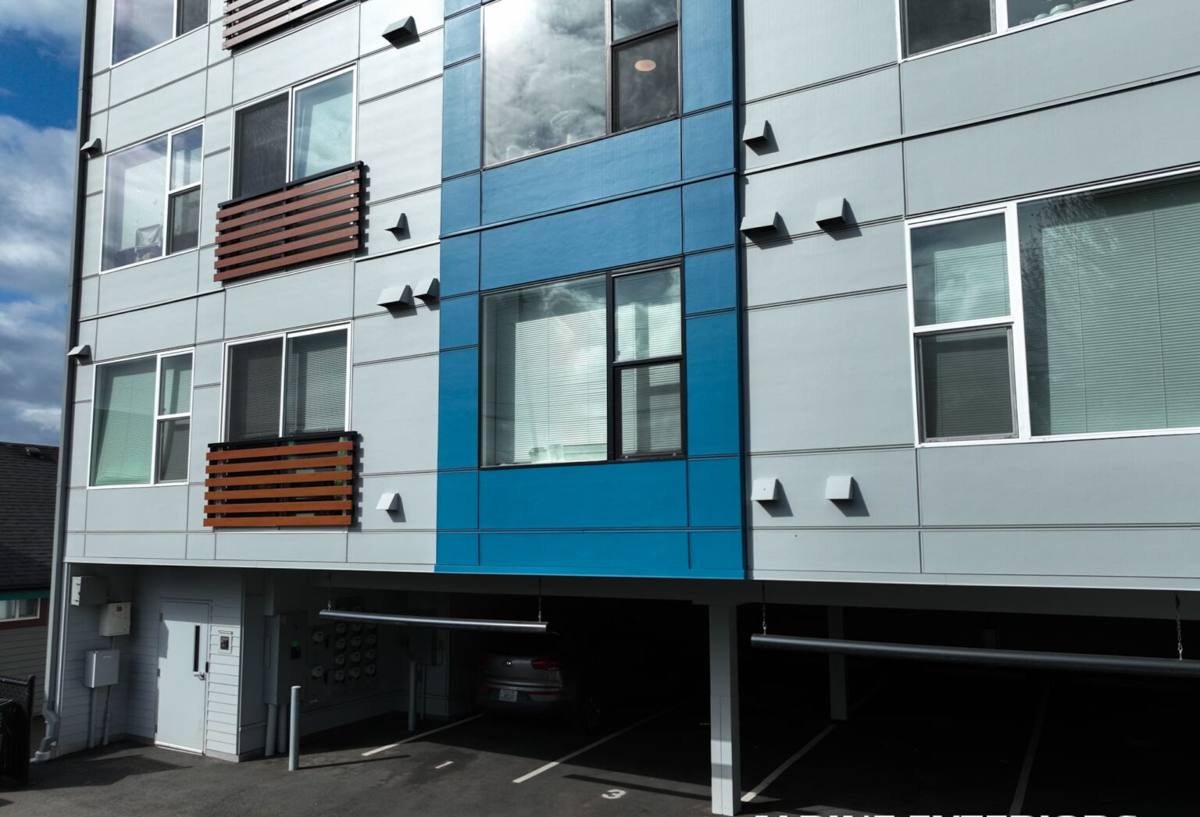
What This Climate Does to Windows
Hurricane-Force Wind and Wind-Driven Rain
Manatee County's building code sets wind load and impact requirements based on your distance from the coast, and homes on Bradenton Beach are about as close to that coastline as you can get. During a storm, wind doesn't just push against a window — it drives rain sideways into every gap in the frame and flashing. A window that isn't properly sealed and fastened won't just risk shattering; it can let water into the wall cavity long before the glass ever fails.
Year-Round UV Exposure
Florida sun is intense on any house, but the reflective glare off the water adds to the UV load on Gulf-front and near-water homes. Over time, UV breaks down vinyl frames, dries out sealants, and fades interior finishes near unprotected glass. Low-E coatings and quality frame materials matter more here than they do a few miles inland.
Salt Air Corrosion
Salt in the air settles on everything, including window hardware, screws, and metal components. Ordinary fasteners and hardware corrode faster this close to the water, which is why the fastener and hardware specification matters as much as the window unit itself. This is one of the most common things overlooked on barrier island installs.
Florida Building Code and What It Means for Your Windows
Manatee County falls under the Florida Building Code's wind-borne debris region requirements for coastal areas, which means replacement windows generally need to be either impact-rated or paired with approved storm protection, and the whole assembly needs a valid Florida product approval or Miami-Dade NOA rating for the specific wind zone your address falls into. Every window we install on Bradenton Beach carries the product approval documentation that ties to your permit — this isn't paperwork for its own sake, it's what your insurance company and any future buyer will ask to see.
Permits Aren't Optional Here
Window replacement on a barrier island property almost always requires a permit, and the inspector will be checking fastening schedule, flashing, and product approval against what's on file — not just whether the window looks installed. Skipping the permit step, or hiring someone who does, leaves you with no record that the work meets code, which becomes a real problem at resale or during an insurance claim.
Impact-Rated vs. Protected Windows: The Real Trade-offs
Homeowners on Bradenton Beach generally choose between impact-rated glass (laminated glass that resists penetration) or standard glass paired with code-compliant shutters or panels. Both routes can satisfy code, but they come with different day-to-day trade-offs worth understanding before you decide.
| Factor | Impact-Rated Windows | Standard Glass + Shutters/Panels |
|---|---|---|
| Storm prep | None needed — always ready | Must install panels/shutters before each storm |
| Upfront cost | Higher per window | Lower window cost, added shutter/panel cost |
| Noise and UV reduction | Better, even in calm weather | No benefit until deployed |
| Insurance impact | Often qualifies for wind mitigation credits | May qualify depending on shutter type and rating |
| Daily appearance | Unchanged — no visible hardware | Shutter tracks/hardware visible year-round |
Neither option is wrong. Some owners want the "set it and forget it" simplicity of impact glass; others are comfortable with the shutter routine and prefer to spend the difference elsewhere. What matters is that whichever path you choose is documented and code-compliant for your specific wind zone — not assumed.
Frame Materials Near Salt Water
The frame matters as much as the glass. On a barrier island, we steer homeowners away from bare aluminum frames and lower-grade hardware because of how quickly they corrode and pit this close to the Gulf. Our standard for Bradenton Beach installs is vinyl or fiberglass frames with marine-grade or coated fasteners and hardware rated for coastal exposure. It costs a bit more up front, but replacing corroded hardware or a pitted frame in five years costs a lot more than doing it right the first time.
- Vinyl frames: low maintenance, good insulation, holds up well to salt air when properly reinforced for impact-rated units
- Fiberglass frames: excellent durability and dimensional stability, higher upfront cost
- Bare aluminum: not our standard for coastal installs — prone to corrosion and pitting without added coatings
- Hardware and fasteners: stainless steel or coated marine-grade — non-negotiable this close to the water
What a Correct Installation Actually Involves
The window unit itself is only part of the job. Most window failures we get called out to inspect on the island trace back to the installation, not the product. A correct install includes:
- Removing the old window and inspecting the rough opening and surrounding wall for hidden moisture damage or wood rot before anything new goes in
- Installing flashing tape and a weather-resistant barrier that integrates properly with your home's existing wall assembly, whether it's stucco over block or wood frame
- Setting the window level, plumb, and square, then fastening it per the manufacturer's approved schedule for your specific wind zone — not a generic pattern
- Sealing with a marine-grade, UV-stable sealant rated for exterior coastal use, applied at every joint the code and manufacturer call for
- Insulating the gap between the frame and rough opening correctly, without over-packing it, which can bow the frame
- Final adjustment and operation check, plus cleanup and disposal of the old unit
- Scheduling and passing the required Manatee County inspection tied to your permit
Any one of these steps done wrong can undermine an otherwise good window. Flashing installed backwards, for example, can direct water into the wall instead of away from it — a mistake that won't show up until it's already caused damage.
Our Process for Bradenton Beach Homes
1. On-Site Assessment
We look at your existing windows, wall construction, and current condition, and talk through what your home actually needs based on its exposure and your priorities — full impact glass, protected standard glass, or a mix depending on which elevations face open water.
2. Product Selection and Documentation
We walk you through frame material, glass options, and the product approval paperwork for your wind zone, so you know exactly what's going in and why it satisfies code before we ever pull a permit.
3. Permitting
We handle the Manatee County permit application and schedule the required inspections as part of the job, not as an afterthought.
4. Installation
Removal, flashing, setting, fastening, and sealing, done to the fastening and sealing standard your wind zone requires — not a shortcut version.
5. Inspection and Walkthrough
We're on-site for the county inspection, and we walk the finished work with you so you know how to operate and maintain your new windows.
Why a Local Crew Matters Here
A contractor who mostly works inland neighborhoods can still install a window competently, but they're less likely to have the day-to-day familiarity with barrier island specifics: how Manatee County's coastal wind zones are mapped, what the inspectors on the island tend to flag, how tight some Bradenton Beach lots and driveways are for material staging, and how condo or HOA rules on the island can affect exterior work timelines and appearance requirements. A crew that already works this area shows up knowing these things instead of learning them on your project.
Signs Your Windows Need Attention
You don't have to wait for a storm to find out a window has a problem. Common warning signs on barrier island homes include:
- Fogging or moisture between panes of double-pane glass — a sign the seal has failed
- Visible corrosion or pitting on frames, tracks, or hardware
- Difficulty opening, closing, or locking a window that used to operate smoothly
- Soft or discolored drywall, trim, or wall texture near a window frame — a possible sign of water intrusion
- Drafts or noticeable outside noise that wasn't there before
- Windows without documented impact rating or product approval, especially in a home you didn't build yourself
Any of these are worth a professional look, even if the window still technically opens and closes.
If you're weighing a window replacement or just want an honest read on what your current windows can handle in this environment, we're glad to come take a look. The estimate is free, there's no pressure, and you'll get a straight answer about what your home actually needs — just fill out the form below to get started.