 Bradenton Siding
 Board & Batten in a Southgate Setting
Southgate is one of the more established residential pockets on the south side of Bradenton, and homes here run the gamut you'd expect from a neighborhood that's been built out over several decades — mid-century ranch homes sitting near newer remodels, single-story construction mixed with the occasional two-story addition. Board and batten shows up often in this kind of neighborhood because it works architecturally on almost any of those styles: it can dress up a plain gable end on an older ranch, give a front porch some visual weight, or serve as an accent that breaks up a long, flat elevation. It's a look that photographs well and reads as more custom than a straight run of lap siding.
What board and batten is made of matters more in Southgate than the style question does. This is Manatee County, a few miles inland from the Gulf but still well within reach of salt-laden air, sitting under some of the most intense year-round UV exposure in the continental United States, and squarely in the path of hurricane-season wind and wind-driven rain. A vertical siding pattern with more seams and more fastener points than flat lap siding either holds up to that combination or it doesn't, and the difference comes down almost entirely to the substrate underneath the pattern, not the pattern itself.
We install board and batten exclusively in James Hardie fiber cement. This page covers what that style actually is, what Southgate's climate does to it over time, how we build it correctly, and what a homeowner should expect from the process start to finish.
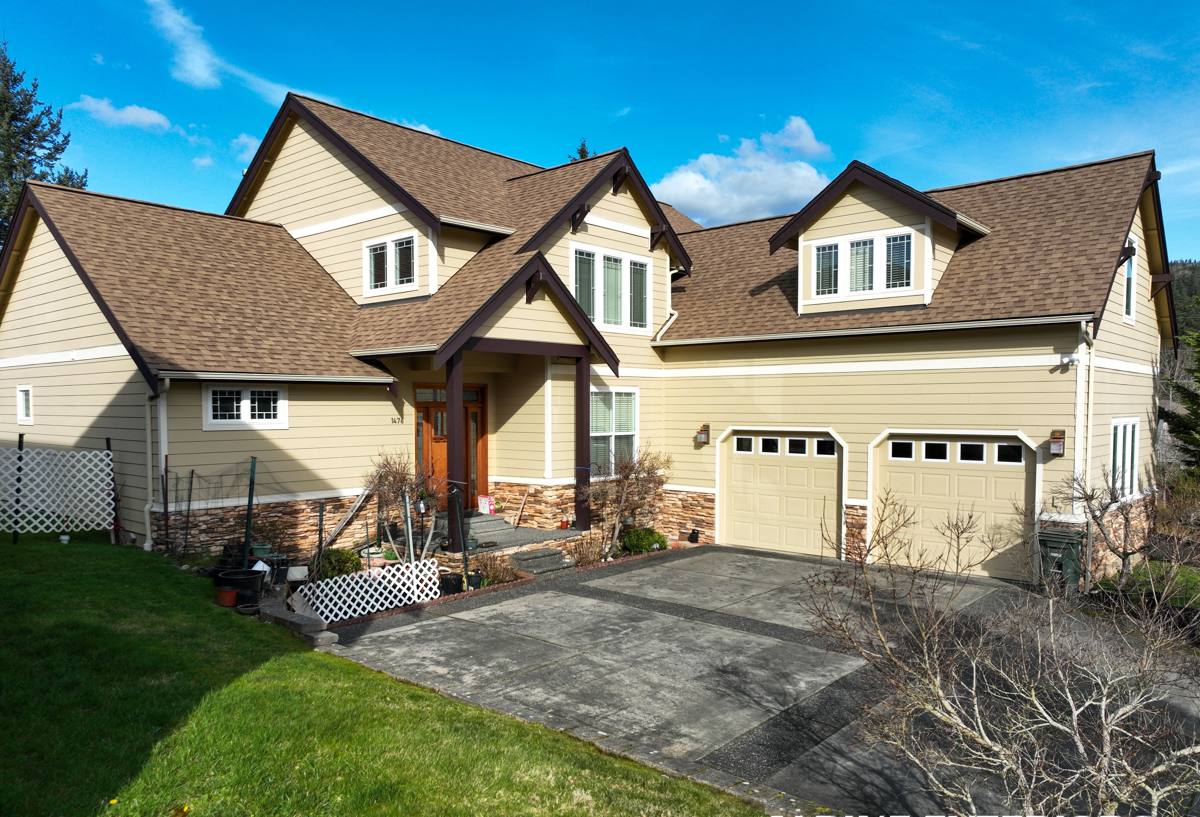
What Board & Batten Siding Actually Is
Board and batten is a two-layer vertical siding system. A wider flat board or panel goes on first, and a narrower strip — the batten — is fastened over each seam between panels. The result is a repeating pattern of raised vertical lines and shadow gaps, which is why it reads as more dimensional and architectural than a flat wall of horizontal lap siding.
There are two ways this gets built in practice:
- Engineered vertical panels — manufactured specifically for this look, with consistent panel width and batten spacing built into the product
- Site-built board and batten — individual flat boards installed as the base layer with battens fastened over each seam by the crew on site
Either method can look correct when it's finished. What determines how it performs over the next fifteen or twenty Manatee County summers is whether the material behind that pattern is dimensionally stable and moisture-resistant, because a style with this many seams and fastener penetrations has very little margin for a substrate that swells, shrinks, or breaks down unevenly.
What Bradenton's Climate Actually Does to This Style
Board and batten has more places for water and sun to work on than flat siding — every batten covers a seam, and every seam is a potential path for moisture if the material or the installation underneath it isn't built for the job. In Southgate, that's not a hypothetical concern. It's a year-round condition made up of a few specific factors:
- Hurricane-force wind that puts direct lateral load on every batten and fastener, particularly during the peak of storm season
- Wind-driven rain that gets forced sideways into seams and laps during summer thunderstorms and tropical systems, rather than simply running down the face of the wall
- Intense, near-constant UV exposure that breaks down unstable coatings and unprotected wood fiber faster here than in most of the country
- Salt air carried inland from Tampa Bay and the Gulf, which accelerates corrosion on fasteners and stresses finishes not formulated for a coastal-influenced climate, even a few miles from the water
- Sustained humidity that keeps a poorly performing material damp for longer stretches between rain events than it would ever see in a drier climate
A board and batten system built from a material that absorbs and releases moisture readily, or that depends on field-applied paint as its main line of defense, is asking that paint film to do a lot of work in a climate that never really lets up on it. Fiber cement doesn't have that weakness by design, which is the core reason we don't build this style out of anything else.
How James Hardie Board & Batten Is Built
James Hardie's HardiePanel vertical siding, installed with HardieTrim battens, is engineered fiber cement — Portland cement, sand, and cellulose fiber cured into a dense, dimensionally stable board. It doesn't swell and contract with humidity the way wood or wood-composite products do, so the panels stay flat and the seams stay tight over years of Florida heat and rain instead of gapping, cupping, or telegraphing movement through the finish.
HZ5 Climate Engineering
James Hardie manufactures regionally specific formulations rather than one product for the whole country. Product sold and installed in our part of Florida is built to the HZ5 specification, engineered for high-humidity, high-moisture-exposure climates. That's a real difference in the mix and manufacturing of the board, not a marketing distinction, and it's why the same-looking siding sold in a dry inland state isn't the product we install here.
ColorPlus Factory Finish
On a style with this many exposed seams and edges, the finish is doing as much work as the substrate. ColorPlus finish is baked on in multiple coats under controlled factory conditions rather than sprayed or brushed on site, which gives it meaningfully better fade and chip resistance than field-applied paint. That matters most on board and batten, where the vertical battens catch direct sun and wind-driven rain at different angles throughout the day.
Non-Combustible Composition
Fiber cement doesn't contribute fuel to a fire the way wood-based siding products can. It's not the primary reason most Southgate homeowners choose board and batten, but it's a real, tangible benefit of building the style in Hardie rather than an engineered wood panel product.
How Our Installation Process Works
Board and batten punishes installation shortcuts more than flat lap siding does, simply because there are more seams and fastener points for water to exploit if something is off. Our process is built around getting each of those details right, in order:
- On-site assessment — we walk the home, check the condition of the existing wall assembly, and identify where board and batten makes sense architecturally versus where lap siding or a different profile is the better fit
- Substrate and moisture barrier check — any existing sheathing damage gets addressed before new siding goes up, since covering a moisture problem never solves it
- Weather-resistant barrier installation — a properly lapped and sealed barrier goes on the wall, not house wrap stapled up and left as-is
- Panel layout and gapping — panels are set with the correct gapping at every butt joint and termination, per James Hardie's published specifications, to allow for expansion without stressing the seams
- Batten fastening — battens are fastened at the spacing and penetration depth James Hardie specifies, secure enough for hurricane-force wind without over-driving fasteners through the material
- Flashing at every transition — window heads, roof-to-wall intersections, and any point where the vertical pattern meets a horizontal element get proper flashing, not caulk alone
- Base clearance — the bottom of the siding is kept above grade, decking, and roofing so it isn't sitting in standing water after a summer storm
- Final inspection and walkthrough — we check seams, fastening, and flashing before calling the job finished, and walk the homeowner through what was done
None of these steps are exclusive to Hardie — they're the difference between a board and batten job that's still tight and dry after a decade of Manatee County storm seasons and one that starts showing problems at the seams within a few years, regardless of what's behind the battens.
Board & Batten Materials Compared
| Material | Moisture Behavior | Finish Durability | Fit for Hurricane Wind Zones |
|---|---|---|---|
| James Hardie fiber cement (panel + trim) | Dimensionally stable; doesn't swell or shrink with humidity | Factory-baked ColorPlus finish resists fade and chipping | Engineered and tested for high-wind installation |
| Engineered wood composite panels | More sensitive to moisture at cut edges and exposed seams | Depends on factory or field coatings with a shorter service life | Varies significantly by manufacturer and product line |
| Primed spruce or cedar boards | Absorbs and releases moisture readily; prone to swelling, cupping, and seam movement | Fully dependent on a repainting maintenance cycle | Not engineered specifically for hurricane wind zones |
| Vinyl board and batten panels | Doesn't absorb water, but flexes and can gap at seams with thermal movement | Color is through-body but can fade and chalk under sustained UV load | Wind rating depends heavily on fastening pattern and panel gauge |
This isn't a claim that every one of these products fails in the field — it's why, for a style with this many seams in a climate like ours, we don't install anything other than Hardie for board and batten work.
Design Considerations for Southgate Homes
Because Southgate's housing stock spans several decades of building styles, board and batten gets used a few different ways depending on the home:
- As a full-elevation treatment on newer construction or a full re-side, where the vertical pattern is the primary siding style
- As an accent on gables, dormers, or a front porch on an older ranch home, paired with HardiePlank lap siding on the main walls
- On a garage face or single feature wall, to add architectural interest without re-siding the whole exterior
Darker, more saturated colors tend to make the shadow lines between battens read more dramatically, while lighter colors give a softer, more uniform look. Because ColorPlus finishes hold their color under sustained Florida UV better than most field-applied paint, this is one of the few siding styles where color choice and long-term appearance are directly connected to the finish system, not just the paint color itself.
What Correct Maintenance Looks Like
A properly installed Hardie board and batten system in Southgate doesn't need the upkeep that wood-based versions of the same look demand. Realistic maintenance is limited to:
- An occasional rinse to clear pollen, general grime, and any salt residue carried in from Tampa Bay or the Gulf
- A visual check after major storms for any battens that may have loosened or flashing that shifted
- Keeping sprinkler heads and landscaping from spraying directly onto the base of the wall
- Touch-up only where something physically damages a panel or batten — not as a routine repainting cycle
There's no annual caulk-and-repaint schedule to keep up with, and the panels aren't feeding termites or holding onto humidity between storms the way wood boards can.
Why a Local Southgate Crew Matters
Board and batten is one of the least forgiving siding styles to get wrong, because a mistake at one seam or one flashing detail doesn't stay isolated — wind-driven rain will find it. A crew that already works Southgate and the surrounding Bradenton area knows what this neighborhood's building stock actually looks like underneath the surface: the age range of the sheathing, the kinds of wall assemblies common to homes built in different decades, and how prior additions or re-roofs sometimes changed the original flashing details. That familiarity shows up in fewer surprises once the old siding comes off, and in a crew that isn't learning Manatee County wind and moisture behavior for the first time on your house.
It also matters for accountability. A local crew is answering to neighbors and repeat referrals in the same community, not moving through the area once and leaving. That's a real, practical reason to favor a contractor who already has a track record in Southgate specifically, rather than one commuting in from outside the county for a single job.
What to Expect From an Estimate
A board and batten estimate on a Southgate home typically covers a few things before any number gets put on paper: an assessment of the existing wall condition, a conversation about where the style fits architecturally on the specific home, and a look at whether it's being used as a full-elevation treatment or an accent. A few practical questions worth asking any contractor before hiring them for this kind of work:
- Are you a certified James Hardie installer, and can you show manufacturer fastening and gapping specifications, not just a general contractor's license?
- How do you handle seam gapping and batten fastener spacing specifically, since that detail matters more here than on flat lap siding?
- What's your approach to flashing at window heads and roof-to-wall transitions?
- Do you inspect the substrate and moisture barrier before new siding goes up, or just install over what's already there?
- Can I see the manufacturer warranty terms in writing before work starts?
If you're considering board and batten for a Southgate home — a full re-side, a gable accent, or a feature wall — we're glad to walk the property, talk through where the style makes sense for your home specifically, and put together a free, no-pressure estimate.