 Bradenton Siding
 Composite Decking for Braden River Homes
Braden River sits inland from the open Gulf, but that doesn't spare it from Manatee County's tougher weather. Homes here still deal with intense year-round UV, long stretches of high humidity, sudden wind-driven rain off summer thunderstorms, and the occasional hurricane-force wind event that puts every fastener, board, and railing post to the test. A deck built for a milder climate simply doesn't hold up the same way out here, which is why composite decking has become the go-to choice for homeowners who want a low-maintenance outdoor space that actually survives a Florida summer.
This page covers what Braden River homes specifically need from a composite deck, what a correctly built one looks like, and how we approach the work from first estimate to final walkthrough.
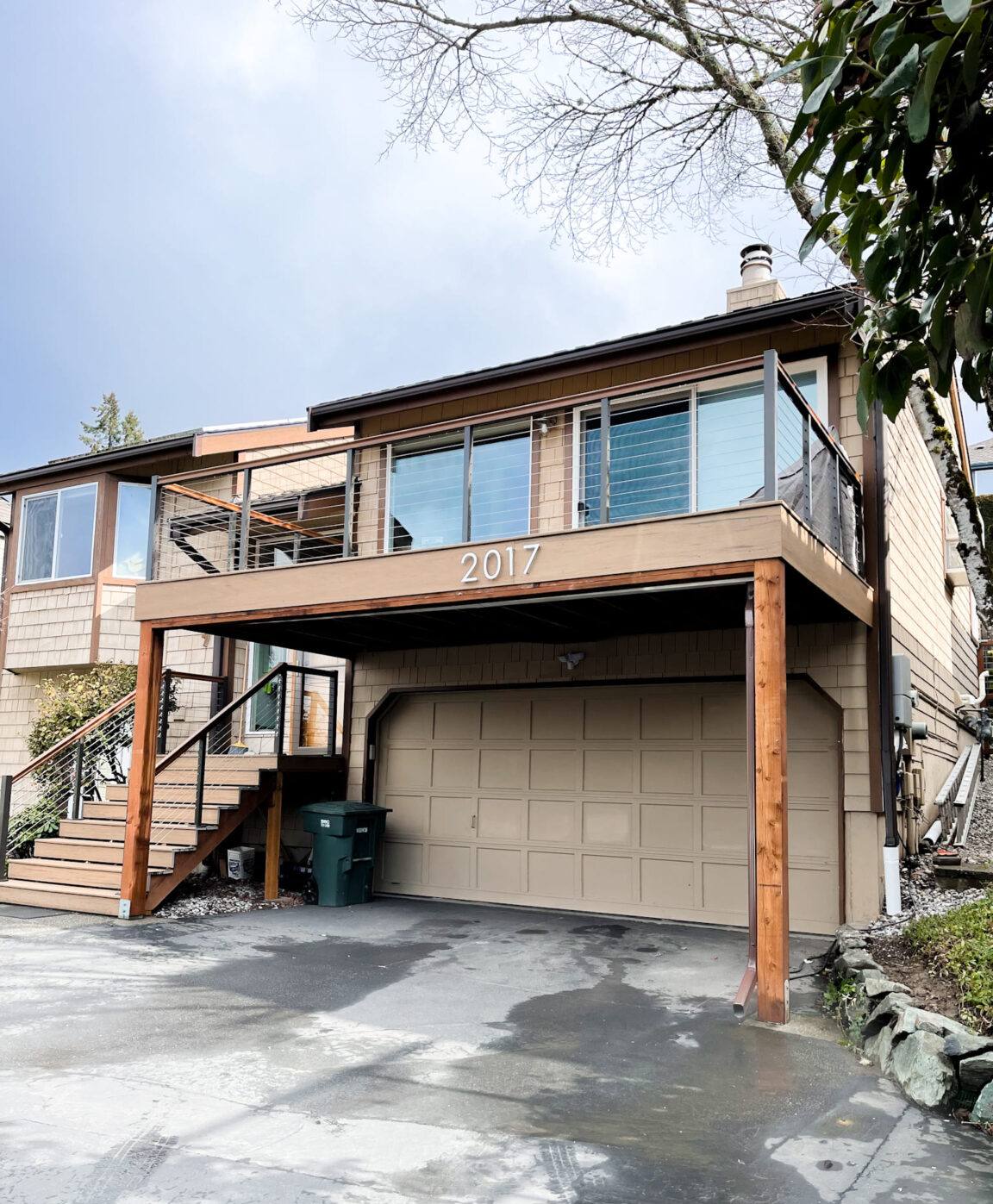
What Braden River's Climate Does to a Deck
UV and Heat
Florida sun is relentless, and a deck faces it every single day, often with little shade depending on lot orientation. Cheap composite boards or poorly finished wood will fade, chalk, or crack under that kind of exposure within a few seasons. Quality composite decking is manufactured with UV inhibitors built into the material itself, not just a surface coating, which is the difference between a deck that still looks good in year five and one that's already gone gray and brittle.
Humidity and Moisture
Manatee County's humidity doesn't let up for most of the year. Wood decking absorbs and releases moisture constantly in that environment, which leads to warping, cupping, and the freeze-thaw-style cracking you'd expect further north but that here comes from expansion and contraction driven by heat and moisture cycling instead. Composite boards are largely inert to that cycle, but the substructure underneath still needs real moisture protection — more on that below, because that's where a lot of decks actually fail.
Storm Wind and Wind-Driven Rain
When a storm rolls through with hurricane-force gusts, a deck's railings, fasteners, and ledger connection are what get tested first. Wind-driven rain also finds its way into any gap or seam that wasn't properly flashed or sealed, which is how rot starts in framing that looks fine from the surface. Building for Braden River means building for that reality, not just for a calm, dry day.
Composite vs. Wood vs. PVC: A Straight Comparison
There's no single "best" decking material for every homeowner, but here's how the common options actually compare for a climate like this one.
| Factor | Wood (Pressure-Treated) | Composite | PVC/Capped Polymer |
|---|---|---|---|
| Upfront cost | Lowest | Mid-range | Highest |
| Maintenance | Annual sealing/staining | Occasional soap-and-water cleaning | Minimal cleaning |
| UV fade resistance | Poor without upkeep | Good, especially capped boards | Very good |
| Moisture behavior | Absorbs, prone to warping/rot | Resists moisture; core matters | Fully moisture-resistant |
| Heat underfoot | Moderate | Can run warm in direct sun | Can run warm in direct sun |
| Typical lifespan | 10–15 years with upkeep | 25–30+ years | 30+ years |
Wood has its place for homeowners who want that specific look and are willing to keep up with sealing on a strict schedule. For most Braden River homeowners who want to actually enjoy their deck rather than maintain it, capped composite hits the best balance of upfront cost, appearance, and how little it asks of you afterward.
What a Correct Composite Decking Installation Involves
Composite boards are only as good as what's underneath them. A lot of decking problems we get called to fix started with a substructure that was never built for this climate in the first place.
Framing and Substructure
Joists and beams need to be sized correctly for the span and load, and every cut end or drilled hole in pressure-treated lumber should get sealed to stop moisture from wicking in. Joist tape over the top of each joist is a small step that prevents a lot of long-term rot, since it keeps standing water from sitting directly against the wood under the deck boards.
Ledger Attachment and Flashing
Where the deck attaches to the house is the single most important structural connection on the whole project, and it's also the most common spot for wind-driven rain to get behind siding or trim if it's flashed poorly. Proper ledger flashing directs water away from the house rather than into the wall assembly.
Fasteners and Hardware
Everything below the decking surface — hangers, bolts, screws — should be corrosion-resistant hardware rated for the environment. This matters more here than in drier climates, since humidity accelerates corrosion on anything undersized or mismatched for pressure-treated lumber.
Board Installation
Composite boards need consistent gapping for expansion, proper fastening (hidden-fastener systems for a clean look, or approved face-screws where called for), and attention to how the boards run relative to the house so water sheets off rather than pooling. Picture-framing the perimeter with a contrasting or complementary border board is a common upgrade that also protects the cut ends of the field boards.
Railings and Guards
Railing posts need to be through-bolted into properly blocked framing, not just screwed to the rim joist. This is a wind-load issue as much as a code issue — a railing that isn't solidly anchored is the first thing to fail in a storm.
Our Process From Estimate to Finished Deck
1. On-Site Assessment
We walk the property, look at the existing structure if there is one, and talk through how you actually plan to use the space — grilling, dining, a pool deck, or just a place to sit outside in the evening.
2. Design and Material Selection
We help you pick a board profile, color, and railing style, and explain the real trade-offs between options rather than steering you toward whatever costs more.
3. Permitting
Deck construction in Manatee County generally requires a permit, and we handle that process rather than leaving it on you. Skipping this step is a common shortcut some contractors take, and it can come back to bite you at resale.
4. Build
Demo of any existing structure if needed, framing, flashing, board installation, and railings — done in that order, with each stage inspected before we move to the next.
5. Final Walkthrough
We walk the finished deck with you, check every rail and stair for solid footing, and go over basic care so you know what to expect from the material going forward.
Why Hiring a Crew That Already Works Braden River Matters
Building codes and wind-load requirements in Manatee County aren't identical to a general statewide standard — inspectors here know what they're looking for, and a crew that already pulls permits and passes inspections locally moves through that process without surprises. That familiarity also shows up in smaller ways: knowing which lots tend to hold more moisture, how afternoon storm patterns affect scheduling, and what kind of shade and sun exposure a typical Braden River yard actually gets through the day. None of that is complicated, but it's the difference between a deck that was built to a generic spec sheet and one that was built for the yard it's actually sitting in.
Maintenance: What Composite Actually Asks of You
One of the main reasons homeowners switch to composite is how little upkeep it needs compared to wood. That said, "low-maintenance" isn't "no-maintenance," and a few habits go a long way in this climate.
- Rinse or sweep off leaves, pollen, and debris regularly so they don't trap moisture against the boards
- Wash with soap and water a few times a year to prevent mildew film, especially in shaded areas
- Keep planters and grills from sitting directly on the boards for extended periods without a protective mat
- Check railing posts and stair connections once or twice a year, especially after a significant storm
- Trim back nearby landscaping so airflow under and around the deck isn't blocked
- Avoid pressure washing at close range or high PSI, which can damage the board surface over time
Cost Factors to Expect
Every deck project is different, but the main variables that move the price are consistent from job to job.
| Factor | Impact on Cost |
|---|---|
| Deck size and shape | Larger and more complex layouts (multi-level, angles) cost more |
| Board tier | Capped composite costs more upfront than basic composite but needs less long-term care |
| Height and stairs | Elevated decks and additional stair runs add framing and railing work |
| Substructure condition | Replacing an existing frame adds cost but is often necessary for a lasting result |
| Railing style | Composite, aluminum, and cable railings each carry different material and labor costs |
We'll walk through these factors with you directly during the estimate so there are no surprises once the work starts — broad ranges only get you so far until we've actually seen the site.
Ready to Talk About Your Deck?
If you're weighing options for a new deck or need to replace one that hasn't held up to Braden River's heat and storms, we're happy to take a look and give you an honest read on what it'll take. Fill out the form below for a free, no-pressure estimate — we'll walk the property, answer your questions, and give you a straightforward plan either way.