 Bradenton Siding
 Why Decks Take a Beating on Bradenton Beach
Bradenton Beach sits on a barrier island, which means it gets the full, unfiltered version of Florida's coastal weather. Salt-laden air moves through the neighborhood constantly, even on calm days, and it settles into every exposed surface a deck has to offer — fasteners, hardware, wood grain, the underside of railings. Add in nearly year-round intense UV exposure and the periodic hurricane-force wind gusts that come through Manatee County during storm season, and you have a structure that's under more stress than a deck built fifty miles inland would ever see.
None of this means a deck can't last on Bradenton Beach. It means the materials, fasteners, and structural details have to be chosen with that exposure in mind from the start. A deck that would hold up fine in a dry inland climate can start showing real problems here in a fraction of the time — rusted fastener heads, soft spots where wind-driven rain has worked its way into end grain, railings that have loosened because the connection hardware corroded faster than anyone expected.
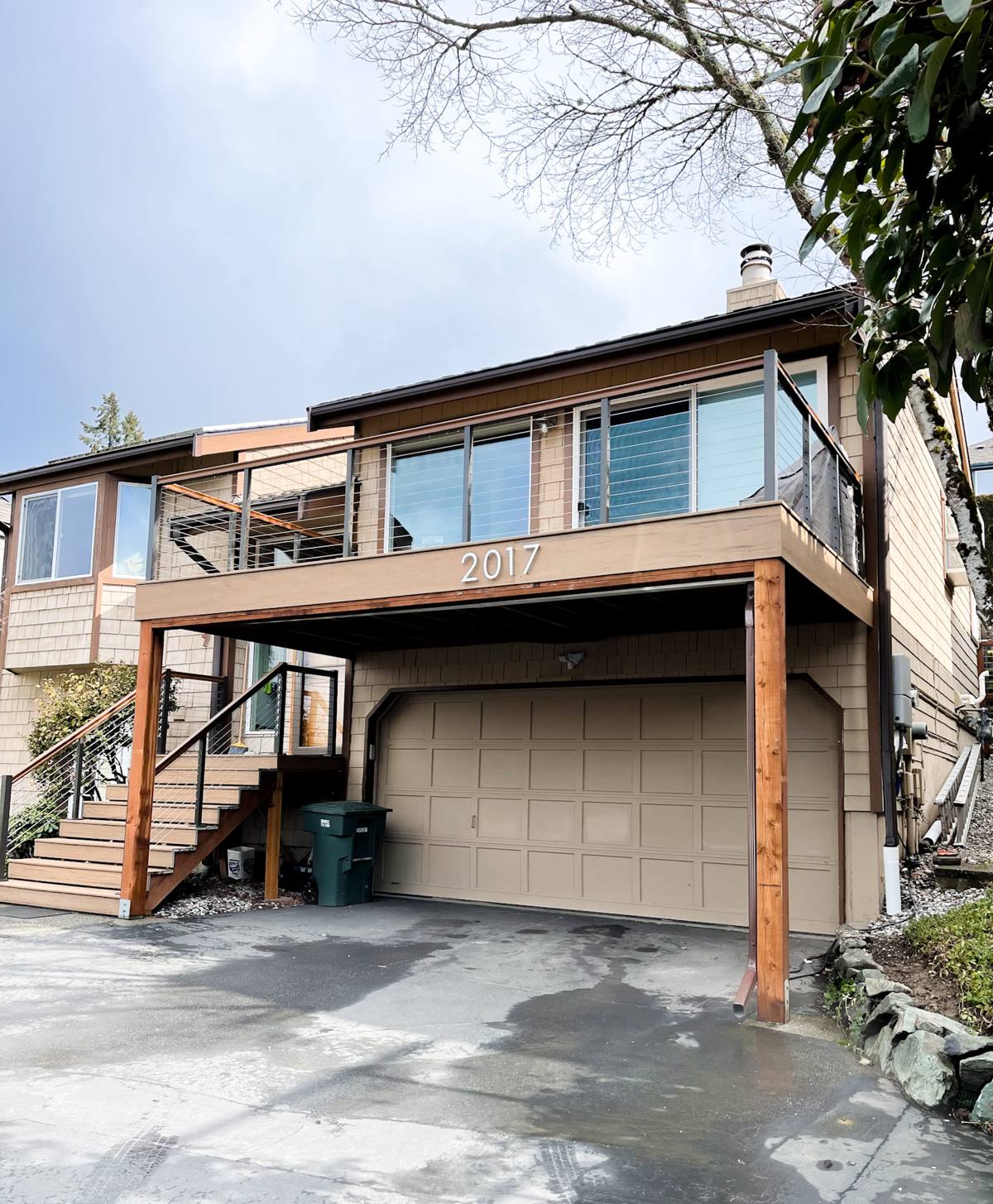
When Repair Isn't Enough
Not every aging deck needs a full teardown. Sometimes a deck's structural bones — the framing, ledger connection, and footings — are still sound, and what's failing is just the surface: worn boards, faded finish, a few loose balusters. That's a repair or resurfacing job, and it's the honest answer when it applies.
Full replacement becomes the right call when the problems have moved past the surface and into the structure itself. On the coast, that usually shows up in a specific pattern.
Signs You're Looking at Replacement, Not a Patch
- Soft, spongy, or spring-feeling spots in the decking or framing underneath
- Rot or staining at the ledger board where the deck attaches to the house
- Fasteners or joist hangers showing heavy rust, bleeding stains, or corrosion
- Visible sagging between support posts, or noticeable movement when you walk across it
- Railings or stair stringers that flex or feel loose even after hardware is tightened
- A deck older than 15-20 years that has never had the substructure inspected
If even one or two of these show up, it's worth having someone look at what's underneath the boards before spending money resurfacing a structure that may not be sound.
Choosing a Decking Material for This Climate
There's no single "best" decking material for every homeowner — it comes down to how much upkeep you want to do, your budget, and how the material actually behaves in salt air and constant sun. Here's how the common options compare for a barrier island property like Bradenton Beach.
| Material | Salt Air / Moisture Behavior | Sun & Fade Resistance | Maintenance | Typical Lifespan |
|---|---|---|---|---|
| Pressure-treated wood | Needs sealed end cuts and regular sealing to resist moisture intrusion | Fades and grays without upkeep; sealing helps | Annual cleaning and resealing recommended | 10-15 years with upkeep |
| Capped composite | Handles moisture and salt exposure well; core is protected by a cap | Good, though uncapped edges can wear over time | Occasional washing, no sealing or staining | 20-25+ years |
| PVC / vinyl decking | Excellent — fully synthetic, doesn't absorb moisture | Very good with quality products | Low; mainly rinsing off salt film and pollen | 25+ years |
| Tropical hardwoods | Naturally dense and moisture-resistant when properly finished | Grays without regular oiling | Regular oiling to maintain color and seal | 20-25 years with diligent care |
Wood costs less upfront but asks more of the homeowner over time — sealing, staining, and watching for the spots where moisture likes to hide, like fastener heads and end grain. Composite and PVC cost more initially but trade ongoing labor for a more predictable maintenance schedule, which matters a lot in a climate that's actively working against painted or sealed wood surfaces year-round. Neither choice is wrong; it's a real trade-off between upfront cost and long-term time investment, and we'll walk through it honestly based on your budget and how you actually use the space.
The Structure Underneath Matters More Than the Boards
A deck's visible surface gets all the attention, but its long-term performance is decided by what's underneath — and that's especially true here, where wind uplift and moisture intrusion are constant factors rather than occasional ones.
What a Correct Rebuild Addresses
The ledger board connection — where the deck attaches to the house — needs proper flashing to keep wind-driven rain from getting behind it and rotting the rim joist. Fasteners and joist hangers should be stainless steel or coated for coastal/high-corrosion exposure, not standard galvanized hardware that can start rusting within a few seasons of steady salt exposure. Footings need to be sized and set to local code depth, and post connections should be engineered to resist uplift, not just downward load, since Manatee County's wind requirements account for the kind of gusts a coastal storm can produce even without a direct hit. Railings and baluster spacing also need to meet current code, which matters both for safety and for passing inspection on a replacement permit.
Permitting and Flood Zone Considerations
Structural deck replacement on Bradenton Beach typically requires a permit through the local building department, and barrier island properties often carry flood zone designations that can affect footing depth, elevation requirements, or how the substructure needs to be built. This isn't a formality to skip — it protects you if you ever sell the home, and it's the difference between a deck that's built to hold up and one that just looks finished. We handle the permitting process as part of the job and will flag anything about your specific lot — flood zone status, setback lines, HOA requirements — that affects the scope before work starts, not after.
How Our Deck Replacement Process Works
- Assessment — We inspect the existing deck from the ground up, including framing, ledger, and footings, and give you an honest read on what's salvageable versus what needs to go.
- Material and design decisions — We walk through decking material, railing style, and layout, with real numbers so you can weigh the trade-offs yourself.
- Permitting — We prepare and submit what's required for your property before demolition starts.
- Removal — Full teardown of the old decking and any compromised framing, footings, or ledger material.
- Structural rebuild — Framing, ledger flashing, footings, and hardware are installed or replaced to current code, using fasteners rated for coastal exposure.
- Decking and railing installation — Boards, stairs, and railings go in to the manufacturer's install specs, which matters for both appearance and warranty coverage.
- Final walkthrough and inspection — We confirm everything passes required inspections and walk the finished deck with you before calling the job done.
Keeping a New Deck in Good Shape in Salt Air
The material you choose determines how much of this list applies to you, but every deck on Bradenton Beach benefits from a basic seasonal routine.
- Rinse the deck surface periodically to clear salt film, especially after wind events off the Gulf
- Check fastener heads and railing hardware once or twice a year for early rust or loosening
- Reseal or restain wood decking on a regular schedule — don't wait until it's visibly gray and dry
- Keep gutters and drainage clear so water isn't dumping onto or under the deck
- Trim back landscaping that traps moisture against framing or footings
- Inspect the ledger board area annually where the deck meets the house
None of this is complicated, but skipping it is how a well-built deck ends up needing structural work years before it should.
Why Local Experience on Bradenton Beach Matters
A deck built for a shaded inland yard and a deck built for an exposed barrier island lot aren't the same project, even if they look similar on paper. A crew that already works Bradenton Beach regularly knows what this specific stretch of coastline does to fasteners, framing, and finishes over time, and builds around it instead of finding out the hard way. That local knowledge also carries into permitting — knowing what the building department expects to see on a coastal deck submission, and what typically comes up during inspection here, which keeps the project moving instead of stalling on avoidable back-and-forth.
If your deck is showing its age, or you're just not sure whether you're looking at a repair or a full replacement, we're happy to take a look and give you a straight answer. Reach out for a free, no-pressure estimate using the form below, and we'll walk the property with you and talk through what actually makes sense for your home.