 Bradenton Siding
 Ellenton sits in Manatee County just north of Bradenton, close enough to the Gulf and the Manatee River that homes here take on the same weather stress as the rest of the coastline. Hurricane-force wind gusts, rain that comes in sideways during a squall instead of falling straight down, salt-laden air, and some of the most intense year-round UV exposure in the country all land on the same set of building components — and windows sit right at the intersection of all four. That's why window replacement in this part of Manatee County is a different job than the same replacement in a drier, calmer inland market, even though the window itself might look identical in a catalog.
A lot of the housing stock in and around Ellenton spans several decades — older homes with original aluminum single-pane windows, mid-generation vinyl units nearing the end of their service life, and newer builder-grade windows that met code when installed but weren't necessarily upgraded with the area's worst-case weather in mind. We work on all of it, and the starting point is always the same: figure out what the existing windows and their openings are actually doing, not just what they look like from the curb.
Why Ellenton Homes Put Extra Demands on Windows
Wind is the most obvious factor, and it's not just the named storms. Manatee County sees sustained tropical-storm and hurricane-strength wind events on a fairly regular cycle, and every one of those puts direct pressure on window frames, glass, and the anchoring that holds a unit in the wall. A window that isn't rated or installed for that load doesn't necessarily fail catastrophically — more often it flexes, leaks, or works its fasteners loose a little more with each event, until a bigger storm finds the weak point.
Wind-driven rain compounds that. Ordinary rain falling straight down rarely tests a window's weatherproofing. Rain pushed horizontally by 40, 60, or 90 mile-per-hour gusts finds every gap in flashing, every degraded sealant joint, and every spot where trim was caulked instead of properly flashed. And salt air, present anywhere near the Gulf and carried further inland by onshore wind, accelerates corrosion on hardware, fasteners, and lower-grade frame components faster than it would happen in a landlocked climate. Add in UV exposure that runs close to year-round rather than seasonal, and vinyl, seals, and weatherstripping age faster here than the same products would in a milder climate — frames chalk, gaskets go brittle, and seals that were fine five years ago can be the reason a window leaks today.
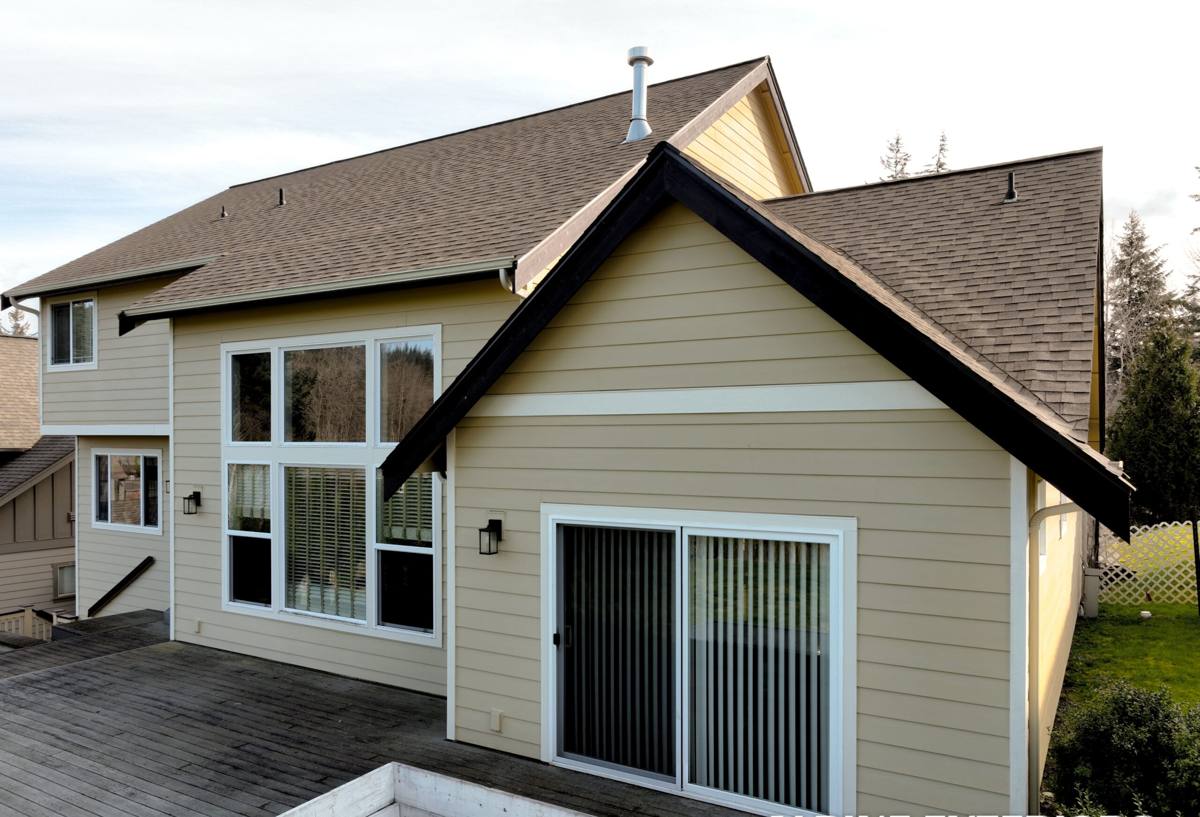
Signs Your Windows Need Replacing, Not Just Repair
Not every window problem in Ellenton calls for full replacement. But a few signs usually mean repair is a temporary patch rather than a real fix:
- Visible fogging or a cloudy haze between double-pane glass — the seal has failed and the insulating gas is gone
- Frames that feel soft, chalky, or show cracking, especially on south- and west-facing exposures that take the most UV
- Difficulty opening, closing, or locking, which often points to a frame that's racked or warped rather than a simple hardware fix
- Visible corrosion on aluminum frames or hardware, common on older coastal-exposed homes
- Drafts or water intrusion during wind-driven rain, even when the window looks closed and latched properly
- Single-pane glass anywhere in the home — it no longer meets what most homeowners expect for energy performance or storm protection
- Visible daylight or gaps around the frame where it meets the wall, a sign the original flashing or sealant has failed
If you're seeing more than one of these, it's usually a sign the window's service life is ending rather than a single fixable issue.
Florida Building Code and Wind Protection: What Applies Here
Manatee County falls inside Florida's wind-borne debris region under the Florida Building Code. That's a different, less restrictive designation than the High-Velocity Hurricane Zone rules that apply specifically to Miami-Dade and Broward Counties, but it still means new and replacement windows in most of this area need to either be impact-rated or paired with code-approved shutter protection, depending on the specific jurisdiction and the home's design wind speed. The exact requirement can vary by permit and by how the local building department applies it to your address, which is one more reason a permit pulled correctly, with the right product approvals on file, matters more here than in a non-coastal market.
Impact-Rated Glass vs. Shutters
Impact-rated windows use laminated glass that's designed to stay intact in its frame even when the outer pane cracks from debris impact, so the opening stays protected without any separate action needed during a storm. Shutters can satisfy the same code requirement at a lower upfront cost, but they require someone to actually deploy them before a storm arrives, and they don't do anything for everyday wind and UV performance the rest of the year. We'll walk through which approach fits your home, your budget, and how much you want storm prep to depend on advance notice and someone being available to put shutters up.
What a Correct Window Replacement Job Involves
Assessment and Measuring
Every job starts with a field measurement of the actual opening, not an assumption based on the window currently in it. We check for square, level, and any signs that the surrounding wall assembly has already taken on moisture damage — something that shows up more often on older Ellenton-area homes than newer construction, simply due to age and years of coastal exposure.
Removal
The old window comes out carefully, and this is usually the point where hidden problems surface — soft framing, rusted anchors, or flashing that was never installed correctly in the first place. We'd rather find that now than have it show up as a leak two years after the new window goes in.
Flashing and Weatherproofing
This is the step that matters most given the exposure here, and it's also the step that's easiest to shortcut if a crew is moving fast. Flashing has to be sequenced so that water is directed out and down, layer over layer, with no reverse laps that let wind-driven rain work its way behind the barrier. On a coastal wind-borne debris property, this detail is doing as much work as the window itself when it comes to keeping a wall assembly dry through a real storm.
Setting, Anchoring, and Sealing
The new window is set plumb and square, anchored per the manufacturer's product approval — which matters for maintaining the window's wind rating — and sealed with materials suited to sustained sun and salt exposure rather than a generic caulk that will chalk and crack within a couple of seasons.
Finish and Trim
Exterior trim is integrated cleanly with the surrounding siding or stucco, and interior finish work is completed so the installation looks intentional, not patched.
Choosing the Right Window for an Ellenton Home
Frame material and glass package both affect how a window holds up here, and the right choice depends on the home, the exposure, and the budget. We'll walk through the honest trade-offs for your specific situation rather than defaulting to whatever's fastest to install.
| Factor | Vinyl | Aluminum | Fiberglass / Composite |
|---|---|---|---|
| Salt air / corrosion resistance | Good — doesn't corrode, but frames can chalk under sustained UV | Lower — prone to pitting and corrosion near the coast without upgraded finishes | Strong — resists corrosion and holds finish well over time |
| UV / heat performance | Can expand and contract with heat; quality varies widely by manufacturer | Conducts heat readily unless thermally broken | Dimensionally stable across Florida's heat swings |
| Impact-rated options | Widely available | Available, often at a higher cost tier | Available, typically at the higher end |
| Maintenance | Low — no painting, occasional cleaning | Moderate — finish and hardware need periodic attention near the coast | Low — durable finish, minimal upkeep |
| Typical cost tier | Lower to mid | Mid | Mid to higher |
What actually moves the price on a given project is fairly consistent: overall size and number of openings, whether the frames are impact-rated or paired with shutters, glass package, and the condition of the existing opening once the old window comes out. We won't quote a number without seeing the openings in person, but we'll walk through which of those factors apply to your home before you commit to anything.
Our Process, Start to Finish
- On-site assessment — we measure each opening, check the condition of the surrounding wall, and confirm what the local permit and wind-borne debris requirements call for at your address
- Honest recommendation — frame material, glass package, and impact-rated vs. shutter-protected, explained with the reasoning behind it, not a default upsell
- Permitting — pulled correctly, with the right product approvals documented, so the finished job passes inspection without issues later
- Removal and opening prep — the old window comes out carefully, and any hidden framing or flashing issues are addressed before the new unit goes in
- Installation, flashing, and sealing — set to manufacturer specifications that preserve the window's wind rating
- Trim and finish — exterior trim integrated to match the home, interior finish completed cleanly
Why a Crew That Already Works in Ellenton Matters
Manufacturer installation guidance is written for average conditions in a moderate climate. It doesn't fully account for what Manatee County actually delivers — hurricane-strength wind events, salt air working on hardware and seals year-round, and UV exposure that runs nearly twelve months a year instead of a few summer weeks. A crew that has actually installed and flashed windows on homes in this specific area knows which parts of that generic guidance are non-negotiable here, and which local permitting details get missed by a crew that doesn't regularly pull permits with this county's building department.
That familiarity shows up in decisions that don't come up in a sales conversation — how a flashing detail needs to change on an older block or frame wall common to this area, which sealants actually hold up through a full Florida summer instead of failing in year two, and how to document a job so it passes inspection the first time rather than getting flagged for missing product approval paperwork.
What to Ask Before Hiring for Window Replacement
- Ask whether the quoted window is actually rated for your address's wind-borne debris requirement, not just "hurricane windows" in general terms
- Confirm current Florida contractor licensing and insurance
- Ask who pulls the permit and confirms the product approval documentation
- Get a written scope covering removal, flashing method, and finish work, not just the window model and price
- Ask how labor and the window unit are each covered under warranty, since they're often separate
- Ask for a realistic installation timeline, including any lead time on impact-rated units
If your windows in Ellenton are showing their age, or you're planning ahead of hurricane season and want to know what impact-rated options make sense for your home, it's worth having someone look at the actual openings before you start comparing quotes. We offer free, no-pressure estimates for window replacement in Ellenton and the surrounding Bradenton area — use the form below to get a time on the schedule.