 Bradenton Siding
 Rosedale's Climate Is Harder on Siding Than Most Homeowners Realize
Rosedale sits inland from Tampa Bay in Manatee County, but "inland" doesn't mean sheltered. Every home here still deals with the same forces that batter the whole Gulf Coast: hurricane-force wind gusts during storm season, wind-driven rain that gets pushed sideways into walls rather than falling straight down, and near-constant, high-intensity UV that starts breaking down cheap exterior materials within a few years of installation. Add in the salt-laden air that drifts inland from the bay and the coast, and you have a combination that punishes any siding product not specifically engineered for it.
Homeowners who move to Rosedale from other parts of the country are often surprised at how fast Florida sun fades paint and how quickly moisture problems show up behind siding that wasn't installed with the right flashing and drainage details. This isn't a defect specific to Rosedale — it's true across Manatee County — but it's exactly why the siding decision matters more here than in a milder climate.
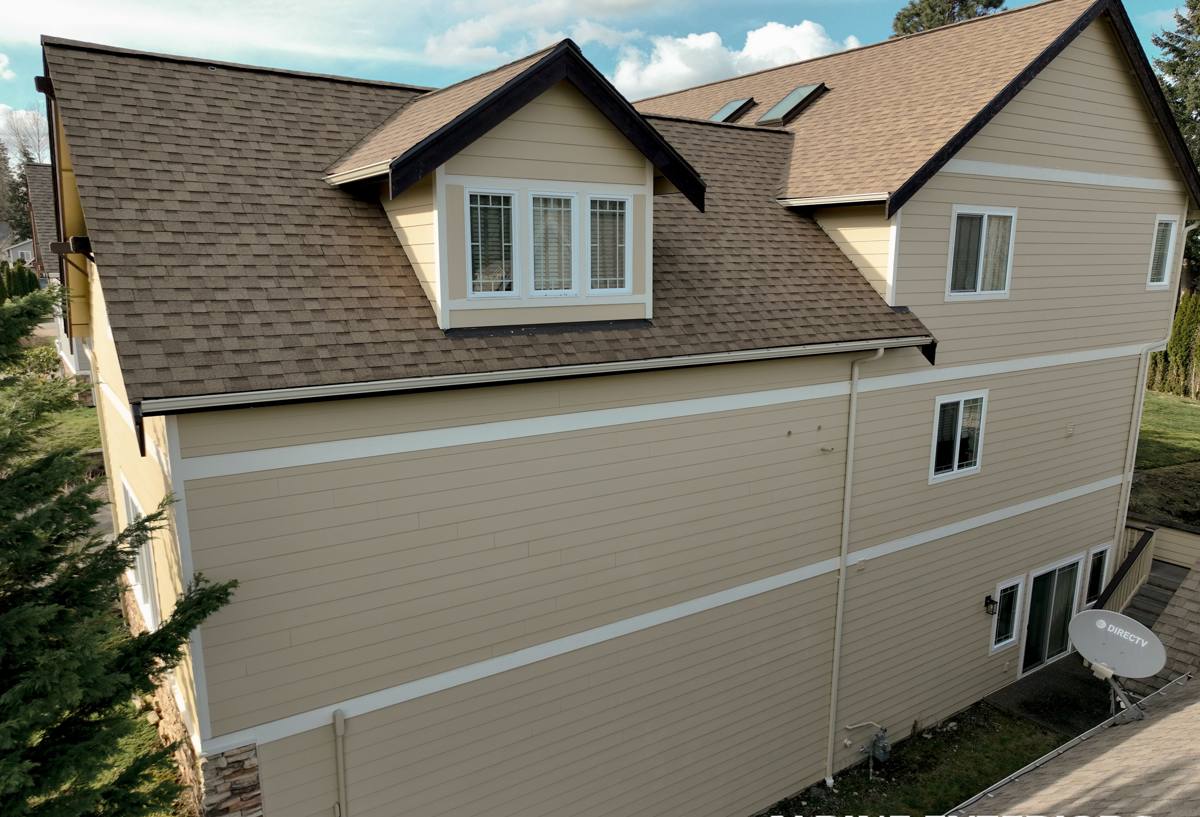
What Fiber Cement Siding Has to Do to Actually Hold Up Here
Fiber cement siding is a strong match for this climate, but only when the product and the installation both account for what the Gulf Coast throws at a house. A correctly specified fiber cement system needs to manage several things at once:
Wind resistance without cracking
Siding on a Rosedale home needs to stay fastened and intact through sustained high winds and the gust loads that come with tropical storms and hurricanes. That means the right fastener type, fastener spacing, and panel engagement — not just "nailing boards to the wall."
Moisture management, not just moisture resistance
Wind-driven rain will find any gap in flashing, caulking, or panel overlap. The siding itself needs to resist water intake, but the assembly behind it — the water-resistive barrier, the flashing at windows and penetrations, the drainage plane — has to give that moisture somewhere to go if it does get behind the cladding.
UV and color stability
Direct, intense sun year-round fades and chalks paint finishes that aren't formulated for it. A siding product that looks great at installation but fades unevenly within a few years creates a maintenance headache the homeowner didn't sign up for.
Salt air tolerance
Airborne salt accelerates corrosion of fasteners and trim hardware and can degrade certain coatings faster than inland climates. Material choice and hardware choice both matter here.
Why We Install Only James Hardie Fiber Cement
We don't install LP SmartSide, vinyl, Cemplank, Allura, or primed wood siding, and we're upfront about why. Each of those products has real strengths, but none of them combine the specific traits Rosedale homes need in one system the way James Hardie does.
James Hardie fiber cement is non-combustible, which matters in a state where lightning-driven brush fires and electrical fires are a real risk. It's engineered in HZ5 formulations specifically for high-humidity, high-moisture Southern climates — the board itself is built to handle the water exposure this region gets, not just tolerate it. Hardie's ColorPlus factory-applied finish is baked on under controlled conditions and holds color far better under sustained UV than field-applied paint, which matters enormously in a market where the sun works on a house nearly every day of the year. And Hardie backs the product with a long, transferable limited warranty on both the substrate and the ColorPlus finish — a warranty that only holds up if the installation itself meets Hardie's published requirements.
That last point is the one homeowners underestimate. Fiber cement siding, including Hardie, is installation-sensitive. The material rewards a crew that follows manufacturer specs on clearances, fastening, and flashing, and it punishes shortcuts. That's true of any premium fiber cement product — it's one more reason we standardized on a single system we install to spec every time, rather than juggling several products with different rules.
What a Correct Installation Actually Involves
A siding job that looks right from the curb can still be wrong underneath. On every Rosedale project, our process covers the details that determine whether the siding performs for decades or causes problems in five years:
- Full removal of failing siding and inspection of the sheathing underneath for rot, moisture damage, or prior water intrusion before anything new goes up
- Correct installation of a water-resistive barrier, lapped and sealed per manufacturer requirements — not just stapled over the old wrap
- Proper flashing at every window, door, and penetration, since these are the most common failure points on any siding job
- Manufacturer-specified fastener type, length, and spacing to hold up under Gulf Coast wind loads
- Correct clearances at grade, roofline, and trim so water has somewhere to drain instead of wicking into the board
- Factory-finished ColorPlus panels handled and cut with the right blades and techniques to protect the finish and the warranty
- A final walkthrough covering caulking, trim details, and cleanup before we consider the job done
Comparing Siding Materials for a Rosedale Home
Homeowners doing their research often ask how fiber cement stacks up against the alternatives. Here's an honest comparison based on how each material actually performs in this climate:
| Material | Wind/impact durability | Moisture behavior | UV/color stability | Combustibility |
|---|---|---|---|---|
| James Hardie fiber cement | High | Engineered for humid climates; needs correct flashing | Factory ColorPlus finish resists fading | Non-combustible |
| Vinyl siding | Moderate; can crack or blow off in high wind | Sheds water but can trap moisture behind panels | Fades and can warp under intense, sustained heat | Combustible |
| LP SmartSide (engineered wood) | Good when installed correctly | Wood-based; sensitive to sustained moisture exposure | Field-applied or factory finish, needs upkeep | Combustible |
| Primed wood/cedar | Moderate | Most moisture-sensitive option; needs frequent repainting | Repaints needed on a regular cycle | Combustible |
This isn't a knock on the other products — each one can be a reasonable choice in the right setting. It's why, given what Rosedale's climate demands, we made fiber cement our standard and Hardie our brand.
What Drives the Cost of a Rosedale Siding Project
Every home is different, but the same handful of factors drive the price on most jobs we quote in this area:
| Factor | Why it matters |
|---|---|
| Tear-off and substrate condition | Hidden rot or moisture damage found once old siding comes off adds repair scope before new siding goes on |
| Home size and wall complexity | More corners, dormers, and trim details mean more labor and more cuts |
| Siding profile and plank width | Lap siding, panel siding, and shingle-style Hardie products carry different material and labor costs |
| Color and finish choice | Factory ColorPlus finishes cost more upfront than primed boards but eliminate a repaint cycle |
| Trim, soffit, and fascia scope | Full exterior packages cost more than a siding-only job but avoid mismatched materials down the line |
We give every Rosedale homeowner a written estimate that breaks these factors down rather than a single vague number, so you know what you're actually paying for.
Signs a Rosedale Home May Need New Siding Soon
Siding failure is usually gradual, and by the time it's obvious from the street, there's often already moisture damage underneath. Watch for:
- Visible cracking, warping, or buckling in siding panels or boards
- Paint that's peeling, bubbling, or chalking heavily to the touch
- Soft spots, discoloration, or a musty smell near exterior walls, especially near windows
- Siding that flexes or feels hollow when pressed
- Rising utility bills that may point to compromised insulation behind failing siding
- Visible gaps at seams, corners, or trim where caulking has failed
If you're seeing any of these, it's worth having someone look at it before the next storm season rather than after.
Why It Matters That We Already Work in This Area
Manatee County's permitting requirements, wind-load standards, and inspection expectations aren't identical to neighboring counties, and a crew that regularly works Rosedale and the surrounding Bradenton area already knows how those pieces fit together. That familiarity shows up in small but real ways — knowing how local HOA architectural guidelines typically handle siding color and material changes, understanding how homes in this area were built and what's commonly hiding behind the existing siding, and being able to schedule around this region's storm season rather than working against it.
It also means we're not learning Hardie's installation requirements on your house. We install one fiber cement system, to one set of manufacturer specs, on every job — which is exactly the kind of consistency that protects both the performance of the siding and the warranty behind it.
Get a Straight Answer About Your Rosedale Home
If your siding is showing its age, or you're planning ahead of the next storm season, we're happy to take a look and give you an honest read on what your home actually needs — no pressure, no inflated scope. Request a free estimate using the form below and we'll walk you through your options in plain terms.