 Bradenton Siding
 What Samoset Homes Actually Need From Their Siding
Samoset sits in the Bradenton area of Manatee County, and like the rest of this stretch of the Gulf Coast, homes here take on a combination of stresses that a lot of siding products simply weren't built for. Hurricane-force wind isn't a rare event to plan around loosely — it's a design condition. Add in year-round UV intensity, wind-driven rain that gets pushed sideways into laps and seams during summer storms, and salt-laden air drifting in off the coast, and you have an exterior envelope that's under near-constant load in a way that siding in a milder climate never has to deal with.
That combination is why we don't treat siding as a cosmetic decision for homes in this area. The material underneath the color and profile determines whether a siding job holds up for decades or starts showing problems within a handful of storm seasons. This page covers what Samoset's climate actually does to siding, what a correct fiber cement installation involves, and why we install James Hardie exclusively rather than offering a menu of cheaper alternatives.
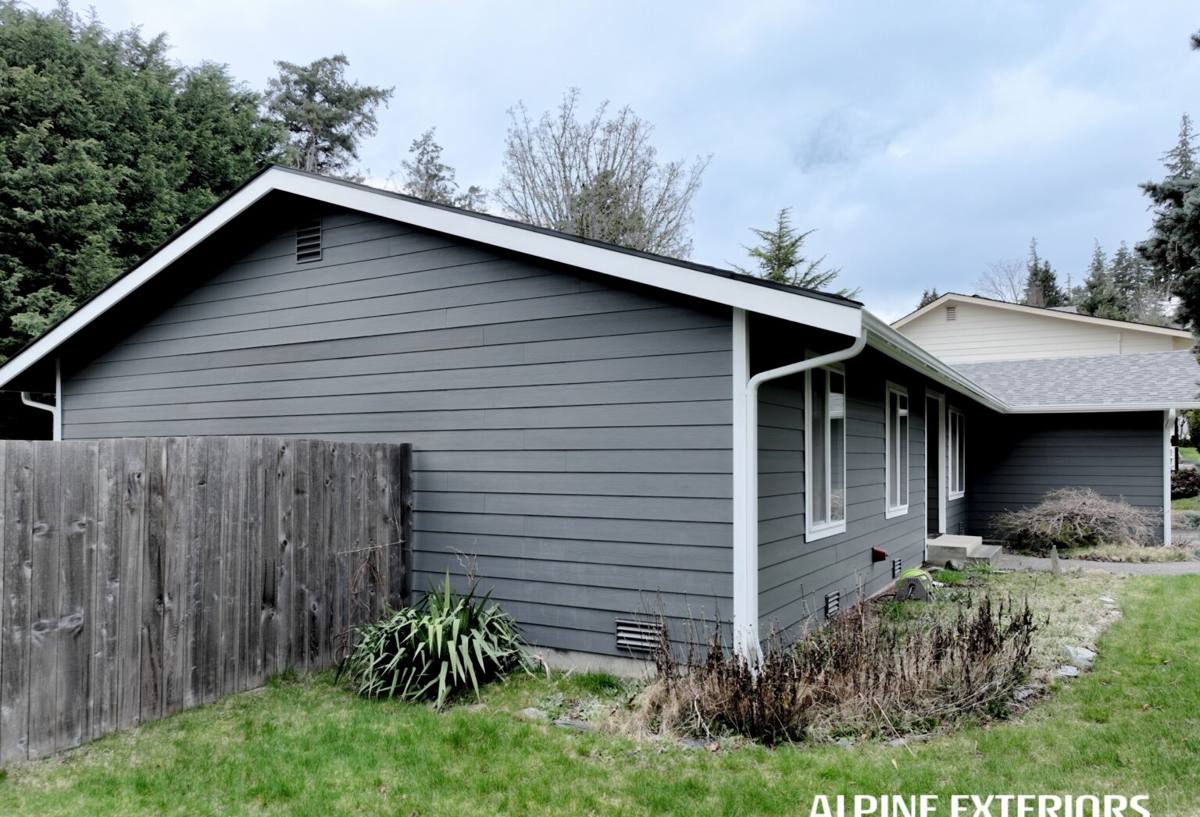
What Samoset's Climate Actually Does to Siding
Hurricane-Force Wind and Wind-Driven Rain
Wind doesn't just push against a wall — it drives rain sideways into every lap, seam, and fastener penetration on a home's exterior. Siding that isn't fastened and lapped correctly for high-wind conditions can let water behind the cladding long before any damage is visible from the street, and material that isn't dimensionally stable can loosen at the fasteners after repeated wind loading over several storm seasons.
Year-Round UV Intensity
Florida's sun exposure is among the most intense in the country, and it doesn't ease up in the winter the way it does farther north. UV breaks down unstabilized coatings and finishes over time, which is why field-applied paint on siding tends to chalk, fade, and need repainting on a shorter cycle here than almost anywhere else. A finish that isn't engineered for this UV load is fighting a losing battle from the day it's applied.
Salt Air and Humidity
Samoset isn't a barrier island, but salt-laden air still travels well inland along this part of the Gulf Coast, and it settles into exposed surfaces and fasteners continuously, not just during storms. Combined with Manatee County's humidity, that salt exposure accelerates corrosion on metal components and keeps moisture-sensitive materials damp longer between rain events than they'd stay in a drier climate.
A Mix of Older and Newer Homes
Whether a Samoset home is an older build with its original siding or a newer construction, the climate factors above apply the same way. Older siding that's reached the end of its service life often shows it first at the seams and fastener points, while newer homes benefit most from getting the material choice right the first time, since a re-side is a bigger project than most homeowners want to repeat.
Why We Install Only James Hardie Fiber Cement
We install James Hardie fiber cement siding exclusively — not vinyl, not LP SmartSide, not primed wood, not other fiber cement brands. That's a deliberate standard, not a limited product menu. Fiber cement as a category, done right, resists the specific stresses described above better than the alternatives, and James Hardie's engineering and finish system are what we've found actually hold up to years of Gulf Coast weather rather than just the marketing photos.
HZ5 Engineering for Gulf Coast Humidity
James Hardie manufactures siding in different formulations for different climate zones. Homes in our region receive the HZ5 product line, engineered specifically for high-humidity, high-moisture-exposure conditions. That's a real manufacturing difference, not a label — the formulation sold here is built to handle the rain and humidity load Manatee County actually sees, rather than a generic version of the product.
ColorPlus Factory Finish
Instead of relying on field-applied paint that has to fight Florida's UV load from day one, James Hardie's ColorPlus finish is baked on in a controlled factory environment through multiple coats. It resists fading and chipping far longer than paint applied on site after installation, which matters most on a home that's going to sit under this much sun for most of the year.
Non-Combustible Material
Fiber cement is made from Portland cement, sand, and cellulose fiber, and it doesn't burn the way wood-based siding products can. That's a meaningful difference in wildfire-adjacent conditions and simply a sound long-term material property for a home's exterior, independent of storm and sun exposure.
What a Correct Fiber Cement Installation Involves
Fiber cement siding performs the way it's supposed to only when it's installed to the manufacturer's actual specifications. A correct installation for a Samoset home includes:
- A properly lapped and sealed weather-resistant barrier behind the siding, not house wrap stapled up and left as-is
- Correct fastener type, spacing, and penetration depth, matched to James Hardie's published fastening schedule for our wind zone
- Proper panel and plank gapping at all butt joints and terminations to allow for expansion and contraction without stressing seams
- Flashing at every horizontal transition — window heads, roof-to-wall intersections, and any point where trim meets the field of the siding
- Correct clearance at the base of the wall, keeping siding above grade, decking, and roofing so it isn't sitting in standing water
- Caulking used only where James Hardie specifies it, not as a substitute for proper flashing and gapping elsewhere
- Corrosion-resistant fastener hardware suited to a salt-air environment, not standard-grade fasteners that corrode faster near the coast
None of these steps show up as a problem on day one. They show up two, five, or ten years later — as a soft spot behind the siding, a seam that's opened up, or a fastener that's corroded enough to stain the panel around it. Getting them right the first time is the difference between a siding job that lasts and one that needs premature repair.
How Our Process Works
We start with a site visit to look at the actual condition of the home — existing siding and substrate condition if it's a replacement, sun exposure through the day, drainage around the foundation, and any areas that have already shown signs of moisture or wind damage. From there we talk through the James Hardie product line and color options that fit the home's style and the homeowner's budget.
Permitting in Manatee County generally follows Florida's coastal construction and wind-load requirements under the state building code, and we handle that permitting process as part of the job rather than leaving it for the homeowner to sort out. Once permitted, the installation follows the sequence above — weather barrier and flashing details first, since those are the parts that get covered up and can't be checked later, then the fiber cement siding itself, trim, and any finish work. We close out with a walkthrough covering what upkeep the specific product and color you chose actually needs.
James Hardie Fiber Cement Compared to Other Siding Materials
| Material | Wind & Storm Performance | Finish Durability in FL Sun | Moisture Behavior |
|---|---|---|---|
| James Hardie fiber cement | Engineered and rated for high-wind installation | Factory-baked ColorPlus finish, resists fade and chip | Dimensionally stable; doesn't swell or rot |
| Vinyl siding | Wind rating depends heavily on gauge and fastening pattern | Color is through-body but can fade and chalk under sustained UV | Doesn't absorb water but can warp under heat and impact |
| LP SmartSide / engineered wood | Varies by product line and fastening detail | Relies on factory or field coatings with a shorter service life than ColorPlus | More moisture-sensitive at cut edges and seams than fiber cement |
| Primed spruce or cedar | Not engineered specifically for hurricane wind zones | Fully dependent on a repainting maintenance cycle | Absorbs and releases moisture readily; prone to swelling and rot |
This isn't a claim that every alternative fails on every home. It's why, given what Samoset's climate does to an exterior over years rather than months, we standardized on James Hardie fiber cement rather than offering a lower-cost option we don't think holds up the same way here.
What Fiber Cement Siding Still Needs From You
Fiber cement is low-maintenance compared to wood or vinyl, not maintenance-free. A little routine attention keeps it performing the way it's designed to:
- Rinse the surface periodically to clear salt residue, pollen, and general grime before it builds up on the finish
- Walk the exterior after major storms to check for any loosened panels, opened seams, or shifted flashing
- Keep irrigation and landscaping from spraying directly onto the base of the wall
- Address any signs of moisture behind the siding right away — that's a structural issue, not a cosmetic one, and it doesn't improve by waiting
Why Hiring a Crew That Already Works Samoset Matters
A contractor who mostly works inland, milder climates can still install fiber cement siding competently on paper, but a Samoset job has variables that don't come up as often elsewhere — wind load requirements tied to coastal exposure, permitting that follows Manatee County's specific process, and salt and humidity conditions that punish shortcuts faster than a drier climate would. Working this area regularly means we're not learning those requirements on your project. We know what fastener grade actually holds up here, how the local permitting process runs, and which details actually matter versus which are just upsells.
That familiarity also shows up in the smaller decisions — knowing which James Hardie colors and profiles fit the look of homes in this area, and giving a straight answer about what a siding project realistically needs rather than padding the scope.
Get a Straight Answer About Your Siding
Whether your Samoset home needs a full re-side, repair to a section that's taken storm or moisture damage, or you just want an honest read on the condition of what's currently on the walls, we're happy to walk the property and lay out the options plainly. Reach out below for a free, no-pressure estimate.