 Bradenton Siding
 Siding Built for Palmetto's Coastal Climate
Palmetto sits along the Manatee River, close enough to the Gulf that salt-laden air, wind-driven rain, and long stretches of direct sun are simply part of daily life for anyone who owns a home here. Add in Manatee County's exposure to tropical storms and hurricane-force wind events, and you have a climate that is genuinely hard on exterior building materials. Siding here isn't just a cosmetic layer — it's the first line of defense against water intrusion, wind pressure, and UV breakdown, year after year.
Homes in Palmetto and the surrounding Bradenton area take on a different kind of wear than siding installed inland or up north. Salt air accelerates corrosion of fasteners and hardware. Intense, near-constant UV exposure fades and embrittles lower-grade materials faster than manufacturers' glossy brochures suggest. And when a named storm or a strong seasonal squall rolls through, siding has to hold up against sustained wind loads and flying debris, not just an afternoon shower. Choosing the right siding material and installing it correctly is not optional in this zip code — it's the difference between a wall system that shrugs off two decades of Gulf Coast weather and one that needs constant patching.
Why We Install Only James Hardie Fiber Cement
Our company made a deliberate decision to install James Hardie fiber cement siding exclusively — no vinyl, no LP SmartSide, no primed wood, no other fiber cement brands. That's not a marketing gimmick; it's a standard we hold because of what we've seen matter in real installations across this region.
Fiber cement is non-combustible, which matters in a state where lightning-sparked brush fires are a real if infrequent risk. It doesn't warp, rot, or attract wood-boring insects the way untreated or primed wood trim can. And because James Hardie engineers specific product lines for humid, high-UV, storm-prone climates (marketed as their HZ5 formulation for the Southeast), the boards installed on a Palmetto home are formulated differently than siding sold in a dry inland climate. That's an engineering distinction, not a sales pitch — moisture and heat behave differently here than they do in Ohio or Colorado, and the product should be matched to the environment it's going into.
James Hardie's ColorPlus factory-applied finish is baked on under controlled conditions, which gives it more consistent UV resistance than field-applied paint. That matters enormously in a market with this much annual sun exposure. We'll go into color and finish details further down, but the short version is: factory-cured finish holds color longer under Gulf Coast sun than most site-painted alternatives.
What We Don't Install, and Why
We get asked from time to time about vinyl siding, LP SmartSide (an engineered wood product), Cemplank or Allura (other fiber cement brands), and primed wood or cedar siding. Each of those has genuine strengths — vinyl is inexpensive and low-maintenance in mild climates, engineered wood has a warmer look, other fiber cement brands are chemically similar to Hardie. But we've standardized on one product line so we can guarantee installation quality, warranty support, and color-matching consistency for every job we take on in this market. Spreading a crew thin across five different siding systems means being an expert in none of them. We chose to be excellent at one.
What Palmetto Homes Specifically Need From Their Siding
Every coastal Manatee County home has to deal with the same three stressors, just in different proportions depending on lot orientation, tree cover, and proximity to open water:
- Wind resistance: Siding needs a fastening schedule and installation method rated for the wind loads this area sees, not just a generic nail pattern.
- Water management: Wind-driven rain gets pushed sideways and upward under eaves and around penetrations. Flashing details and rain-screen gaps matter as much as the siding board itself.
- UV and salt exposure: Southern and western-facing walls in particular take a beating from sun; homes closer to the river or Gulf shoreline see more airborne salt on top of that.
A siding job that ignores any one of these three isn't built for Palmetto — it's built for somewhere else and happens to be installed here.
What a Correct Fiber Cement Installation Actually Involves
Fiber cement is a forgiving material when it's installed right and an unforgiving one when it isn't. James Hardie publishes detailed installation specifications, and following them is what separates a siding job that lasts from one that fails early — usually at the fastener points, the seams, or the flashing.
Key Installation Details We Hold Ourselves To
- Correct fastener type, spacing, and embedment depth — under-driven or over-driven nails are one of the most common causes of early failure.
- Proper clearance between siding and roofline, deck surfaces, and grade to prevent wicking moisture from the ground or roof runoff.
- Weather-resistive barrier and flashing integration at every window, door, and penetration — this is where most water intrusion problems actually originate, not through the siding face itself.
- Correct joint treatment and caulking at butt seams, using materials rated for the Florida climate.
- Painting or finishing exposed cut edges in the field, since factory finish only covers the manufactured face.
- Following manufacturer-specified overlap and gapping so panels can handle thermal movement without buckling.
None of this is exotic. It's disciplined, by-the-spec work. But skipping any one of these steps is exactly how a fiber cement installation ends up with the moisture problems the material is supposed to prevent in the first place.
Our Process for a Palmetto Fiber Cement Project
We approach every siding job in this area the same structured way, because a rushed or improvised process is where problems creep in.
- On-site assessment: We walk the exterior, check existing siding condition, look at sheathing and moisture barrier condition where accessible, and note wind exposure by elevation.
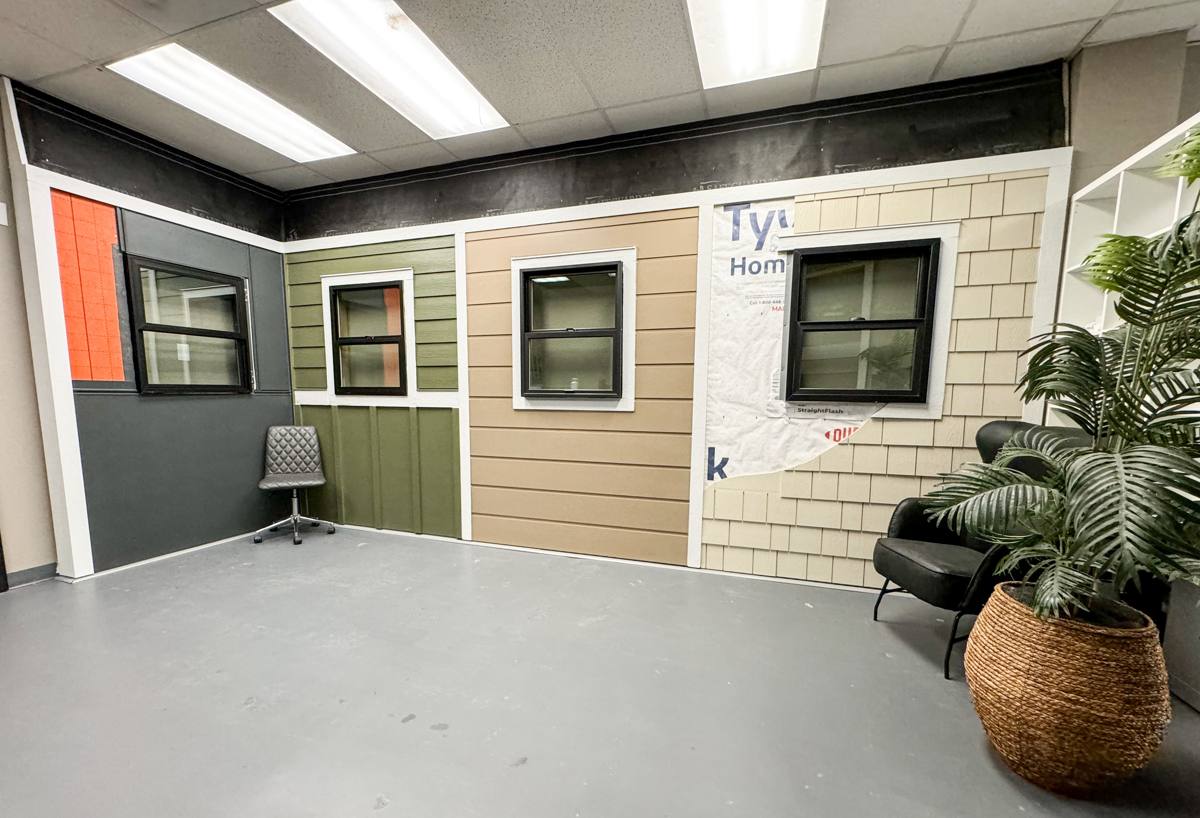
- Product and color selection: We help you choose the right James Hardie board profile (lap, shingle-style panel, or vertical) and ColorPlus finish for your home's style and HOA requirements, if applicable.
- Tear-off and substrate check: Old siding comes off, and we inspect the sheathing underneath for rot or water damage before anything new goes up — covering a damaged substrate just hides a bigger problem.
- Weather barrier and flashing installation: This is the layer that actually keeps water out long-term; the siding itself is largely cosmetic and wind protection on top of a correctly built water management system.
- Siding installation to manufacturer spec: Fastening, spacing, and joint details are followed to James Hardie's published requirements, not shortcuts.
- Trim, caulking, and final finish work: Cut-edge sealing, caulking, and detail work at corners and openings.
- Final walkthrough: We review the finished work with you before calling the job complete.
Comparing Siding Options for Manatee County Conditions
| Factor | James Hardie Fiber Cement | Vinyl | Engineered Wood / Primed Wood |
|---|---|---|---|
| Wind resistance | Rated for high-wind installation when installed to spec | Can deform or detach under sustained high wind | Adequate but panel and fastener sensitive |
| UV / fade resistance | Factory-baked ColorPlus finish resists fading | Can fade and become brittle under intense, sustained sun | Field-applied paint fades faster and needs recoating |
| Moisture / salt air tolerance | Non-combustible, dimensionally stable, moisture-resistant core | Doesn't rot but can warp; seams can loosen over time | Vulnerable to moisture absorption if finish is compromised |
| Maintenance burden | Occasional caulk/paint touch-up at cut edges and trim | Low maintenance but limited repair options once damaged | Regular repainting and moisture monitoring required |
| Fire classification | Non-combustible | Combustible | Combustible |
This isn't a claim that other materials are unusable — plenty of homes across Florida wear vinyl or engineered wood without incident. It's a summary of the trade-offs that led our company to standardize on one product for the conditions we see in this specific market.
Color, Style, and HOA Considerations in Palmetto
James Hardie's ColorPlus palette runs from classic coastal whites and soft neutrals to deeper, more saturated tones, and the factory finish is engineered to hold up under Florida sun better than most site-applied paint jobs. If your neighborhood has an HOA or architectural review board — common in many Bradenton-area communities — we can help you select a compliant color and profile before ordering materials, which avoids delays once the project starts.
Lap siding remains the most common choice for traditional home styles in this area, while vertical panel and shingle-style Hardie products are popular for accent areas, gables, or homes going for a more coastal or craftsman look.
What to Check Before Hiring Any Siding Contractor Here
Because Palmetto and greater Bradenton see enough storm and moisture stress to expose bad workmanship quickly, it's worth being deliberate about who you hire. A short checklist:
- Are they licensed and insured to do exterior work in Florida, and can they show proof without hesitation?
- Do they have experience specifically with James Hardie fiber cement, not just siding in general?
- Will they inspect and address sheathing or moisture barrier issues before covering them up?
- Do they follow manufacturer fastening and flashing specifications, or improvise based on "how we've always done it"?
- Can they explain their warranty coverage — both material and labor — in plain terms?
- Do they have a track record of jobs specifically in Manatee County, where wind and salt exposure are part of the equation?
A crew that already works this specific area understands things a traveling or inland contractor simply won't have internalized — how wind behaves around river-adjacent lots, how quickly cut edges need to be sealed in this humidity, and how HOA review timelines in local communities typically run. That local familiarity translates directly into fewer surprises during the project.
Warranty and Long-Term Value
James Hardie backs its fiber cement products with a transferable limited warranty, and ColorPlus finishes carry their own separate finish warranty — details vary by product line, and we'll walk you through the specifics that apply to your home before you sign anything. Beyond the manufacturer warranty, our own workmanship guarantee covers the installation itself, because a great product installed poorly is still a poor outcome. For a coastal Manatee County home, that combination of climate-engineered material and installation accountability is what actually determines whether siding looks and performs well in year fifteen, not just year one.
If you're considering new siding for a home in Palmetto or anywhere in the greater Bradenton area, we're happy to take a look and give you a straightforward, no-pressure estimate — no obligation, just an honest read on what your home needs.