 Bradenton Siding
 Why Anna Maria Island Decks Wear Out Faster Than Inland Ones
A deck on Anna Maria Island lives a harder life than one ten miles inland in Bradenton. The barrier island sits directly in the path of salt-laden air coming off the Gulf, and that salt settles into every exposed surface — fasteners, framing connectors, railing hardware, and the wood or composite decking itself. Add in the intense, near-constant Florida UV exposure, frequent wind-driven rain that gets pushed sideways under railings and through gaps in the decking, and the occasional direct hit from hurricane-force wind, and you have a structure that's being attacked from every angle, every season.
None of this means a deck can't last on Anna Maria Island — plenty do, for decades. It means the materials, fasteners, and workmanship have to be matched to that environment from the start, and that ongoing wear needs to be caught and repaired before it becomes a structural problem. That's the gap we see most often: decks that were built to a standard that works fine in a drier, inland climate, quietly failing faster near the water because nobody accounted for the salt air.
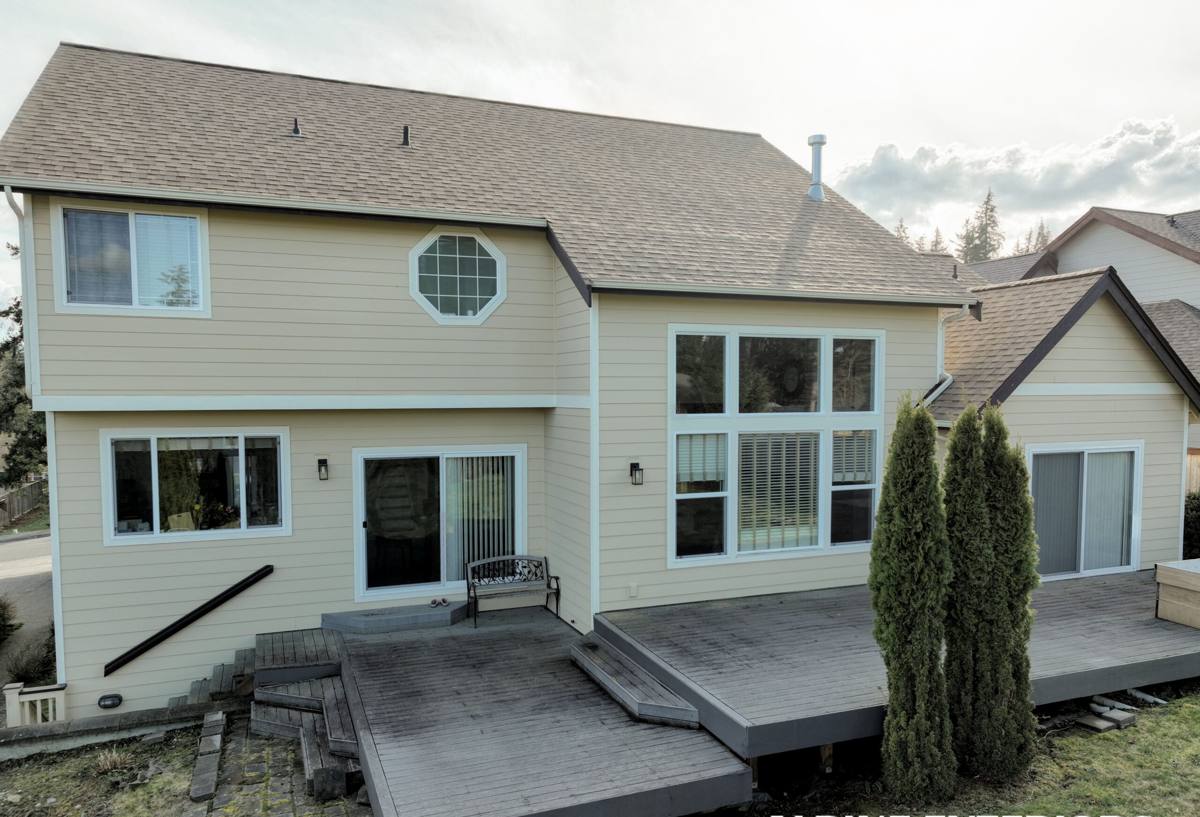
The Repairs We're Called Out for Most on the Island
Fastener and Hardware Corrosion
This is the single most common issue on barrier island decks. Screws, nails, joist hangers, and post bases that aren't rated for coastal exposure begin corroding within a few years — sometimes faster if they were installed near the water side of a property. Corroded fasteners lose their grip strength long before the wood around them looks bad, which is what makes this problem dangerous: the deck can look fine on the surface while the connections holding it together are quietly failing underneath.
Ledger Board and Attachment Point Rot
Where the deck attaches to the house is the highest-risk area on almost any deck, and even more so here because of how much moisture gets driven against exterior walls during storms. If the ledger board wasn't properly flashed when the deck was built, water works its way behind it and rots the framing from the inside — often invisible until the deck starts to feel spongy or pulls slightly away from the house.
Sun-Damaged and Splitting Boards
Year-round UV breaks down the surface fibers of wood decking and, over time, the outer layer of many composite products too. Boards cup, crack, or split, and screw heads that were countersunk flush can start to pop as the wood around them shrinks and swells with humidity cycles.
Storm-Loosened Railings and Stairs
Railings take the brunt of wind loads during storms, and repeated flexing loosens post connections over time even without a direct hit. Stair stringers and treads see similar stress, plus extra wear from sand and grit tracked up from the beach.
Signs Your Deck Needs Attention
Most deck failures don't happen suddenly — they show warning signs for months or years first. Walk your deck periodically and check for these:
- Boards that feel soft, spongy, or flex more than they used to underfoot
- Railings or posts that wiggle or feel less rigid than before
- Rust streaks bleeding from screw heads or connector hardware
- Visible gaps or separation where the deck meets the house
- Nails or screw heads standing proud of the board surface
- Cracking, splitting, or graying that goes beyond surface weathering
- A musty smell near the ledger board or under low-clearance sections
- Stair treads that feel loose or stringers that show cracking
Any one of these is worth a call. Several together usually mean the deck needs a proper structural inspection, not just a cosmetic fix.
What a Correct Deck Repair Actually Involves
A repair that's done right starts below the surface, not on top of it. Replacing a cracked board without checking the joist underneath it just delays the real problem. Our approach on every repair call includes:
1. Structural Inspection First
Before any board gets touched, we check the framing — joists, beams, posts, and especially the ledger board connection to the house. This is where we catch the problems that aren't visible from the top of the deck.
2. Fastener and Hardware Assessment
We check the condition of every connector we can access — joist hangers, post bases, railing brackets — and replace anything showing corrosion with hardware rated for coastal, salt-air exposure. Using the same standard-grade fasteners that failed the first time just resets the clock on the same problem.
3. Moisture Path Correction
If rot is present at the ledger board or another attachment point, we address the flashing and water path, not just the rotted wood. Replacing rotted framing without fixing why it got wet in the first place means the repair fails again on the same timeline.
4. Matched or Compatible Materials
Where we're replacing boards, we match species and dimension as closely as possible, or discuss honestly with you where an upgrade makes more sense than an exact match.
5. Final Structural Check
Before we call a repair done, we recheck the sections we worked on and the connections around them under load — not just a visual look, but actually testing that the fix holds.
Wood vs. Composite: Repair Considerations
What your deck is built from changes how a repair should be approached. Here's how the two most common decking types compare when it comes to island-condition repairs:
| Factor | Wood Decking | Composite Decking |
|---|---|---|
| Salt air impact | Accelerates surface weathering and fastener corrosion around it | Surface holds up well; fasteners and hidden framing still at risk |
| UV damage pattern | Graying, splitting, raised grain over time | Slight fading; some early products chalk or scratch more visibly |
| Repair board matching | Can usually match species and stain over time | Discontinued colors/profiles can be hard to match exactly |
| Underlying frame risk | Same structural risk as any deck — often higher if untreated lumber was used | Same structural risk — composite decking does not protect the frame beneath it |
| Typical repair cost driver | Board and fastener replacement, ledger/framing work if present | Board replacement often pricier per unit; framing work costs the same as wood |
The important point in both cases: the decking surface is not what keeps you safe. The framing underneath is doing the structural work, regardless of what material sits on top, and that framing needs the same scrutiny either way.
Repair or Replace? What Actually Drives That Decision
Not every damaged deck needs to be torn out. The decision usually comes down to a few honest questions we walk through with you on site:
- Is the damage isolated to a few boards and connections, or spread across the structure?
- Is the framing itself sound, or has rot reached the joists and beams?
- How old is the deck relative to its expected service life in this climate?
- Was it built to current hurricane wind-load and attachment standards?
- Does the repair cost approach what a partial or full rebuild would cost?
We'll tell you plainly if a repair is the right call or if you're better off putting that money toward a rebuild instead of patching a structure that will keep presenting problems. That's a judgment call we make based on what we find, not on what's easiest for us to sell.
Our Process, Start to Finish
We keep the process straightforward because deck repair doesn't need to be complicated when it's done by people who've done it many times on this island:
- On-site inspection of the full structure — decking, framing, connections, and attachment points
- A clear explanation of what we found, what's causing it, and what it will take to fix
- A written scope and estimate before any work begins, with repair-vs-replace options if relevant
- Repair work performed with fasteners and materials suited to coastal exposure, not builder-grade defaults
- Final walkthrough with you so you know exactly what was done and what to watch for going forward
Keeping a Repaired Deck in Good Shape
Once a deck is repaired properly, a little seasonal attention goes a long way on Anna Maria Island. Rinsing salt residue off decking and hardware periodically, keeping an eye on fastener heads and railing connections after major storms, and not waiting on soft spots or loose railings all extend the life of the repair. A deck that gets checked twice a year catches small problems while they're still small — and small problems are the ones that don't turn into framing replacements.
Why It Matters to Hire a Crew That Already Works This Island
Anna Maria Island isn't a typical Manatee County job site. Material and equipment logistics, bridge access, and the realities of working on a barrier island all factor into scheduling and how a job gets done efficiently. More importantly, a crew that regularly works homes here already knows what coastal exposure does to fasteners, framing, and decking over time — that's not something you learn from a general contracting background inland. We bring that experience to every repair, along with straight answers about what your deck actually needs and what it doesn't.
If you've noticed soft boards, loose railings, or rust stains on your Anna Maria Island deck, we're happy to take a look and give you an honest assessment. Fill out the form below for a free, no-pressure estimate — there's no obligation, just a clear picture of what's going on and what it would take to fix it right.