 Bradenton Siding
 Siding Replacement Built for Palmetto's Coastal Climate
Palmetto sits where the Manatee River meets Tampa Bay, and that location comes with a specific set of demands on a home's exterior. Between hurricane-force winds during storm season, intense year-round UV exposure, wind-driven rain that finds every gap in a wall assembly, and salt air drifting in off the water, siding here works harder than it would almost anywhere inland. When siding starts to fail in Palmetto, it's rarely one single cause — it's usually the cumulative effect of all four factors acting on a material that wasn't built to take that kind of punishment for the long haul.
This page is about one service, done right, in one place: full siding replacement for homes in and around Palmetto. Not a patch job, not a repair-and-hope approach — a correctly engineered replacement that accounts for what this specific stretch of Manatee County throws at a house.
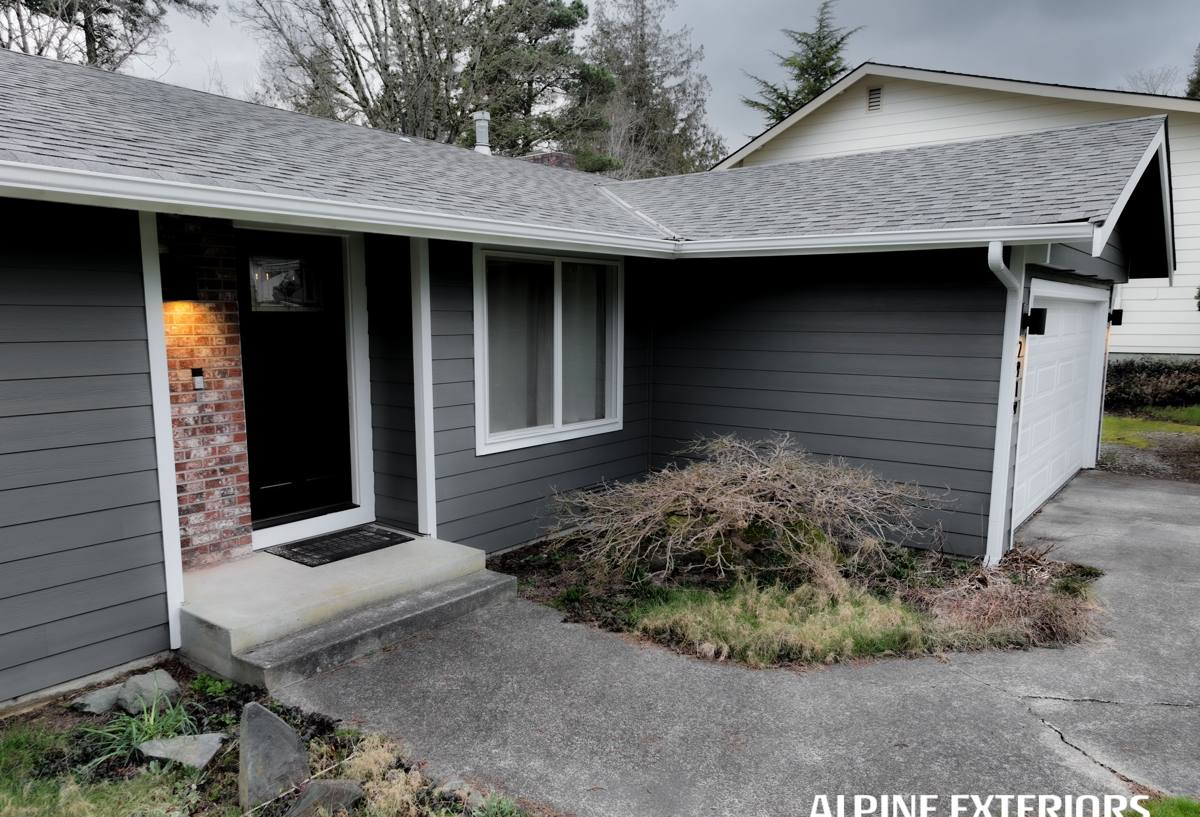
What Palmetto Homes Actually Need From New Siding
A lot of siding failure we see isn't really a "bad siding" problem — it's a mismatch between the product and the environment it was installed in. Palmetto homes need a few things that not every siding product can deliver together:
- Wind resistance that holds up to code and beyond. Manatee County sits in a high-velocity hurricane zone, and siding has to stay fastened and intact through sustained wind events, not just look fine on a calm day.
- Dimensional stability under constant humidity swings. Materials that expand, contract, or absorb moisture cyclically loosen fasteners and open seams over time.
- UV-stable finish. Florida sun is relentless nearly twelve months a year. A finish that chalks, fades, or breaks down under UV starts looking tired within a few years, not a decade.
- Resistance to salt-laden air. Proximity to the bay means airborne salt settles on exterior surfaces and accelerates corrosion of fasteners and degradation of lesser finishes.
- Real moisture management behind the cladding, not just a water-resistant face — because wind-driven rain during a tropical system pushes water sideways and upward, not just down.
Signs a Palmetto Home Needs Replacement, Not Repair
When Patching Stops Making Sense
Repair has its place for isolated damage — a cracked panel from debris impact, for example. But once a home shows several of the following, patching individual sections usually costs more over time than a full replacement done once, correctly:
- Soft or spongy spots when pressed, especially near the bottom courses or window trim
- Visible warping, buckling, or panels pulling away from the wall
- Paint that won't hold no matter how often it's redone
- Persistent staining or streaking that suggests water is getting behind the siding
- Siding that's original to a home 20+ years old, particularly wood-based or older composite products not engineered for this climate
If moisture has been getting behind the siding for any length of time, there's also a real chance the sheathing or framing underneath has damage that won't show up until the old siding comes off. That's actually one of the advantages of full replacement — it's the one point in a home's life where the crew can see and address what's really going on behind the wall, not just what's visible from the street.
Why We Only Install James Hardie Fiber Cement
We install one siding product on every home we work on in Palmetto: James Hardie fiber cement. That's not a marketing preference — it's a standard we hold because of what we've seen this climate do to alternatives.
Vinyl siding is affordable and easy to install, and for a lot of markets it's a reasonable choice. But in intense, sustained Florida sun it can soften, warp, or become brittle over the years, and in a serious wind event it's more prone to cracking or blowing off than fiber cement. Wood-based products like cedar or primed spruce look good initially but need consistent maintenance to fight rot and insect damage in a humid coastal environment, and that maintenance burden only grows over time. Engineered wood siding (LP SmartSide) improved on solid wood in some ways, but it's still an organic, wood-strand product — if moisture gets past the finish, it's vulnerable to swelling and edge deterioration in exactly the kind of humid, wind-driven-rain climate Palmetto sits in.
James Hardie fiber cement is non-combustible, doesn't rot, resists pests, and holds its shape in heat and humidity because it isn't an organic material to begin with. Hardie's ColorPlus factory finish is baked on and UV-cured specifically to resist the fading and chalking that plagues field-applied paint in intense sun. Hardie also engineers HZ5 product lines specifically for high-humidity, moisture-prone climates like Florida's — this isn't a one-size-fits-all product shipped the same way to every region of the country. Backed by a strong, transferable manufacturer warranty and a track record of holding up when installed to spec, it's the product we're willing to put our name behind.
What a Correct Installation Actually Involves
Fiber cement siding is only as good as the installation behind it. The product itself resists the elements, but the assembly underneath is what actually keeps water out of the wall. A correct Hardie installation in a coastal wind zone like Palmetto includes:
Moisture and Weather Barrier
A continuous water-resistive barrier goes on before any siding, with all seams properly lapped and taped so water is directed out and down, not trapped against the sheathing.
Flashing at Every Penetration
Windows, doors, vents, and any other wall penetration get proper flashing so wind-driven rain can't work its way behind the siding at those vulnerable points — this is where most water intrusion problems actually start.
Correct Fastening for Wind Zone
Fastener type, spacing, and embedment have to match both the manufacturer's specifications and the local wind-load requirements for Manatee County. Under-fastened siding is one of the most common causes of wind failure in storm events, and it's invisible from the ground once the job's finished.
Proper Clearances and Gaps
Hardie specifies minimum clearances from grade, roofing, and adjoining surfaces, along with expansion gaps at joints. Skipping these details doesn't show up as a problem on day one — it shows up two or three years later as trapped moisture or cracked caulk joints.
Our Replacement Process
| Step | What Happens |
|---|---|
| Inspection & Estimate | We walk the exterior, check for hidden moisture or sheathing damage, and give an honest assessment of what the job actually requires |
| Tear-Off | Old siding is removed and the sheathing underneath is inspected — any rot or damage found here is addressed before anything new goes up |
| Weather Barrier & Flashing | New water-resistive barrier and flashing are installed at every window, door, and penetration |
| Hardie Installation | Fiber cement siding and trim are installed to manufacturer spec and local wind-load requirements |
| Finish & Cleanup | Caulking, touch-up, and full site cleanup — job debris and old material hauled off |
Cost Factors for Palmetto Siding Replacement
Every home is different, so we don't quote sight unseen, but the main factors that move the price on a replacement job are consistent:
| Factor | Why It Matters |
|---|---|
| Home size & wall complexity | More square footage and more corners, gables, or architectural detail mean more material and labor |
| Extent of hidden damage | Rotted sheathing or framing found during tear-off has to be repaired before new siding goes on |
| Hardie product line & profile | Lap siding, shingle-style panels, and board-and-batten each have different material and install costs |
| Trim & detail work | Window and door trim, fascia, and soffit work add labor beyond the flat wall areas |
| Access & site conditions | Multi-story sections, tight lot lines, or landscaping that limits equipment access affect labor time |
Why Hiring a Crew That Already Works Palmetto Matters
Local experience isn't a nice-to-have on a job like this — it changes outcomes. A crew that regularly works in Manatee County already knows the wind-load requirements the local building department enforces, understands what permitting looks like for this jurisdiction, and has seen firsthand how different assemblies actually hold up a few miles from the bay versus further inland. That familiarity shows up in details a first-time or out-of-area crew is more likely to miss — fastening schedules, flashing details around openings, and product selection that actually matches this specific environment rather than a generic install.
It also matters for accountability. A contractor with an ongoing presence in the Palmetto and greater Bradenton area has a reputation to maintain in the community they're working in, which is a different incentive than a crew that's in and out of town on a single job.
What to Check Before Hiring Anyone for Siding Replacement
- Florida contractor license, verifiable and current
- Proof of liability insurance and workers' compensation coverage
- Manufacturer training or certification on the specific siding product being installed
- A written scope of work that specifies product line, fastening method, and flashing details — not just "siding replacement"
- Clarity on who pulls the permit and handles inspections
- A real local address and history of jobs in the area, not just a phone number
Ready for a Straight Answer on Your Palmetto Home
If your siding is showing its age, or you just want an honest read on whether repair or replacement makes more sense for your home, we're glad to take a look. We'll walk the exterior, tell you what we actually see, and put together a clear estimate — no pressure, no upsell. The form below gets you started.