 Bradenton Siding
 Roof Repair Built for a Bay-Side Manatee County Neighborhood
Bayshore Gardens sits close to Sarasota Bay, just outside Bradenton, which means roofs here take on a different combination of stress than roofs a few miles inland. You get the open water breeze, the salt content that rides in on it, direct year-round Florida sun, and the same tropical storm exposure every coastal Manatee County community deals with. A roof repair here isn't just patching a leak — it's addressing the specific way this location wears a roof down. This page covers what that looks like in practice, what a correct repair actually involves, and why it pays to hire a crew that already understands the conditions instead of one learning on your roof.
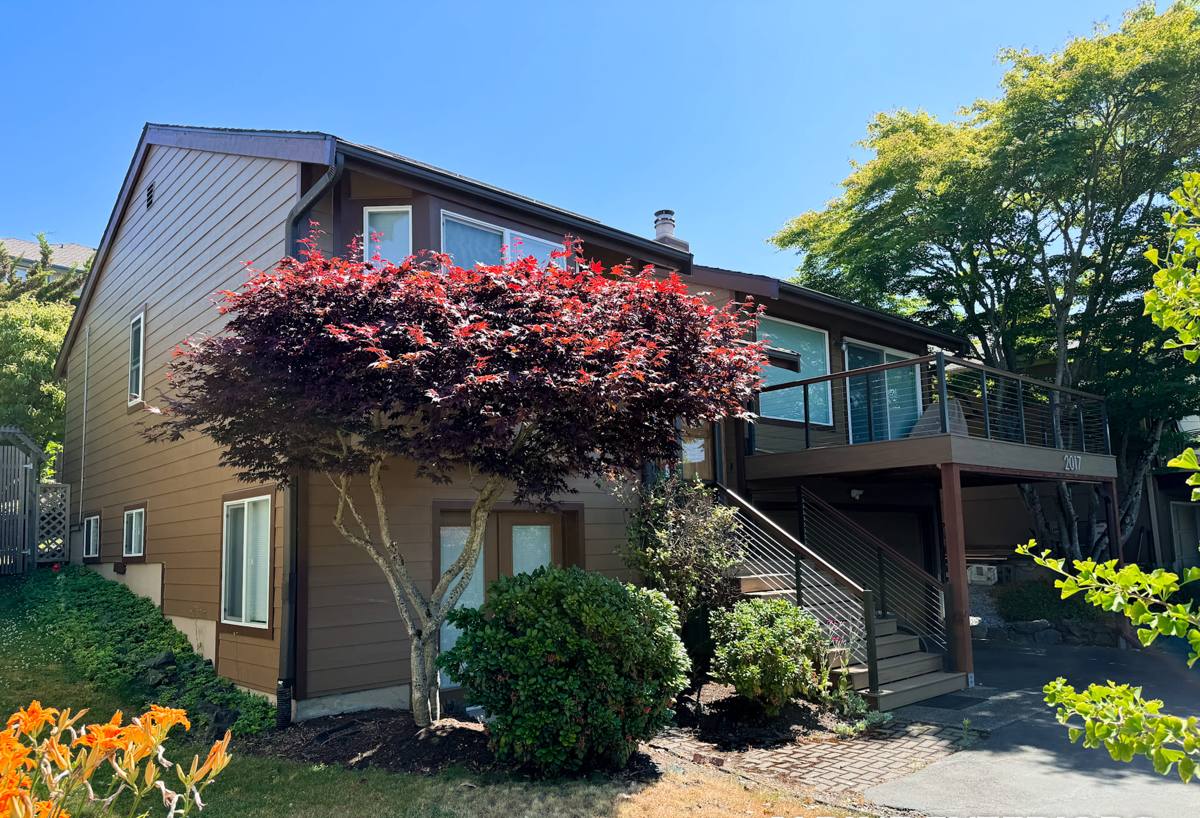
What Bayshore Gardens Roofs Are Up Against
Every roof in this part of Florida faces the same broad list of stressors, but proximity to the water changes how fast each one does damage. Understanding the mechanism behind the wear helps explain why the repair matters, not just the symptom.
Sun and Heat
Nearly year-round UV exposure breaks down asphalt shingle granules, dries out sealant strips, and accelerates the aging of underlayment faster than roofs see in most of the country. Once granule loss exposes the asphalt mat underneath, that section of roof ages at a much faster rate than the rest of the field.
Wind and Storms
Manatee County sits in a wind-borne debris and hurricane-exposure zone under Florida's building code, and gusts don't need to reach named-storm strength to do damage. Repeated wind events loosen shingle tabs, work nail fasteners loose, and lift flashing edges a little more each time — damage that often isn't visible from the ground until it's already let water in.
Salt Air
Being close to Sarasota Bay means airborne salt settles on the roof surface and on any exposed metal — flashing, fasteners, vent stacks, drip edge. Salt accelerates corrosion on lower-grade metal components and can degrade sealants faster than the same materials would wear a few miles inland.
Wind-Driven Rain
Florida storms rarely fall straight down. Wind-driven rain gets pushed sideways and upward under shingle tabs, around vent boots, and into flashing laps that would stay dry in a calmer climate. Most of the "mystery leaks" we get called out for trace back to a wind-driven rain entry point, not a hole in the roof itself.
The Roof Repairs We See Most Often in This Area
- Lifted or missing shingles after wind events, especially along ridge lines and roof edges where uplift pressure is highest
- Cracked or brittle pipe boots — the rubber collar around plumbing vents is usually the first thing to fail from UV exposure
- Flashing separation at chimneys, walls, and roof-to-wall transitions, often loosened gradually by repeated wind flex
- Nail pops and fastener corrosion that create small gaps water can work through over time
- Granule loss and soft spots from sun exposure, particularly on south- and west-facing slopes
- Valley leaks where two roof planes meet and debris or aged underlayment lets water track sideways instead of down
- Soffit and fascia water staining that signals a leak has been active longer than the visible ceiling stain suggests
What a Correct Roof Repair Actually Involves
A roof repair done right is a diagnostic process before it's a fix. Slapping sealant over a stain is not a repair — it's a delay. Here's what should happen for the repair to actually hold.
Find the Real Entry Point
Water travels. A stain on a ceiling is rarely directly below the actual leak — it can run several feet along a rafter or underlayment layer before it drips through drywall. A correct repair starts by tracing the path back to the source, not just treating where the damage showed up.
Check the Layer Under the Shingle
Underlayment and decking condition matter as much as the shingles themselves. If water has been getting in for a while, the plywood decking underneath may be soft or delaminating, and the underlayment may already be compromised beyond the immediate area. A surface patch over damaged decking will fail again.
Match Materials, Not Just Color
Shingle repairs should use compatible materials — same profile, comparable weight, and fasteners rated for the wind zone — so the patched section performs the same as the surrounding roof instead of becoming the next weak point.
Reseal and Re-flash Properly
Flashing and pipe boots that get disturbed during a repair need to go back correctly, not just get resealed on top. A bead of sealant over failing flashing buys a season, not years.
Our Repair Process, Step by Step
- Inspection — a full look at the roof surface, not just the reported leak area, including flashing, vents, valleys, and edges
- Diagnosis — identifying the actual entry point and checking decking and underlayment condition where accessible
- Honest estimate — a written scope covering what needs repair, what's optional, and what to keep an eye on going forward
- The repair itself — matched materials, correct fastening for our wind exposure, and flashing detail done to hold, not just seal
- Cleanup and walkthrough — job site cleared of debris and nails, and a plain explanation of what was done and why
We don't upsell a full replacement when a repair is the right call, and we don't quietly under-scope a repair on a roof that's genuinely past the point where patching makes sense. We'll tell you which situation you're in.
Repair or Replace: How to Tell
Not every roof problem near Sarasota Bay calls for a full replacement, but some do. This is a general guide — every roof gets evaluated on its own condition, not by age alone.
| Situation | Repair usually makes sense | Replacement usually makes sense |
|---|---|---|
| Damage extent | Isolated to one section or a few spots | Spread across multiple slopes or recurring in new areas |
| Roof age | Under roughly 15 years, asphalt shingle | Nearing or past manufacturer-rated lifespan |
| Decking condition | Solid, no soft spots found | Widespread soft decking or rot discovered |
| Granule loss | Localized to the damaged area | Widespread across most of the roof surface |
| Storm history | One-off wind or debris damage | Multiple storm cycles with cumulative fastener and flashing wear |
What Repair Costs Depend On
We don't publish flat repair prices because the honest answer is "it depends," but these are the real factors that move the number, so an estimate makes sense when you get one.
| Factor | Why it matters |
|---|---|
| Size of the damaged area | A single shingle section costs far less than a full slope re-cover |
| Roof pitch and access | Steeper or harder-to-reach roofs take longer and require more safety setup |
| Decking condition | Rotted or soft decking has to be replaced before shingles go back down, adding material and labor |
| Material match | Matching an older or discontinued shingle line can cost more, or require a color-blend compromise |
| Flashing scope | Chimney, wall, and valley flashing work is more labor-intensive than field shingle repair |
Why Hiring a Crew That Already Works in Bayshore Gardens Matters
A roofer who regularly works this part of Manatee County already knows what to expect before climbing the ladder. That's not a small thing on a repair call.
- Familiarity with the wind and salt exposure typical of neighborhoods close to the bay, so the crew isn't guessing at why a roof is failing faster than its age would suggest
- Working knowledge of Florida and Manatee County wind-uplift and fastening requirements, so a repair doesn't become a code problem later — including at resale or insurance inspection
- Faster response after regional storm events, when demand for repairs spikes across the whole area and being local means less time on the road and more time on your roof
- A track record of return customers in the community, which is a stronger accountability check than a one-time out-of-town crew ever has
Bradenton and the surrounding bay-side neighborhoods share a climate profile, but they don't all age roofs the same way — tree cover, sun exposure, and proximity to open water all shift the timeline. A crew that works this specific area regularly calibrates repairs to how Bayshore Gardens roofs actually behave, not a generic statewide average.
Roof Repair Checklist: Signs You Shouldn't Ignore
- Ceiling stains that appear or grow after a rain event, even a minor one
- Shingles that look curled, cracked, or are missing granules in patches
- Visible daylight or gaps around vent boots, chimneys, or roof-to-wall flashing
- Granules collecting in gutters or at downspout outlets
- Soft or spongy spots when walking the roof (leave this to a professional, not a DIY check)
- A musty smell in the attic, which often shows up before any visible ceiling stain does
- Any roof damage after a storm, even if no active leak has shown up yet
Catching any of these early is almost always cheaper than waiting for a ceiling stain to force the issue, since decking and insulation damage compound the longer a small leak runs unaddressed.
Get a Straight Answer on Your Roof
If you're dealing with a leak, storm damage, or just want a second opinion on a roof issue near Bayshore Gardens, we're glad to take a look. The estimate is free, there's no pressure to book anything on the spot, and if a repair is the right call instead of a full replacement, that's exactly what we'll recommend. Fill out the form below and we'll get back to you to schedule a time.