 Bradenton Siding
 Why Longboat Key Roofs Age Differently
Longboat Key sits out on a barrier island between the Gulf of Mexico and Sarasota Bay, and that location puts a roof through more punishment than almost anywhere else in Manatee County. It isn't one thing wearing the roof down — it's several things happening at once, year after year.
Salt-laden air corrodes exposed metal fasteners, flashing, and drip edge faster than it would even a few miles inland. Intense, near-constant UV exposure bakes shingle granules and dries out underlayment and sealants ahead of schedule. Wind-driven rain during summer storms finds its way through any gap in flashing or fastening that wouldn't even be a problem in a calmer climate. And hurricane-force wind gusts test every nail, clip, and seam a roof has — not just during a named storm, but during the tropical downpours and squall lines that roll through several times a season.
None of this means a roof on Longboat Key is doomed to fail early. It means the roof has to be built and replaced with those specific stresses in mind, not with a generic inland approach.
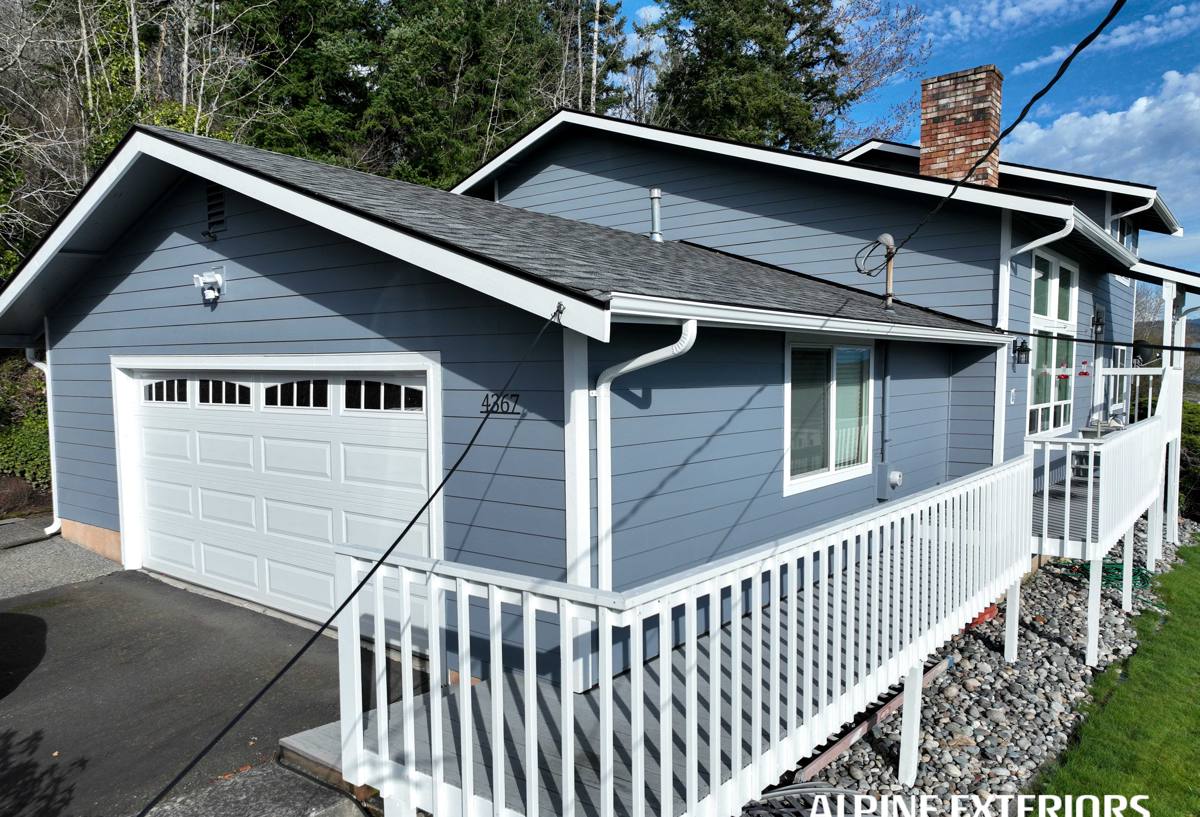
Signs a Longboat Key Roof Needs Replacement, Not Another Repair
We get called out to a lot of roofs where a patch or two would only buy a homeowner a year or two before the next leak shows up somewhere else. Here's what tells us a full replacement is the honest recommendation rather than another repair:
- Granule loss heavy enough that you can see bare, shiny patches on asphalt shingles, especially on south- and west-facing slopes
- Multiple past repairs in different areas of the same roof, rather than one isolated problem spot
- Soft or spongy decking found during an attic inspection, which points to sustained moisture intrusion
- Rusted or corroded fasteners, flashing, or drip edge — a common early failure point in salt air
- Curling, cracked, or missing shingles/tiles concentrated on the sides of the roof that take the most wind and sun
- A roof already past 18-20 years old (asphalt) or showing its age visually, even if it hasn't leaked yet
- Rising insurance premiums or a carrier flagging roof age or condition at renewal
Roofing Materials That Actually Hold Up on a Barrier Island
There's no single "best" roof for every Longboat Key home — it depends on the house, the roof pitch, HOA or condo association rules, and budget. But some materials are simply better suited to sustained salt exposure and high wind than others. Here's how the common options compare for this specific setting.
| Material | Wind performance | Salt-air durability | Typical lifespan here | Maintenance |
|---|---|---|---|---|
| Architectural asphalt shingle | Good with proper high-wind fastening and rated products | Moderate — fasteners and flashing are the weak point | 15-20 years | Periodic inspection of flashing and fasteners |
| Concrete or clay tile | Very good when properly fastened/adhered to code | Excellent — tile itself doesn't corrode | 30+ years (underlayment usually fails first) | Watch for cracked/slipped tiles after storms |
| Standing seam metal | Excellent — concealed fasteners, strong panel engagement | Very good with marine-grade coatings and stainless fasteners | 30-50 years | Low; occasional coating/sealant checks |
One point worth being direct about: a tile or metal roof is only as good as the underlayment and deck attachment underneath it. We've seen plenty of tile roofs where the tile still looked fine but the underlayment had failed years earlier, letting water in underneath without any visible sign from the ground. That's why our standard on Longboat Key replacements is a fully sealed, self-adhering underlayment system regardless of the surface material chosen — it's the actual waterproofing layer, and it's not a place to cut corners near the water.
A note on exposed-fastener metal panels
Exposed-fastener metal roofing (sometimes called corrugated or R-panel) costs less upfront than standing seam, but every fastener penetration is a potential leak and corrosion point over time — and that matters more here than inland. We'll install it when it's the right fit for a project, but for most Longboat Key homes we recommend standing seam or tile specifically because they keep fastener exposure to a minimum.
What a Correct Roof Replacement Actually Involves
A roof replacement done right on a barrier island isn't just stripping the old material and nailing down new shingles. Here's what we consider non-negotiable steps:
Deck inspection and repair
Once the old roofing is off, the decking gets inspected board by board (or sheet by sheet on plywood/OSB roofs). Any wood that's delaminated, soft, or water-stained gets replaced before anything new goes down — covering up bad decking is how a "new roof" ends up leaking within a year or two.
Sealed underlayment
A fully adhered, self-sealing underlayment protects the deck even if the outer roofing surface is compromised in a storm — this is often the difference between a minor repair after a hurricane and a full interior water loss.
Flashing and penetrations
Every pipe boot, vent, skylight curb, and wall transition is a place water can get in. We replace flashing rather than reuse it, and pay particular attention to any dissimilar-metal contact points, since that's where salt air accelerates corrosion fastest.
Fastening to code, not to habit
Florida Building Code wind-fastening requirements for coastal Manatee County are stricter than a lot of homeowners realize, and stricter than what some older roofs were originally built to. We fasten to current code requirements for the wind zone, not to whatever pattern happens to be fastest.
Ventilation
Proper intake and exhaust ventilation keeps attic temperatures and moisture in check, which extends the life of the new roofing material and helps prevent condensation-related decking problems down the road.
Permitting, Wind Mitigation, and Insurance
Roof replacements on Longboat Key require a building permit, and depending on exactly where a property sits, that permit may run through the Town of Longboat Key or through Manatee or Sarasota County, since the island crosses both county lines. We handle that permitting process as part of the job rather than leaving it to the homeowner to sort out.
A new roof is also one of the best times to get an updated wind mitigation inspection done. Insurance carriers in this part of Florida weigh roof age, covering type, and fastening/attachment details heavily when setting premiums, and a documented, code-compliant new roof can make a real difference at renewal. We build our replacements to meet current wind mitigation criteria and can point homeowners toward getting that inspection scheduled once the job is complete.
The Logistics of Working on the Island
Longboat Key isn't like a typical mainland Bradenton neighborhood job. Access is limited to a single main route on and off the island, which affects how we schedule material deliveries, dumpster placement, and crew arrival to avoid tying up traffic or blocking neighbors. Many properties are part of condo associations or HOAs with their own rules about work hours, staging areas, contractor insurance documentation, and noise — and getting that squared away before the first shingle comes off the roof avoids delays once work has started.
We also plan around weather more conservatively out here. A tear-off that would be low-risk inland is a bigger deal on an exposed barrier island roof, so we watch the forecast closely and sequence the job so a home is never left open to the weather longer than necessary.
Our Process, Start to Finish
- On-site inspection of the current roof, decking access points, and any HOA/condo requirements specific to the property
- Written estimate covering material options, scope of work, and realistic timeline
- Permit pulled through the correct jurisdiction before any work begins
- Tear-off and deck inspection, with any repairs documented and approved before covering
- Underlayment, flashing, and new roofing installed to current Florida Building Code wind requirements
- Final walkthrough with the homeowner and job-site cleanup, including magnetic sweep for stray fasteners
- Documentation provided for insurance and wind mitigation purposes
Why It Matters That We Already Work on Longboat Key
A crew that only occasionally works this far out on the barrier island has to relearn the access logistics, the permitting jurisdiction, and the HOA paperwork every time. A crew that already works Longboat Key regularly knows which fastening details actually hold up in this exposure, which underlayment choices are worth the extra cost, and how to schedule a job so it doesn't stall out waiting on association approval or a delivery that can't get across the causeway on time. That experience shows up in fewer surprises during the job and a roof that's actually built for where it sits — not just built to a general Florida standard.
If you're weighing a repair against a full replacement, or just want an honest read on how much life is left in your current roof, we're glad to take a look. Reach out for a free, no-pressure estimate — the form below gets you straight to us.