 Bradenton Siding
 Rosedale is one of the more established residential communities on the east side of Bradenton, and homes there carry a mix of ages — from original construction to full exterior updates done over the years. Whatever the vintage, the exterior siding on a Rosedale home is doing the same job every siding in Manatee County has to do: standing between a wood-framed structure and a climate that doesn't let up. Hurricane-force winds during storm season, intense UV exposure essentially year-round, wind-driven rain that gets forced sideways into every lap and seam, and salt-laden air moving inland off Tampa Bay and the Gulf all work on a home's exterior at the same time, every year, for as long as that siding is up there.
We install James Hardie fiber cement siding exclusively, and this page is specifically about what that looks like for a Rosedale property — what the climate demands, what a correct installation actually involves, and why hiring a crew that already works this neighborhood on a regular basis matters more than it might seem.
What Rosedale's Climate Actually Does to Siding
It's easy to think of siding damage as something dramatic — a storm event that tears panels loose. In practice, most siding failure in this part of Florida is slower and less obvious than that. It's cumulative stress from four things happening in combination, not isolation:
- Hurricane-force wind that doesn't just push on a wall — it creates uplift and pressure differences at corners, edges, and fastener points, which is exactly where poorly installed siding starts to fail first
- Year-round UV exposure intense enough to break down pigments and coatings that weren't formulated to hold color under sustained Florida sun
- Wind-driven rain that doesn't fall straight down during a summer storm or tropical system — it gets driven sideways into laps, seams, and trim joints where standard weather protection can be tested hard
- Salt air drifting inland from the coast, which accelerates corrosion on exposed fasteners and can degrade finishes and materials that aren't formulated with a marine-influenced climate in mind
None of these four forces is unique to Rosedale specifically, but together they define what "durable siding" has to mean for any Manatee County home, including this one. A product or installation that would hold up fine in a mild, dry climate can start showing problems here in a fraction of the time.
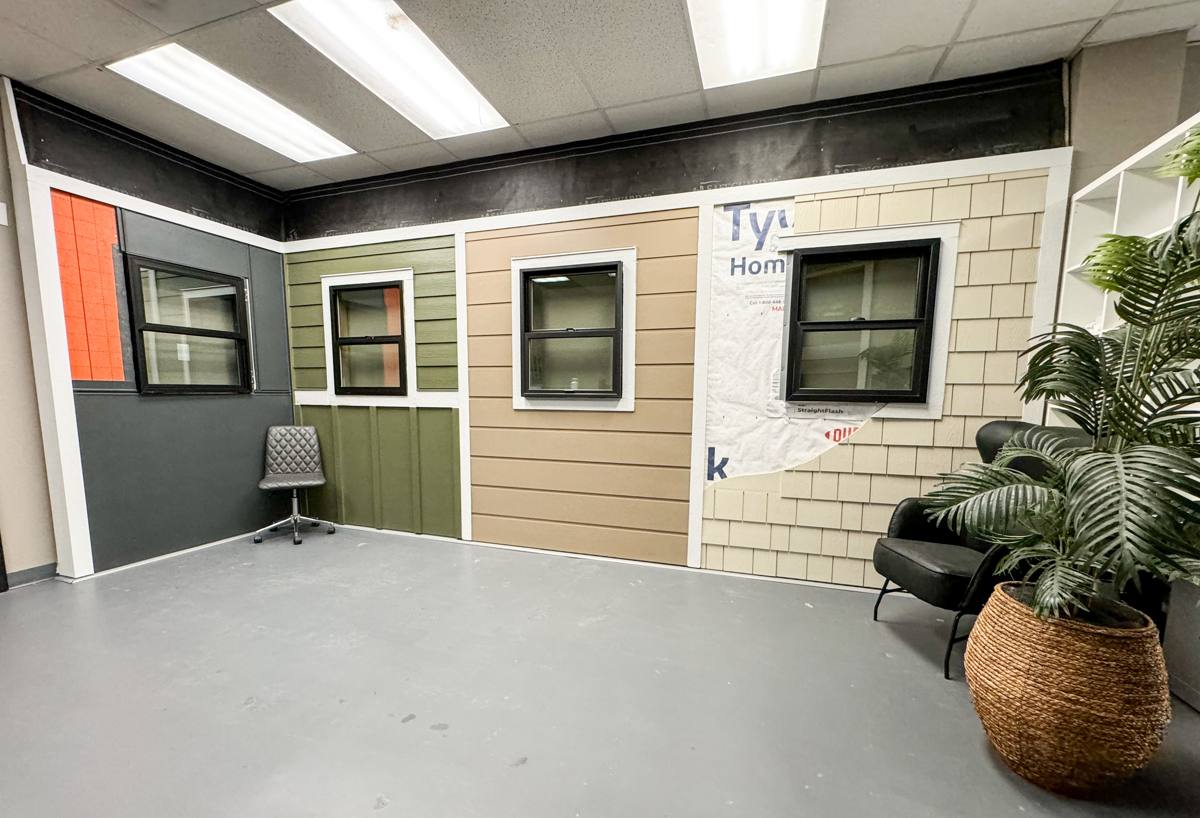
Why We Only Put James Hardie on Rosedale Homes
James Hardie fiber cement is a mix of Portland cement, sand, and cellulose fiber, cured into a dense, dimensionally stable board. It doesn't absorb and release moisture the way wood, wood composite, or primed spruce products do, and it's non-combustible, which matters in a state where wildfire and lightning-strike risk are real considerations for insurers and homeowners alike. Two specifics matter most for a Rosedale application.
HZ5 Engineering for Gulf Coast Humidity
James Hardie manufactures its siding in different formulations for different climate zones — it's not a marketing label, it's a different mix engineered for the moisture and humidity load a region actually sees. Homes in our part of Florida receive the HZ5 product line, built specifically for high-humidity, high-rain-exposure conditions. That's a meaningfully different product than what gets installed in a dry inland climate, and it's the baseline we start from on every Rosedale project.
ColorPlus Factory Finish
Color and coating failure is one of the most common complaints we hear about older siding in this area, regardless of material. ColorPlus finish is baked onto the board in a controlled factory environment through multiple coats, rather than sprayed or brushed on site after installation. It holds color and resists chipping and fading far better than field-applied paint under sustained Florida UV, and it comes with a finish warranty separate from the substrate warranty — which matters on a coastal-influenced property where fade and chalking show up faster than they would further inland.
What Correct Installation Actually Involves
The single biggest factor in how long siding lasts on a Rosedale home isn't the brand on the box — it's whether the installation followed the manufacturer's actual specifications. Fiber cement is a forgiving material when it's installed correctly and an unforgiving one when it isn't, because small shortcuts at the fastening and flashing stage don't show up as problems until years later, when they're expensive to fix. A correct James Hardie installation includes:
- A properly lapped and sealed weather-resistant barrier behind every panel, not house wrap stapled up and left as the only line of defense
- Correct panel and butt-joint gapping per James Hardie's published fastening specifications, so the material has room to handle normal thermal movement without stressing seams
- Fasteners driven to the correct depth and spacing — enough holding power for hurricane-force wind loads without over-driving and cracking the board
- Proper flashing at every horizontal transition: window and door heads, roof-to-wall intersections, and any point where two planes meet
- Correct clearance at the base of the wall, keeping siding above grade, hardscaping, and roofing so it isn't sitting in standing water after a storm
- Caulking used only where James Hardie specifies it — never as a substitute for flashing and gapping done correctly elsewhere
These aren't Hardie-specific rules so much as they're the difference between siding that survives a decade of Manatee County storm seasons and siding that starts failing at the seams within a few years, regardless of what material is under the paint.
Signs a Rosedale Homeowner Shouldn't Ignore
Because siding failure here tends to be gradual, it's worth knowing what to actually look for during a normal walk-around of the property, especially after storm season:
| What You See | What It Usually Means |
|---|---|
| Soft or spongy spots when pressed gently | Moisture has gotten behind the siding and is affecting the substrate or sheathing underneath |
| Visible cupping, bowing, or warping of individual boards | The material is absorbing and releasing moisture unevenly — common with wood and wood-composite products in humid climates |
| Chalky residue or noticeably faded color on sun-facing walls | The finish coat is breaking down under sustained UV exposure |
| Rust streaking near fastener heads | Fasteners weren't rated for the local environment or are corroding under salt-air exposure |
| Gaps opening up at seams, corners, or trim joints | Movement or shrinkage is stressing joints that weren't gapped correctly at installation |
Any one of these on its own might be minor. Several showing up together, especially on a home more than a decade or two old, usually means it's worth having someone look at the whole exterior rather than patching one spot at a time.
Hardie Product Lines That Fit Rosedale's Architecture
Rosedale's housing stock includes a range of exterior styles, and James Hardie's product lines cover most of what shows up in the neighborhood without forcing a homeowner into one look:
- HardiePlank lap siding — the standard horizontal profile, available in multiple textures including smooth and cedar-shake-style, and the most common match for traditional and transitional home styles
- HardiePanel vertical siding — used for board and batten accents, gables, and full vertical applications on more modern or farmhouse-influenced designs
- HardieTrim — matching trim boards for corners, window and door surrounds, and fascia, so the whole exterior reads as one designed system rather than mismatched materials
- HardieSoffit — pre-finished soffit panels that hold up to the same humidity and UV load as the wall cladding, instead of relying on a different, less durable material at the roofline
ColorPlus finishes are available across a range of colors, which gives homeowners real flexibility to match an existing color scheme, an HOA-approved palette, or a full refresh — without sacrificing the factory-finish durability that matters most in this climate.
How James Hardie Compares to the Alternatives
We get asked fairly often why we don't offer other siding materials as options. The honest answer is that we looked at how each performs under the specific conditions Manatee County homes deal with, and standardized accordingly.
| Material | Moisture Behavior | UV/Finish Durability | Fit for Hurricane Wind Zones |
|---|---|---|---|
| James Hardie fiber cement | Dimensionally stable; doesn't swell, warp, or rot with humidity exposure | Factory-baked ColorPlus finish resists fade and chalking | Engineered and tested specifically for high-wind installation |
| LP SmartSide (engineered wood) | Wood-based core is more moisture-sensitive at cut edges and exposed seams than fiber cement | Relies on factory or field coatings with a shorter realistic service life in humid climates | Varies by product line; not fiber cement's dimensional stability |
| Vinyl siding | Doesn't absorb water, but panels expand, contract, and can gap or warp under heat and wind load | Color is through-body but fades and chalks under sustained high UV | Wind performance depends heavily on gauge and fastening pattern; can be more vulnerable in direct hurricane impact |
| Primed spruce or cedar | Absorbs and releases moisture readily; prone to cupping, splitting, and rot without diligent upkeep | Fully dependent on an ongoing repainting and sealing schedule | Not engineered for hurricane wind zones; performance depends entirely on installation and maintenance |
This isn't a claim that every one of these products is unusable — it's an explanation of why, given what Manatee County weather does to a home's exterior year after year, we don't put anything other than Hardie on the homes we work on.
Our Process for a Rosedale Project
The process we follow doesn't change much project to project, because consistency is what keeps quality consistent too:
- Walkthrough and assessment — we look at the existing siding, trim, flashing, and any moisture or damage issues before talking about product or color
- Scope and estimate — a clear, honest breakdown of what the job involves, with no pressure to decide on the spot
- Prep and tear-off — removal of the old siding and inspection of the sheathing underneath, since siding is only as good as what's behind it
- Weather barrier and flashing — properly lapped house wrap and flashing at every penetration and transition before a single piece of Hardie goes up
- Installation to manufacturer spec — correct gapping, fastening, and clearances, following James Hardie's published requirements rather than shortcuts
- Final walkthrough — a review with the homeowner before we consider the job finished, not just a drive-by
Why a Crew That Already Works Rosedale Matters
Siding work in this neighborhood isn't generic exterior work — it's exterior work under Manatee County's specific wind, humidity, and permitting conditions, on homes that often share similar construction eras and HOA expectations around exterior appearance. A crew that's worked in and around Rosedale regularly already knows what local wind-load and building code requirements apply, has a working sense of the HOA and permitting process specific to the area, and isn't learning the region's climate behavior on your project. That familiarity shows up in small ways that add up: fewer surprises during permitting, fewer callbacks for details that get missed by crews unfamiliar with coastal Florida installation requirements, and a finished job that actually accounts for what this specific climate does to a home over time rather than treating Bradenton like anywhere else.
If you're weighing a full siding replacement or repair work on a Rosedale home, we're glad to walk the property, talk through what your specific exterior needs, and put together a free, no-pressure estimate.