 Bradenton Siding
 Siding Installation Built for Rosedale's Climate, Not Just Its Curb Appeal
Rosedale is one of the more established planned communities in the Bradenton area, and homes here tend to share a few things in common: mature landscaping, consistent architectural standards, and exterior siding that's now old enough to be showing its age. Manatee County sits in a stretch of Florida that gets the full treatment from the weather — hurricane-force wind events, wind-driven rain that finds every gap in a wall assembly, UV exposure strong enough to break down cheaper materials year-round, and salt-carrying air moving inland off the Gulf and Tampa Bay. None of that is unique to Rosedale, but it does mean a siding installation here has to be judged by a higher standard than "does it look good going on."
We install exclusively James Hardie fiber cement siding, and this page focuses on what a correct installation looks like specifically for homes in Rosedale — the climate demands, the process, and why the crew doing the work matters as much as the material itself.
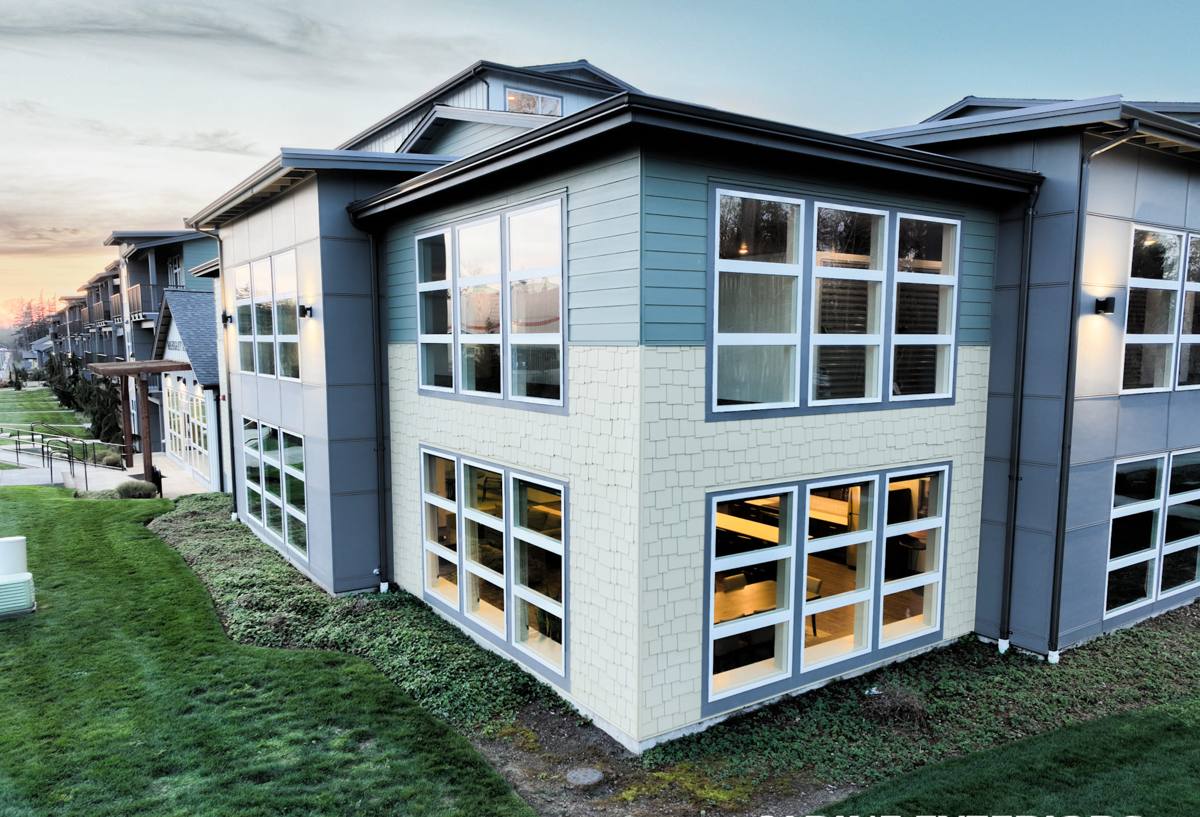
What Rosedale Homes Are Actually Up Against
Wind and Wind-Driven Rain
Manatee County's wind zones require siding systems that are engineered — not just installed — to hold up under sustained uplift and pressure cycling during tropical storms and hurricanes. It's not only about the siding panel itself; it's about whether the fastening pattern, the starter strip, and the corner and trim details were done to the manufacturer's specification for this wind zone. Wind-driven rain is the other half of the problem: in a real storm, rain doesn't just fall, it's pushed sideways into every seam, joint, and penetration. A siding job that isn't properly flashed and lapped will let water behind the cladding long before the panels themselves fail.
UV Exposure
Florida sun is relentless on painted and coated exterior surfaces. Field-applied paint on wood or fiber cement, and the surface coatings on some engineered wood products, chalk, fade, and break down faster here than in most of the country. Siding that depends on a homeowner repainting it every few years to stay protected is signing up for an ongoing maintenance bill.
Salt Air and Moisture
Rosedale isn't directly on the coast, but Bradenton's proximity to Tampa Bay and the Gulf means airborne salt reaches inland neighborhoods too, especially combined with the area's humidity. Salt-laden moisture accelerates corrosion on fasteners and trim and speeds up the breakdown of materials that aren't designed to resist it. Over years, that combination — heat, humidity, salt, and UV — is what separates siding that looks fine at year five from siding that's failing at year eight.
What a Correct Siding Installation Actually Involves
Siding installation is often sold as a cosmetic upgrade, but the parts that actually determine whether it lasts are mostly invisible once the job is done. A correct installation includes:
- A properly lapped weather-resistive barrier behind the siding, with all penetrations (pipes, vents, hose bibs) flashed and sealed before the first panel goes up
- Manufacturer-specified fastener type, spacing, and embedment — not "close enough," since fastening is what determines wind performance
- Correct clearance between the bottom of the siding and roofing, decks, and grade, so water doesn't wick into the material or sit against it
- Proper gapping and sealing at butt joints, corners, and trim, sized for Florida's expansion and contraction range
- Flashing details at windows, doors, and any wall penetration that direct water outward instead of behind the cladding
- Field-cut edges sealed per manufacturer instructions, since an unsealed cut edge is where moisture problems usually start
Skip any one of these and the siding can still look right for a while — the failures usually show up as rot, staining, or water intrusion two to five years later, well after the crew that installed it is gone.
Why We Only Install James Hardie Fiber Cement
We don't install LP SmartSide, vinyl, Cemplank, Allura, or primed wood siding. That's a deliberate standard, not a sales preference. Each of those products has legitimate uses, but for Manatee County's wind, UV, and moisture combination, we've concluded that James Hardie fiber cement is the material that consistently holds up when installed correctly — and we'd rather stand behind one system we know inside and out than offer several we have reservations about.
Non-Combustible, Dense, and Engineered for This Climate
Fiber cement doesn't burn, doesn't attract termites, and doesn't absorb and swell with moisture the way wood-based products can. James Hardie's HZ10 product line is specifically engineered for hot, humid climates like ours, with a moisture and warping resistance formulation suited to Florida conditions rather than a one-size-fits-all national product.
ColorPlus Factory Finish
Rather than relying on field-applied paint that has to fight Florida UV from day one, ColorPlus finish is baked on at the factory in multiple coats, under controlled conditions. It holds color longer than field-applied paint and comes with its own finish warranty — which matters directly in a climate where UV breakdown is the main enemy of painted surfaces.
A Warranty Structure That Actually Transfers
James Hardie backs its siding with a long-term, transferable limited warranty. That transferability matters in an established community like Rosedale, where homes change hands — a documented warranty on the siding is a real asset at resale, not just a paperwork formality.
Our Installation Process
The steps don't change much from house to house, but the details we check at each one do — especially on homes that have existing siding, trim, or moisture issues to address before new material goes up.
- Assessment: we inspect the existing siding, sheathing, and any trouble spots (window returns, past water stains, soft trim) before quoting anything
- Tear-off and substrate check: old siding comes off and we inspect the sheathing underneath for rot or hidden moisture damage before covering it back up
- Weather barrier and flashing: new house wrap or building paper goes on, lapped correctly, with all penetrations flashed before siding starts
- Hardie installation to spec: panels, fasteners, and trim installed per James Hardie's published installation instructions for this wind zone — not a generic install
- Trim, caulking, and finish detail: corners, butt joints, and penetrations sealed with the right materials, not just caulked over gaps
- Final walkthrough: we go over the finished job with the homeowner before calling it done
Working Within Rosedale's Community Standards
Like most established planned communities, Rosedale has architectural guidelines and an HOA review process that typically covers exterior changes, including siding replacement — color selections and material changes often need approval before work starts. A crew that's done work in the neighborhood before knows to build that approval step into the timeline rather than treating it as an afterthought, and knows generally what kind of documentation an HOA board tends to ask for. That's a small thing, but it's the difference between a project that starts on schedule and one that stalls for weeks waiting on paperwork nobody planned for.
What Siding Installation Typically Costs
Every home is different, and the only way to get a real number is a walk-through, but these are the factors that actually move the price on a fiber cement siding job:
| Cost Factor | Why It Matters |
|---|---|
| Home size and wall complexity | More square footage, corners, and gables mean more material and labor |
| Tear-off vs. new construction | Removing and disposing of existing siding adds cost versus a bare-sheathing install |
| Substrate condition | Rotted sheathing or hidden water damage found during tear-off requires repair before new siding goes on |
| Siding profile and trim detail | Lap width, shingle-style accents, and trim complexity affect both material and labor cost |
| Color and finish | ColorPlus factory-finished panels cost more upfront than field-painted but remove a recurring repaint expense |
| Access and site conditions | Landscaping, fencing, and multi-story sections can add labor time |
Fiber cement installed to spec costs more upfront than vinyl or engineered wood — that's a real trade-off, and we won't pretend otherwise. The offset is a material that doesn't need repainting on a short cycle, resists the wind and moisture conditions this area actually sees, and carries a warranty that holds up over the long haul.
Signs Your Rosedale Home's Siding Needs Attention
- Visible cracking, buckling, or panels that have pulled away from the wall
- Soft or spongy spots when you press on the siding, especially near the bottom edges
- Persistent staining or streaking that doesn't wash off
- Paint that's chalking, peeling, or fading unevenly across different wall exposures
- Visible gaps at trim, corners, or window and door surrounds
- Rising energy bills that suggest the wall assembly isn't sealing the way it should
- Any sign of moisture, discoloration, or soft drywall on interior walls that back up to exterior siding
Any one of these on its own might be minor. Several together, or any sign of soft substrate, usually means it's time for a real inspection rather than a patch.
Why It Matters That We Already Work in Rosedale
A crew that's worked in Rosedale before isn't guessing about wind zone requirements, HOA review timelines, or the general condition of homes built in a similar era in this part of Bradenton. That familiarity shows up in small but real ways — knowing what to check for on a tear-off, knowing how long the approval process realistically takes, and knowing how to sequence a job so a Rosedale homeowner isn't living with exposed sheathing longer than necessary during storm season. It's not a substitute for doing the installation correctly, but it's part of why the whole project runs smoother.
If your Rosedale home's siding is showing its age, or you're planning ahead of the next storm season, we're happy to walk the exterior with you and give you a straight assessment — no pressure, no hard sell. Use the form below to request a free estimate.