 Bradenton Siding
 Why Southgate Siding Wears Out Faster Than Homeowners Expect
Southgate is one of Bradenton's older, well-established neighborhoods, which means a lot of its homes are carrying siding that's now decades into a Gulf Coast climate that doesn't go easy on exterior building materials. Manatee County sees intense, near year-round UV exposure, long stretches of high humidity, wind-driven rain off the coast, and periodic hurricane-force winds that test every seam, joint, and fastener on a home's exterior. Siding here isn't just cosmetic — it's the first line of defense against moisture intrusion, and it takes a beating that homes further inland simply don't experience at the same intensity.
Older siding materials, especially wood-based products and lower-grade composites, tend to show their age in this environment through cracking, delamination, swelling, and paint failure well before their expected service life is up. Even siding that looks reasonably intact from the curb can be hiding moisture damage underneath, especially around window trim, corners, and low-hanging eaves where wind-driven rain concentrates. For a lot of Southgate homeowners, the real question isn't whether their siding needs attention — it's whether it still needs repairing, or whether it's past the point where repair makes sense.
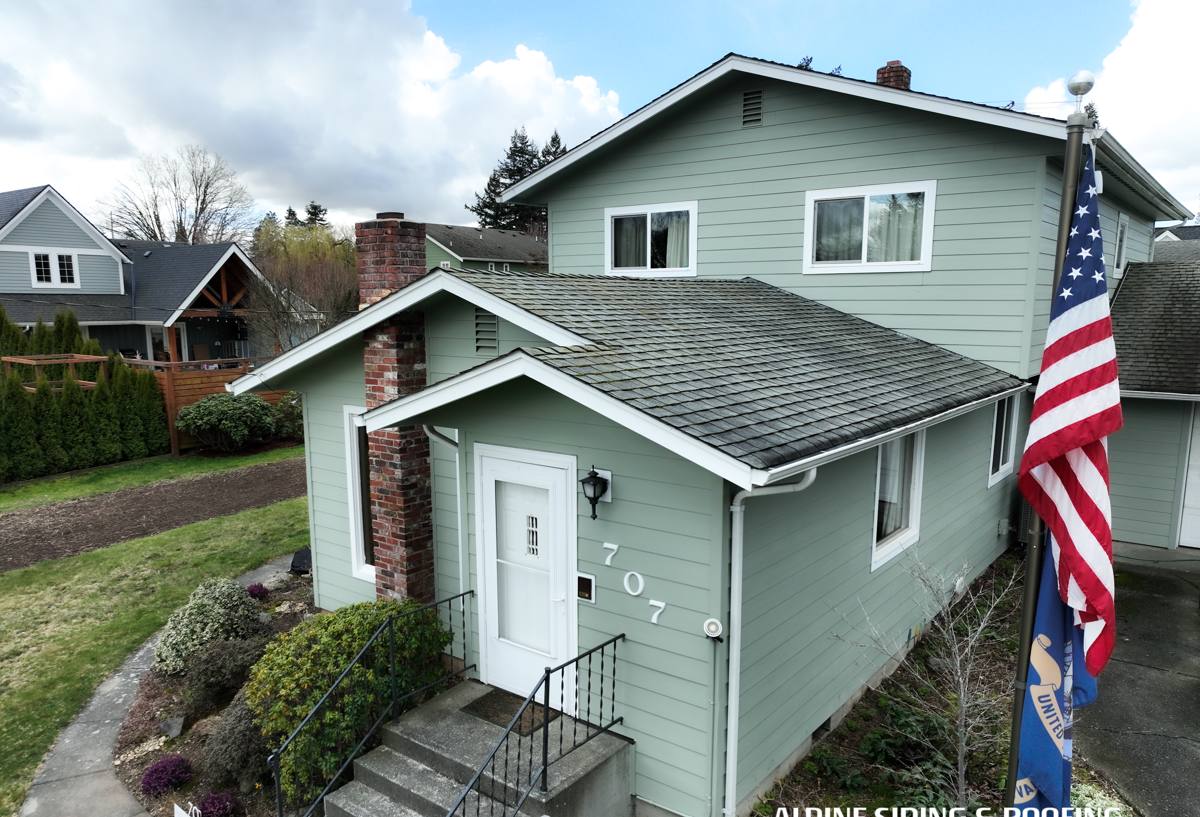
Signs a Southgate Home Needs Replacement, Not Repair
Not every siding problem calls for a full replacement, but there's a point where patching individual boards or panels stops being a good use of money. Here's what tends to separate a repair situation from a replacement situation on homes we look at around Bradenton:
- Soft, spongy, or crumbling siding when pressed — usually a sign of moisture damage to the substrate underneath, not just the surface
- Visible cracking or splitting across multiple boards, especially near butt joints and corners
- Paint or finish that keeps failing within a year or two of repainting, even with quality paint
- Warping, buckling, or gaps that have opened up between boards or panels
- Soft trim or fascia near the siding, which often signals the water problem has spread beyond the siding itself
- Visible mold, mildew staining, or a musty smell along interior walls that back up to exterior siding
If you're seeing more than one or two of these, especially on a home that's been through several hurricane seasons without a siding replacement, a full replacement is usually the more honest recommendation — and the more cost-effective one over time, since repeated spot repairs on failing material rarely hold up long in this climate.
What We Install — and Why We Don't Install Anything Else
We install James Hardie fiber cement siding exclusively. We don't install vinyl, LP SmartSide, primed wood, or other composite panel products, and that's a deliberate standard, not an oversight. Fiber cement is non-combustible, dimensionally stable in heat and humidity swings, and engineered specifically for high-moisture, high-UV climates like ours — which matters more in Manatee County than it does in a lot of the country. James Hardie also builds region-specific product lines (their HZ5 formulation is engineered for humid climates like Florida's) and backs their siding with a factory-applied ColorPlus finish and a strong, transferable warranty when the job is installed correctly.
We're not going to tell you every alternative product is worthless — most have legitimate use cases somewhere. But we've made a professional call that in a coastal, hurricane-exposed climate, the maintenance burden, moisture sensitivity, and installation tolerances of other siding materials aren't worth the trade-off when a proven fiber cement system is available. That standard applies to every job we take on in Southgate and across Bradenton, no exceptions.
Salt Air and Coastal Exposure
Southgate isn't directly beachfront, but Manatee County's proximity to the Gulf means salt-laden air still reaches inland neighborhoods, especially during onshore wind events. Salt air accelerates corrosion of fasteners and metal flashing and can degrade lower-quality finishes over time. James Hardie's factory finish and our use of corrosion-resistant fasteners are both chosen with that exposure in mind.
What a Correct Siding Replacement Actually Involves
Siding replacement is easy to do poorly and much harder to do right. A lot of the value in a correct job is invisible once the new siding is up — it's in what's happening underneath.
Tear-Off and Substrate Inspection
We remove the existing siding down to the sheathing and actually look at what's underneath before installing anything new. This is where hidden moisture damage, soft sheathing, or compromised framing gets caught. Covering over a damaged substrate with new siding just hides the problem for a few more years — it doesn't fix it.
Moisture Management and Flashing
A weather-resistant barrier goes on before the siding, along with properly detailed flashing at every window, door, and roofline intersection. In a climate with regular wind-driven rain, flashing details are usually what separates a siding job that stays dry for decades from one that develops rot within a few years.
Fastening to Spec
James Hardie siding has specific fastening requirements — fastener type, spacing, and penetration depth all affect wind performance and warranty coverage. In a hurricane-prone county, this isn't a place to cut corners; it's the difference between siding that holds through a wind event and siding that doesn't.
ColorPlus Finish
Where the project calls for it, we use James Hardie's factory-applied ColorPlus finish, which is baked on under controlled conditions and holds up to UV exposure significantly better than field-applied paint — a real advantage given how much direct sun Southgate homes take through the year.
Our Siding Replacement Process
- On-site assessment — we inspect the existing siding, trim, and any visible problem areas, and give you a straight answer on repair versus replacement.
- Scope and product selection — we walk through James Hardie's plank, panel, and trim options and colors, and settle on a scope that fits the home and your budget.
- Written estimate — a clear estimate covering tear-off, substrate repair allowances, materials, and installation, with no vague line items.
- Permitting — we handle the Manatee County/City of Bradenton permitting process for the project, so you're not chasing paperwork.
- Tear-off and inspection — old siding comes off, and we document and address any substrate damage found underneath before moving forward.
- Weather barrier and flashing installation — the moisture management layer goes in correctly, before a single piece of new siding is hung.
- Siding installation — James Hardie siding installed to manufacturer fastening and clearance specs, maintaining warranty eligibility.
- Final walkthrough — we go over the finished job with you before calling it done.
What Siding Replacement Costs in Southgate — Cost Factors
Every home is different, so we don't quote pricing sight unseen, but these are the main factors that move the number up or down on a typical Southgate project:
| Factor | Why It Matters |
|---|---|
| Home size and wall complexity | More square footage and more corners, dormers, or trim details mean more material and labor |
| Substrate condition | Rotted or water-damaged sheathing found during tear-off adds repair scope before new siding goes on |
| Product line and profile | Lap siding, panel systems, and specialty trim carry different material costs |
| Finish choice | Factory ColorPlus finish versus field-primed siding affects both cost and long-term maintenance |
| Height and access | Two-story sections and difficult access points add labor time |
| Existing trim and flashing scope | Full trim replacement alongside siding versus reusing sound existing trim |
We'll walk through each of these during an on-site estimate so you understand exactly what's driving the number, rather than getting a flat per-square-foot figure that doesn't reflect your home's actual condition.
Why a Crew That Already Works Southgate Matters
Siding work in Southgate isn't identical to siding work in a landlocked county. Wind load requirements tied to Florida's building code, salt air exposure, and the specific way wind-driven rain hits homes here all factor into how a job should be detailed. A crew that already works this part of Bradenton knows the local permitting process, has already seen how homes in this neighborhood age, and isn't learning coastal installation details for the first time on your house. That familiarity shows up in fewer surprises during tear-off, a smoother permitting process, and a finished job that's actually built for what Manatee County weather will throw at it.
Choosing a Siding Contractor in Manatee County: A Homeowner's Checklist
Whoever you hire for siding replacement, these are worth confirming before signing anything:
- Proper Florida contractor licensing and insurance, verifiable on request
- Written estimate that itemizes tear-off, substrate repair allowance, materials, and labor separately
- Experience specifically with fiber cement installation, not just siding in general
- Willingness to pull the required local permits rather than skipping that step
- A clear answer on fastening specs and how they'll meet manufacturer installation requirements
- References or a track record of work in your specific area, not just the broader region
- A real inspection of your existing substrate before quoting, not a drive-by estimate
A contractor who's vague on any of these is worth a second look before you commit.
If your Southgate home's siding is showing its age, or you just want an honest opinion on repair versus replacement, we're happy to come take a look. The estimate is free, there's no pressure, and you'll get a straight answer either way — just fill out the form below to get started.