 Bradenton Siding
 Building Decks in Tara That Actually Hold Up
Tara sits inland from the coast but that doesn't mean the deck on the back of your house gets an easy ride. Manatee County weather doesn't care whether you're a mile from the water or fifteen — hurricane-force wind gusts, near-constant UV exposure, wind-driven rain, and salt-laden air moving inland off Tampa Bay and the Gulf all reach Tara's neighborhoods and golf course lots. A deck that's framed, fastened, and finished the way it would be in a drier, calmer climate will show it within a few seasons: cupped boards, rusted fasteners, soft spots at the ledger, faded and splintering surfaces. A deck built correctly for this area is a different project from the start.
This page covers what a custom deck for a Tara home actually needs to hold up long-term, what our process looks like, and why working with a crew that already builds in this specific climate and county matters more than picking the cheapest bid.
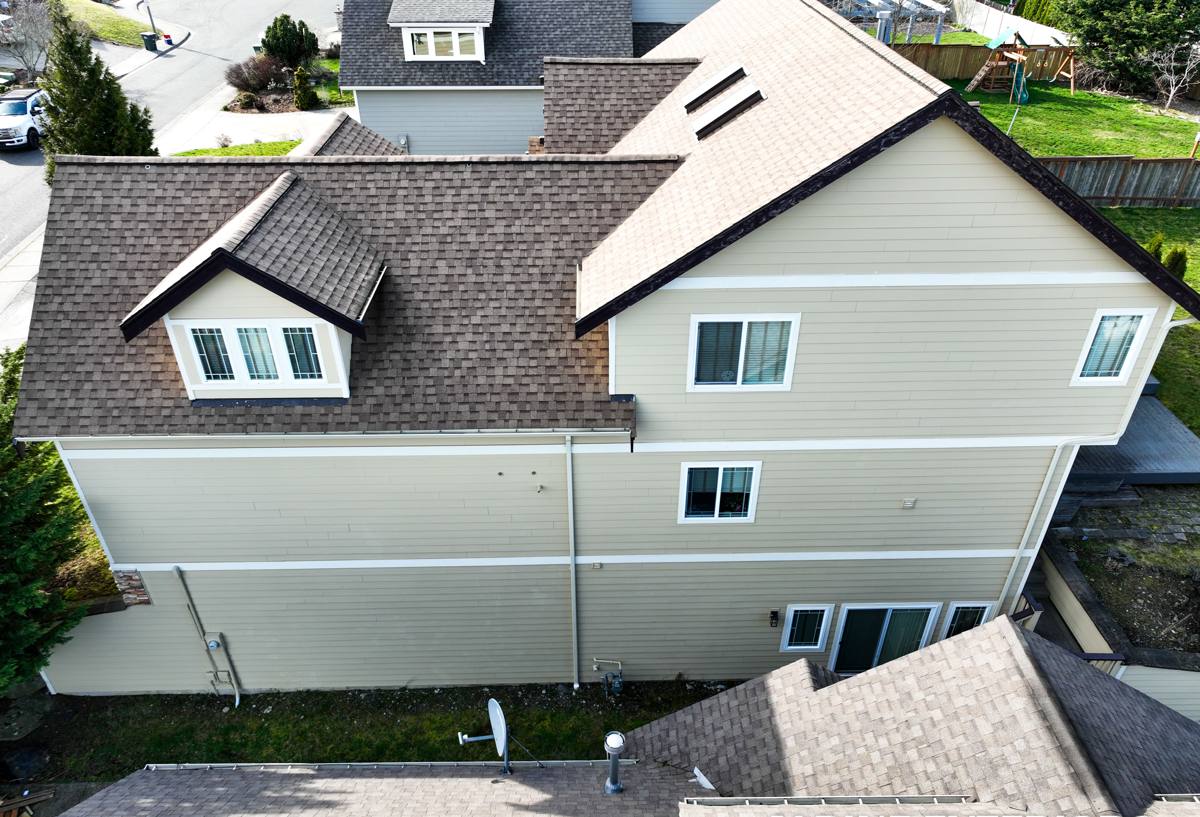
What Tara's Climate Actually Does to a Deck
Wind
Manatee County is rated for high wind loads under the Florida Building Code, and any deck attached to your house — especially an elevated one — has to be engineered and fastened to resist uplift and lateral loads, not just gravity. Undersized joist hangers, toe-nailed connections instead of properly rated fasteners, and ledger boards that aren't through-bolted into structural framing are the kinds of shortcuts that look fine on day one and fail during a real wind event.
UV
Florida sun is intense and consistent nearly year-round. Wood decking that isn't sealed and re-sealed on a real schedule will gray, dry out, and crack. Composite and PVC decking are more UV-stable, but even those products vary — cheaper composite lines can fade or chalk faster than mid- and premium-tier products.
Rain and moisture
Wind-driven rain doesn't fall straight down — it gets pushed sideways into ledger connections, under rail posts, and into any gap in the decking that isn't properly flashed or spaced. Standing water at the ledger-to-house connection is one of the most common causes of rot and structural failure on Florida decks, and it's almost always preventable with the right flashing detail.
Salt air
Even away from the immediate coastline, salt carried on Gulf breezes accelerates corrosion on fasteners, brackets, and railing hardware. Standard interior-grade or even generic exterior fasteners can start rusting and staining decking within a year or two in this environment.
What a Correctly Built Deck Involves
None of this is exotic — it's just doing the structural basics right for this specific climate, instead of building to a generic national spec.
- Ledger boards through-bolted (not just lag-screwed) into house framing, with proper flashing to shed water away from the wall
- Stainless steel or coated, corrosion-rated fasteners and joist hangers throughout — not standard galvanized hardware that wasn't built for salt exposure
- Footings sized and set to local frost-free, high-wind requirements, not a one-size-fits-all minimum
- Joist spacing and beam sizing matched to your decking material's actual span rating, not stretched to save a few boards
- Railing posts anchored with hardware rated for the lateral loads Florida wind code requires, not just screwed to the rim joist
- Proper board spacing and airflow underneath to let the structure dry out after rain instead of trapping moisture
Skipping any one of these doesn't usually show up in the first year. It shows up in year three or four, as soft framing, rust streaks, or a rail that flexes more than it should.
Choosing a Decking Material for a Tara Property
There's no universally "best" decking material — there's a best fit for your budget, your maintenance appetite, and how much direct sun and weather your specific lot gets. Here's how the common options actually compare in this climate:
| Material | UV / Fade Resistance | Moisture Behavior | Maintenance | Typical Lifespan Here |
|---|---|---|---|---|
| Pressure-treated wood | Fades and grays without regular sealing | Can cup, split, or rot if not sealed and drained properly | Sealing every 1-2 years | 10-15 years with upkeep |
| Composite decking | Good on mid/premium lines; budget lines can chalk faster | Won't rot, but lower-end boards can absorb moisture at cut ends if not capped | Occasional cleaning, no sealing | 20-25+ years |
| PVC / capped polymer | Very stable, minimal fading | Fully moisture-resistant, doesn't support rot | Lowest — cleaning only | 25+ years |
| Tropical hardwoods (e.g., ipe) | Naturally dense and UV-tolerant, will still gray over time | Naturally rot- and insect-resistant | Periodic oiling to hold color | 25+ years structurally |
For most Tara homeowners, the real decision comes down to upfront cost versus long-term maintenance. Wood costs less to install but asks more of you every year. Composite and PVC cost more upfront but are close to maintenance-free in this climate, which matters when you're dealing with year-round sun and humidity rather than a short summer season.
Designing Around Your Tara Lot
Tara includes a mix of golf-course-adjacent homes, lake-view lots, and standard residential lots, and the deck that makes sense often depends on which you have. A deck backing up to a golf course or preserve view usually gets designed more open, with lower or view-friendly railing where code allows. A deck tying into a pool cage or lanai needs framing and elevation planned around the existing structure rather than bolted on as an afterthought. And if your neighborhood has an HOA, we account for material, color, and height guidelines up front so the design doesn't get held up in review after the fact.
We also design for how you'll actually use the space — a deck for grilling and evening sitting is a different footprint than one meant to host larger gatherings, and framing/beam sizing changes with that footprint.
Permitting in Manatee County
Most new deck construction in Manatee County requires a building permit, and elevated or attached decks typically need engineered plans showing compliance with Florida Building Code wind load requirements. This isn't paperwork for its own sake — it's the step that confirms your footings, framing, and connections are actually sized for what this climate throws at them. We handle the permitting and inspection process as part of the job, so you're not left figuring out county requirements on your own or discovering a problem after the deck is already built.
Our Process
- On-site assessment — we walk your property, look at sun exposure, drainage, existing structures (pool cage, lanai, slope), and talk through how you want to use the space.
- Design and material selection — we go over decking material trade-offs honestly, including cost and maintenance, and finalize a layout that fits your lot and any HOA guidelines.
- Permitting — we prepare and submit what Manatee County requires, including engineered plans where needed, and schedule inspections.
- Construction — footings, framing, decking, and railing installed to the standards above, with corrosion-rated hardware and proper flashing throughout.
- Final walkthrough — we go over the finished deck with you, confirm everything meets code and your expectations, and cover basic care for whatever material you chose.
Keeping a Tara Deck in Good Shape
Whatever material you choose, a little regular attention goes a long way in this climate:
- Rinse off salt residue, pollen, and debris every few weeks, more often if you're near open water or heavy tree cover
- Check railing posts and stair connections once or twice a year for looseness — wind load works these joints over time
- Re-seal or re-oil wood decking on the schedule the product actually needs, not just when it starts looking gray
- Clear leaves and debris from between boards so water can drain and airflow underneath isn't blocked
- After any major storm, do a quick visual check of framing and fastener points before assuming everything's fine
Why Hire a Crew That Already Works in Tara
A deck contractor who mostly works up north or in a milder climate will often build a technically sound deck — for somewhere else. The details that matter here — through-bolted ledgers with real flashing, corrosion-rated hardware instead of standard galvanized, footings and framing sized for Florida Building Code wind loads, and material choices that account for constant UV and salt air — come from building in Manatee County specifically, not from a general carpentry background. Knowing what Manatee County's permitting process actually requires, and how HOA guidelines in communities like Tara typically run, also means fewer delays and surprises during the project.
If you're planning a new deck or replacing one that didn't hold up, we're happy to come take a look, walk the site with you, and put together a straightforward estimate — no pressure, no pushy sales pitch. Fill out the form below and we'll get in touch to schedule a time.