 Bradenton Siding
 Custom Decks Built for Village of the Arts, Bradenton
Village of the Arts is one of the more distinctive pockets of Bradenton — a walkable grid of older bungalow and cottage-style homes, small lots, and a strong community identity built around local artists and small businesses. A deck here has to do two jobs at once: fit the character of the house and neighborhood, and hold up to real Gulf Coast weather. We build and repair custom decks for homeowners in this part of Bradenton and design every project around both of those needs, not just one.
This page covers what we've learned building decks specifically in this neighborhood — the material choices that make sense, the structural details that matter most, and how our process works from first visit to final walkthrough.
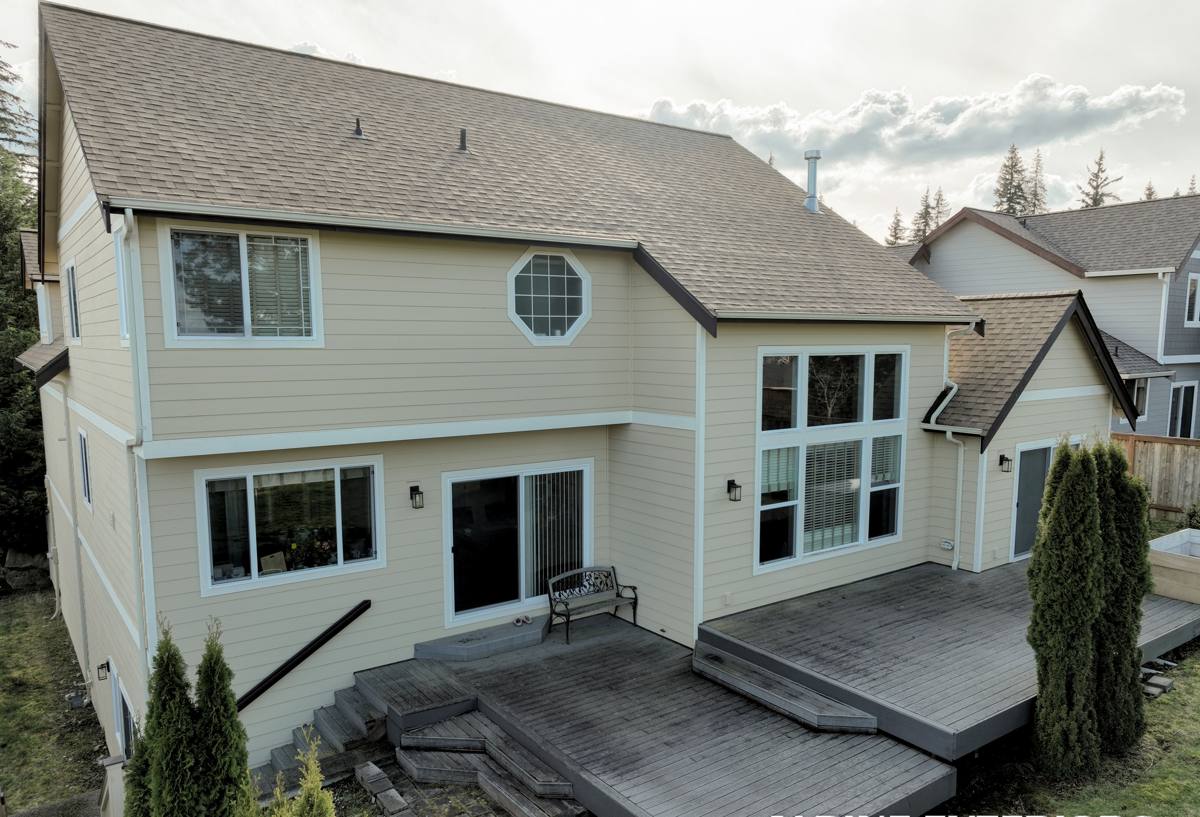
What Bradenton's Climate Does to a Deck
Manatee County sits in a climate that is hard on any exterior structure, and a deck — horizontal, exposed on all sides, and often untreated on its underside — takes more abuse than most parts of a house.
Wind
Hurricane-force wind doesn't just push on a deck, it gets underneath it. Wind can create uplift on decking boards and railings, and it puts real load on ledger connections, post bases, and joist hangers. A deck that looks solid can still fail at its attachment points if those connections weren't sized and installed for wind, not just gravity.
UV and Heat
Year-round Florida sun breaks down finishes, dries out wood fiber, and fades color in composite and PVC decking faster than it would in a milder climate. Boards that are rated for northern climates often don't perform the same way here.
Wind-Driven Rain
Storms in this area rarely fall straight down. Wind-driven rain finds its way into ledger connections, fastener holes, and end grain that isn't properly sealed, which is how rot and hidden hardware corrosion get started long before they're visible.
Salt Air
Village of the Arts isn't right on the water, but Bradenton as a whole sits close enough to the Gulf and Manatee River that salt-laden air is a factor on metal hardware, fasteners, and railing systems. Salt exposure accelerates corrosion on anything that isn't rated for it, even a few miles inland.
Small Lots and Older Homes Change the Design
Many houses in Village of the Arts sit on smaller, tighter lots than newer Bradenton subdivisions, and quite a few are older bungalow-style homes with framing, siding, and foundations that weren't built with a modern deck attachment in mind. That changes how we approach a project in a few ways:
- Ledger attachment to an older rim joist or masonry wall often needs extra evaluation before we bolt anything to it
- Footprint and layout have to make the most of a smaller yard without crowding setbacks or existing landscaping
- Railing style, post spacing, and trim details usually work better when they echo the look of an older home rather than a modern build
- Site access for equipment and material staging is tighter, which changes how a crew sequences the job
None of this is a problem — it just means the design and the build sequence need to account for the house that's actually there, not a generic new-construction lot.
Choosing the Right Decking Material
There's no single "best" decking material — there's the right material for how a homeowner plans to use the deck, how much upkeep they want to take on, and what budget they're working with. Here's how the common options compare under Bradenton's climate specifically.
| Material | UV/Fade Resistance | Moisture & Rot Behavior | Maintenance | Typical Lifespan |
|---|---|---|---|---|
| Pressure-treated wood | Fades and grays without regular finish | Vulnerable at fasteners and end grain if not sealed | Annual cleaning, periodic re-staining/sealing | 10-15 years with upkeep |
| Composite decking | Good, but quality varies by product line | Resists rot well; core matters more than surface | Occasional washing, no staining/sealing | 20-25+ years |
| Capped PVC decking | Very good fade resistance | Fully resists moisture absorption in the board itself | Low — periodic washing | 25+ years |
| Tropical hardwoods | Fades to gray without oiling | Naturally dense and rot-resistant when sealed | Regular oiling to maintain color | 15-25 years |
Wood costs the least up front and still has a place, especially on smaller budgets or for homeowners who like the look and don't mind the upkeep. Composite and PVC cost more initially but trade ongoing maintenance for consistency — worthwhile for owners who want the deck to look the same in year ten as it did in year one. We'll walk through the honest trade-offs for your specific project rather than push one product line across the board.
Framing and Hardware: Where Decks Actually Fail
Almost every deck failure we see traces back to the framing and fasteners, not the decking boards on top. This is the part of the job that doesn't show up in photos but determines whether a deck lasts one hurricane season or twenty.
What a Correct Job Includes
- Ledger board properly flashed and through-bolted, not just nailed, where it attaches to the house
- Hot-dip galvanized or stainless steel fasteners and connectors rated for coastal exposure
- Joist hangers, post bases, and hurricane ties sized for wind uplift, not just vertical load
- Footings poured to the depth and diameter the design calls for, not shortcut on a small deck
- Joist tape or equivalent flashing on top of framing to keep water out of the wood itself
Cutting corners on any one of these items usually doesn't show until years later, when a hidden connection has been quietly corroding or a ledger board has been taking on water behind the siding. We build these details the same way whether it's a small platform deck or a large multi-level build, because the climate doesn't treat them differently.
Permits and Local Considerations in Manatee County
Most custom decks in Manatee County require a building permit, and larger or elevated decks typically need engineered plans that account for wind load, not just standard framing tables. We handle the permitting process as part of the job rather than leaving it to the homeowner to sort out.
A few things specific to this area worth knowing:
- Some lots closer to the Manatee River fall within flood zones that affect required footing depth and finished deck elevation — this gets checked during design, not after
- Older homes may have setbacks or lot coverage limits that a newer deck design needs to respect
- Wind-rated hardware and attachment methods aren't optional upgrades here — they're the baseline for a deck that's meant to survive hurricane season
We pull permits, coordinate inspections, and make sure the finished deck is documented correctly — which matters for insurance and for resale down the line.
Our Process for a Village of the Arts Deck
The process is the same whether it's a first deck or a full rebuild of something that didn't hold up:
- Site visit and assessment — we look at the house, the lot, existing structure if there is one, and how the space will actually be used
- Design and material walkthrough — layout, railing style, and decking material options matched to budget and maintenance preference
- Permitting and engineering — plans drawn up and submitted to Manatee County, engineered where required
- Construction — footings, framing, and hardware installed to hold up to wind and moisture, then decking, railings, and finish work
- Final walkthrough — we go over the finished deck with you before calling the job done
We work efficiently around the tighter access that comes with smaller Village of the Arts lots, and we keep the homeowner in the loop at each stage rather than disappearing until the job's finished.
Keeping a New Deck in Good Shape
A well-built deck still needs some basic upkeep to get its full lifespan out of Bradenton's climate. This is a reasonable maintenance checklist for most decking materials in this area:
- Rinse off salt film, pollen, and debris every few weeks, more often near the river or in storm season
- Check railings and stair connections for looseness at least once a year
- Inspect fasteners and hardware for early rust or corrosion, especially where they're hidden under decking
- Re-seal or re-stain wood decking on the schedule the finish product calls for — don't wait until it's visibly gray
- Keep gutters and downspouts directing water away from the deck's footings and ledger area
- After any major storm, do a quick visual check of railings, stairs, and the ledger connection before assuming everything's fine
Why a Local Crew Matters Here
A deck built by a crew that already works in Village of the Arts shows up knowing the lot sizes, the older housing stock, and the wind and moisture exposure this specific part of Bradenton deals with every year. That means fewer surprises during permitting, a design that respects the neighborhood's character instead of fighting it, and a build that's held to the same wind- and moisture-resistant standard on every project, not scaled back because it's "just a small deck."
It also means a faster response if something needs a look after a storm or a few years of use — we're not driving in from across the county.
If you're planning a new custom deck or need to replace one that hasn't held up, we're happy to come take a look and put together a free, no-pressure estimate for your Village of the Arts home.