 Bradenton Siding
 Why Bradenton Beach Decks Wear Out Faster Than Inland Decks
A deck in Bradenton Beach lives a harder life than one just a few miles inland in Manatee County. Sitting on a barrier island puts a structure in near-constant contact with salt-laden air blowing straight off the Gulf, on top of the same intense Florida UV and wind-driven rain that batter every home in the region. Add in the fact that many homes here are elevated on pilings, with decks and stairs exposed on all sides instead of tucked against a house, and you get accelerated wear on fasteners, framing, and decking boards that inland homeowners rarely see at the same pace.
Salt air is corrosive to metal in ways that aren't always obvious from the surface. Fasteners, joist hangers, and structural connectors can be rusting from the inside while the deck boards above still look fine. Combine that with hurricane-force wind loads and the constant expansion and contraction from Florida's heat and afternoon storms, and it's easy to see why decks here need a different repair standard than a generic checklist built for a drier, calmer climate.
Signs Your Deck Needs Repair, Not Just a Cleaning
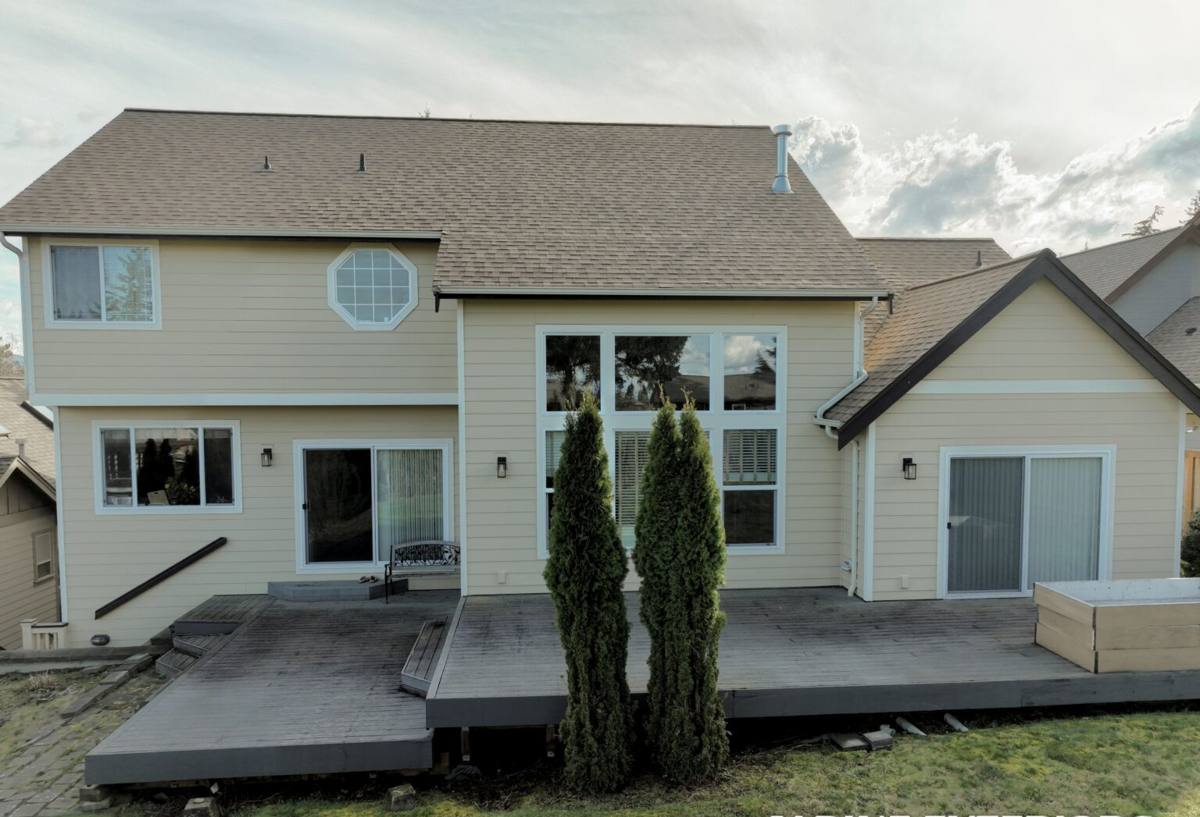
A pressure wash and a coat of sealant can make a tired deck look better without addressing what's actually happening underneath. Before you spend money on cosmetic upkeep, it's worth knowing which signs point to a real repair need:
- Soft, spongy, or bouncy spots when you walk across the decking
- Rust streaking around fastener heads or where metal brackets meet wood
- Railings or balusters that wiggle, feel loose, or have visible gaps at the base
- Gaps opening up where the deck ledger meets the house
- Stair stringers that flex, crack, or sound hollow underfoot
- Boards that are cupping, splintering, or have started to gray and split along the grain
- Visible corrosion or staining on joist hangers, post bases, or under-deck hardware
- Standing water or debris trapped between boards that never fully dries out
Any one of these on its own might be minor. Several at once, especially near the ledger or support posts, usually means the structure needs attention before it becomes a safety issue.
What a Correct Deck Repair Actually Involves
Structural Framing First
Before anything cosmetic happens, a proper repair starts underneath the deck. That means checking joists, beams, and posts for rot, corrosion, and movement. On elevated Bradenton Beach homes, this often means inspecting connections that are constantly exposed to sun and salt spray from below as well as above, since there's no crawlspace or skirting shielding them the way an inland deck's framing might be partially protected.
The Ledger Board Connection
The ledger, where the deck attaches to the house, is one of the most important and most commonly under-repaired parts of any deck. Flashing that's failed, fasteners that have corroded, or a ledger that's pulling away from the house structure are serious problems, not cosmetic ones. This connection carries a large share of the deck's load, and it's also a common entry point for water intrusion into the home itself if flashing has failed.
Decking, Railings, and Stairs
Once the structure underneath is sound, repair work moves to what you actually see and touch: deck boards, railings, baluster spacing, and stair treads. Florida building code has specific requirements for railing height and baluster spacing designed to prevent falls, and repairs are a good opportunity to bring older decks up to current code even if the original construction predates it.
Repair vs. Replace: How We Make the Call
Not every deck problem calls for a full replacement, and not every deck is worth patching. The decision usually comes down to how much of the structural framing is still sound versus how much has been compromised by rot or corrosion.
| Factor | Points Toward Repair | Points Toward Replacement |
|---|---|---|
| Framing condition | Joists and beams are solid, isolated soft spots | Widespread rot or corrosion in structural members |
| Ledger connection | Flashing intact, fasteners sound | Ledger separating from house or flashing failed |
| Age of structure | Under 10-12 years old | Original deck older than its expected service life |
| Fastener corrosion | Surface rust on isolated hardware | Corrosion throughout connectors and hangers |
| Scope of damage | Concentrated in one area (stairs, one section of boards) | Spread across multiple systems (framing, decking, railings) |
We walk homeowners through this honestly. If a deck's bones are good, there's no reason to pay for a full rebuild. If the framing is compromised, patching around the problem just delays a bigger repair bill later, and on an elevated structure, that's not a risk worth taking.
Materials That Actually Hold Up in This Environment
Material choice matters more on a barrier island than almost anywhere else in the region. What performs fine for a deck twenty miles inland can corrode or degrade noticeably faster a few hundred feet from the Gulf.
| Component | Better Choice for Coastal Exposure | Why |
|---|---|---|
| Fasteners & hardware | Stainless steel (305/316 grade) | Resists salt-air corrosion far longer than standard coated hardware |
| Structural connectors | Marine-grade or heavy hot-dip galvanized | Coastal environments break down lighter coatings faster |
| Decking boards | Capped composite (Trex- or TimberTech-style products) or naturally durable hardwood | Better resistance to UV fading and moisture cycling than uncapped wood-composite blends |
| Railing systems | Aluminum or vinyl over painted steel | Won't rust or blister the way ferrous metals and standard paint finishes do near salt spray |
We don't use whatever's cheapest or fastest to source — we spec hardware and decking based on what actually holds up a block or two from the Gulf, not what holds up in a lab test inland. That's a judgment call built from working this specific stretch of coastline, not a manufacturer's general recommendation.
Permits and Elevated Construction on the Island
Bradenton Beach sits within Manatee County's coastal flood zone mapping, and many homes here are elevated on pilings under FEMA flood-zone requirements. Deck repairs, especially anything involving structural framing, ledger reattachment, or stair rebuilds, can require a permit depending on scope. Cosmetic board replacement is usually straightforward, but structural work on an elevated deck needs to meet both county building code and the specific engineering considerations of a piling-supported structure.
We handle the permitting conversation up front so there are no surprises mid-project. It's far easier to confirm what's required before work starts than to have an inspection flag something after the fact.
Our Process From Inspection to Finished Deck
- On-site inspection. We check framing, fasteners, the ledger connection, decking, and railings from both above and underneath the deck.
- Honest assessment. We tell you plainly what's failing, what's still sound, and whether repair or partial replacement makes sense.
- Written estimate. Scope, materials, and cost laid out clearly before any work begins.
- Permit check. We confirm whether the scope requires permitting through the county and handle that process if it does.
- Repair work. Structural repairs first, then decking, railings, and stairs, using hardware and materials suited to salt-air exposure.
- Final walkthrough. We check the finished work with you before calling the job done.
Why a Crew That Already Works Bradenton Beach Matters
Access on the island is different from a typical inland job. Elevated decks mean working under and around pilings, often with limited ground clearance and tighter site access than a standard suburban lot. A crew unfamiliar with that layout loses time figuring out logistics that a crew already working here has already solved.
There's also the storm-season factor. Wind-driven rain and hurricane threats are a regular part of life on Anna Maria Island, and repair timing sometimes needs to move around storm forecasts rather than a fixed calendar. A contractor who already works this area understands that urgency and can prioritize accordingly, rather than treating a pre-storm deck repair the same as any other job on the schedule.
Finally, knowing which materials and fasteners actually last in this specific salt-air environment isn't something you learn from a spec sheet. It comes from seeing what corrodes and what doesn't after a few Gulf-front seasons, and building repairs accordingly.
Keeping a Repaired Deck in Good Shape Going Forward
Once a deck is repaired properly, a little regular attention goes a long way in this climate. Rinse salt residue off periodically, especially after windy stretches, keep an eye on fastener heads for early rust, and don't let standing water sit between boards after storms. Composite decking still needs occasional cleaning to prevent salt and grime buildup, and wood decking will need resealing on a more frequent cycle here than it would inland. Catching small issues early is almost always cheaper than waiting for them to become structural.
If your deck in Bradenton Beach is showing any of the signs above, or it's just been a while since anyone looked underneath it, we're happy to take a look. We offer free, no-pressure estimates and will tell you honestly what we find, whether that's a small repair or something more involved.