 Bradenton Siding
 Siding Replacement Built for Life on a Barrier Island
Longboat Key homes sit closer to the Gulf than almost any other property in our service area, and that changes what "good siding" actually means. A siding system that holds up fine a few miles inland can fail years early out here once you factor in constant salt-laden air, intense reflected sun off the water, wind-driven rain, and the real possibility of hurricane-force gusts in a given season. Replacing siding on a Longboat Key home isn't just a cosmetic upgrade — it's a decision about what's standing between your walls and one of the harshest residential exposures in Florida.
We work throughout Manatee County, and Longboat Key is one of the more demanding stops on our schedule for exactly that reason. This page covers what the local climate does to siding, what a correctly executed replacement involves, and why we install James Hardie fiber cement exclusively rather than offering a menu of cheaper alternatives.
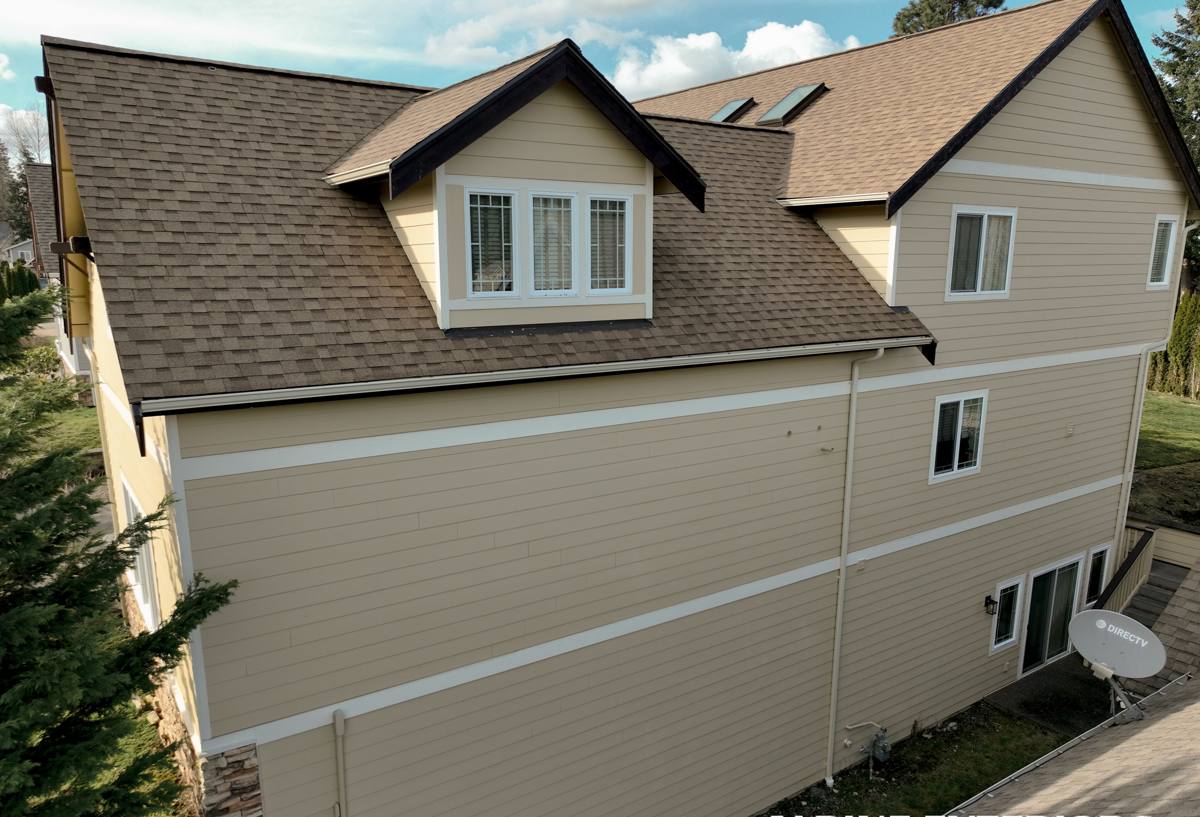
What the Longboat Key Climate Does to Siding
Salt Air and Corrosion
Airborne salt from the Gulf doesn't just affect metal fixtures — it settles into seams, fasteners, and the surface of siding materials day after day. Over time it accelerates the breakdown of coatings, promotes staining, and can corrode fasteners and trim that aren't rated for coastal exposure. Materials and hardware chosen for an inland home simply don't get the same lifespan here.
Year-Round UV Exposure
Florida sun is intense everywhere, but a barrier island gets it from two directions — direct overhead sun and reflected glare off open water. That combination breaks down cheap paint finishes and unstable resins faster than manufacturers' lab testing usually accounts for, leading to fading, chalking, and premature cracking on lower-grade siding products.
Wind-Driven Rain
Rain that arrives sideways during a storm behaves very differently than a normal vertical downpour. It gets pushed up under laps, around trim, and into any gap that wasn't sealed and flashed correctly. On Longboat Key, wind-driven rain is a near-certainty during the wet season — siding and the water-resistive barrier behind it have to be installed with that in mind, not as an afterthought.
Hurricane-Force Wind Loads
This stretch of coast is squarely in hurricane territory. Siding here isn't just decorative cladding — it's part of the building envelope that keeps wind and water out of the wall cavity during a storm. Fastening pattern, panel selection, and installation method all have real consequences when sustained winds and gusts hit a barrier island property.
Signs a Longboat Key Home Needs Siding Replacement
Because of the exposure out here, siding problems tend to show up earlier and progress faster than they would inland. Worth checking for:
- Soft, spongy, or delaminating spots when you press on the siding, especially near the bottom courses
- Visible cracking, buckling, or warping panels
- Paint or finish that's chalking heavily or peeling in sheets rather than wearing evenly
- Rust streaks around fasteners or trim
- Persistent staining or a musty smell near exterior walls, which can point to moisture getting behind the siding
- Gaps opening up at seams, corners, or around windows and doors
- Siding that flexes or rattles noticeably in wind
Any one of these on its own might just need a repair. Several at once, or damage that's spread across multiple walls, usually means the underlying material or the original installation has reached the end of what it can handle in this environment.
What a Correct Siding Replacement Job Involves
Pulling old siding off and nailing up new panels isn't a full replacement — it's a downgrade if the layers underneath aren't addressed. On a Longboat Key home, we treat the following as non-negotiable parts of the job:
Sheathing and Water-Resistive Barrier Inspection
Once the old siding is off, the wall sheathing and weather barrier underneath get a real inspection, not a glance. Any rot, soft sheathing, or compromised house wrap gets addressed before anything new goes on — covering up a damaged substrate with new siding just hides the problem for a few more years.
Flashing at Every Penetration
Windows, doors, hose bibs, light fixtures, vents — every point where something interrupts the wall plane is a place water can get in if it's not flashed correctly. This is where wind-driven rain finds its way into a wall cavity, and it's one of the most commonly rushed steps on lower-bid jobs.
Fastening for Coastal Wind Exposure
Fastener type, spacing, and pattern have to match the product manufacturer's specifications for the wind exposure category of the site — not just whatever's fastest to install. Corrosion-resistant fasteners matter here specifically because of salt air.
Proper Clearances and Drainage
Siding needs the right clearance from roof lines, decks, and grade so water has somewhere to go instead of wicking up into the bottom of the panels. This is a common oversight on older installations that we regularly find and correct during tear-off.
Why We Install Only James Hardie Fiber Cement
We don't offer vinyl, LP SmartSide, or other engineered wood siding, and that's a deliberate standard, not a limitation of what we know how to install. In an environment like Longboat Key's, the trade-offs of those products show up faster and cost more to deal with:
- Vinyl can soften, warp, or blow off in high wind, and its color coat fades under sustained coastal UV exposure — with no way to refinish it short of replacement.
- Engineered wood products are wood-based at the core, which means their long-term performance depends heavily on moisture management. Any breach in the coating or a caulking failure gives water a path into a material that isn't naturally rot-resistant.
James Hardie fiber cement is non-combustible, dimensionally stable, and doesn't rely on a thin plastic or wood substrate to hold its shape and finish. Hardie's ColorPlus factory-applied finish is baked on under controlled conditions and backed by its own finish warranty, which holds up far better against intense sun and salt exposure than field-applied paint. For coastal properties specifically, Hardie also makes an HZ5 product line engineered for high-humidity, high-moisture climates — which is the specification we use on Longboat Key homes rather than the standard HZ10 line built for milder regions.
Siding Materials Compared for Barrier Island Exposure
| Factor | James Hardie Fiber Cement | Vinyl Siding | Engineered Wood (e.g. LP SmartSide) |
|---|---|---|---|
| Behavior in high wind | Rigid, rated for high-wind installation specs | Can distort or detach in sustained high wind | Generally sturdy but seam sealing is critical |
| Salt air / corrosion resistance | Not affected by salt; fasteners are the main consideration | Plastic itself is inert but fades and becomes brittle | Coating breakdown exposes wood substrate to moisture |
| UV / fade resistance | Factory-baked ColorPlus finish, separate finish warranty | Color is through-body but chalks and fades over time | Depends entirely on field-applied or factory coating quality |
| Moisture / rot risk | Cement-based, does not rot | Doesn't rot but traps moisture behind panels if installed poorly | Wood-based core is vulnerable if the coating fails |
| Fire performance | Non-combustible | Combustible plastic | Combustible wood-based product |
Cost Factors for a Longboat Key Siding Replacement
Every home is different, and we won't throw out a number without seeing the property, but these are the variables that actually move the price:
| Factor | Why It Matters |
|---|---|
| Home size and wall area | More square footage means more material and labor |
| Existing siding removal | Multiple layers or damaged sheathing underneath add tear-off and repair time |
| Trim, corners, and architectural detail | Complex facades with dormers, bump-outs, and detailed trim take more labor than a simple rectangular footprint |
| HZ5 coastal-rated product selection | Climate-engineered product costs more than standard HZ10 but is the correct spec for this location |
| Plank profile and color | Lap width, shake or panel styles, and ColorPlus vs. field-painted finish affect material cost |
| Access and site logistics | Barrier island access, staging space, and property layout can affect scheduling and labor time |
Our Process on Longboat Key
- On-site assessment — we walk the exterior, check for the warning signs above, and evaluate wall condition, wind exposure, and existing damage.
- Written estimate — a clear scope covering tear-off, substrate repair if needed, product line (HZ5 for coastal exposure), color, and fastening specification.
- Tear-off and substrate inspection — old siding comes off, and sheathing and the water-resistive barrier get inspected and repaired before anything new is installed.
- Flashing and barrier installation — every penetration gets flashed correctly, and the weather barrier is installed to shed wind-driven rain.
- Hardie installation to spec — correct fastening pattern, clearances, and joint treatment for coastal wind exposure.
- Final walkthrough — we review the finished work with you before calling the job complete.
Why Hiring a Crew That Already Works Longboat Key Matters
A siding crew that mostly works inland neighborhoods doesn't run into salt air corrosion, barrier island wind exposure, or waterfront staging logistics on a regular basis — so those factors are easy to underestimate. We treat Longboat Key jobs differently from the start: material specification defaults to coastal-rated product, fastening follows wind-exposure guidance rather than a generic pattern, and we plan around the realities of working on an island, from site access to material staging.
Many Longboat Key properties are also part of a condo association or homeowners' association with its own exterior guidelines, so it's worth checking your documents or board before work begins. We're happy to work from whatever approval process your community requires — just loop us in early so it doesn't slow down scheduling.
Get a Free, No-Pressure Estimate
If your Longboat Key home is showing any of the warning signs above, or your siding is simply getting old enough that you want a professional opinion, we're glad to take a look. Fill out the form below for a free estimate — no pressure, just a straight assessment of what your home actually needs.