 Bradenton Siding
 Building Decks for Whitfield Estates' Coastal Conditions
Whitfield Estates is one of the older, established neighborhoods on the Bradenton side of the bay, and that maturity shows up in the kind of decks we get called out to work on. A lot of homes here have mature tree canopy, older footprints close to the water, and decks that were built years ago under different assumptions about Florida weather. What holds up in a landlocked subdivision inland doesn't necessarily hold up a half-mile from Sarasota Bay. Salt-laden air, near-constant UV exposure, wind-driven rain, and the real possibility of hurricane-force gusts all work on a deck at the same time, and they work on it every single day, not just during a named storm.
A deck built without those conditions in mind will look fine for a year or two and then start showing problems fast — fastener corrosion, board cupping, soft spots where water sits, railings that loosen. Building correctly the first time costs more up front than the cheapest bid, but it's a lot cheaper than replacing a deck twice in ten years.
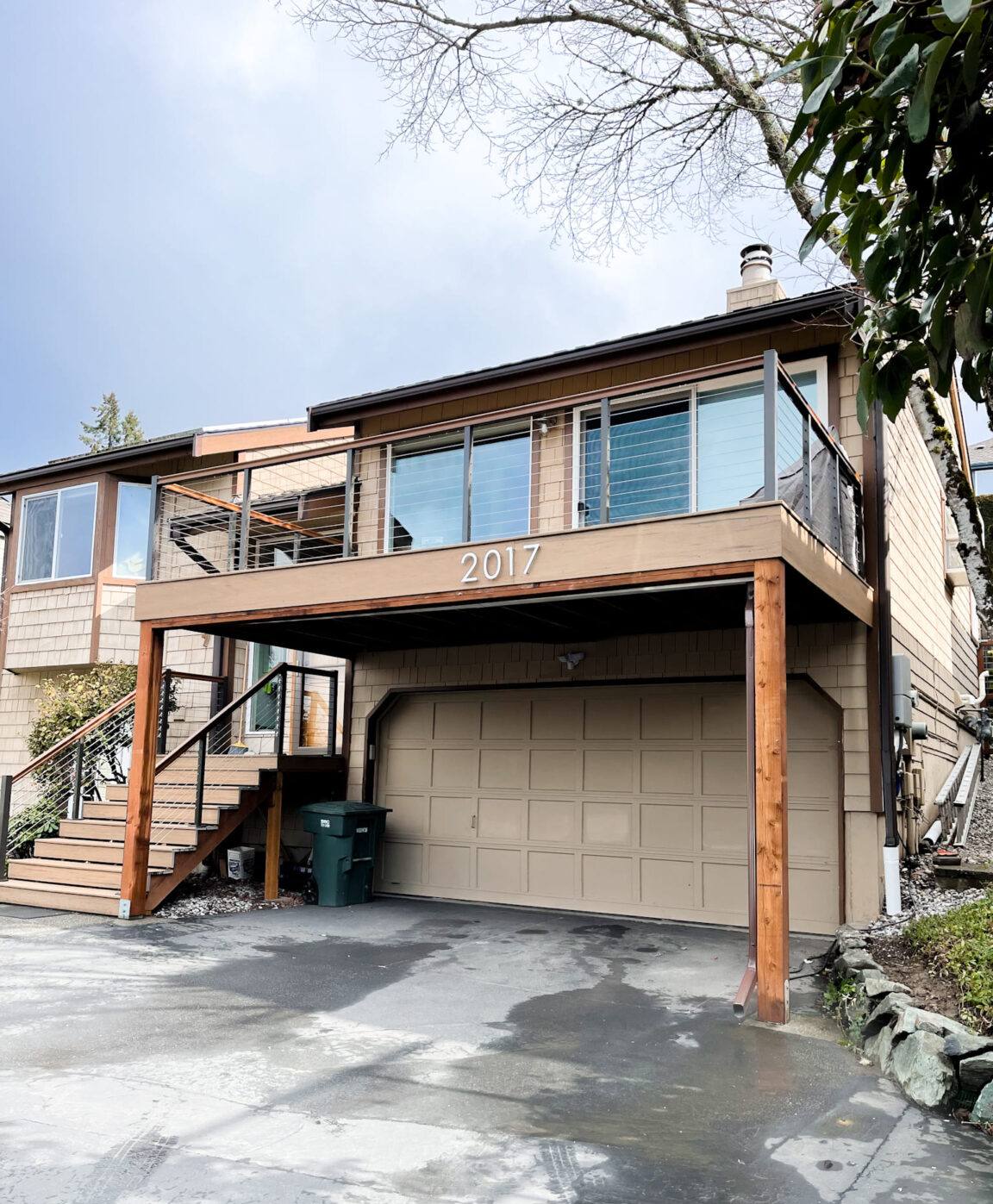
What Whitfield Estates Homes Need From a Deck
Proximity to Salt Water
Homes closer to the bay deal with airborne salt that settles on every exposed surface, including metal fasteners, hinges, and railing hardware. Standard zinc-coated screws and connectors that are fine forty miles inland will corrode noticeably faster here. It's not dramatic — you won't see it happen — but a few years in, you'll find rust streaks bleeding out of screw heads and joist hanger nails starting to weep, which is usually the first visible sign that the fastening system underneath is failing before the wood is.
Sun and Heat Load
Manatee County gets strong, direct sun essentially year-round. On an uncovered deck facing south or west, surface temperatures on darker composite boards or unfinished wood can get uncomfortably hot underfoot, and UV breaks down finishes and sealants faster than most homeowners expect. Materials and coatings need to be chosen with that sun load in mind, not just for how they look on day one.
Wind-Driven Rain and Storm Exposure
Rain in this part of Florida rarely falls straight down. Wind-driven rain gets pushed sideways and underneath structures, which means ledger boards, framing connections, and anything tucked against the house need real flashing and drainage detail, not just caulk. During tropical storms and hurricanes, an under-built deck also becomes a wind hazard — loose railings and poorly fastened boards can become debris.
Decking Material Options for This Climate
There's no single "right" material for every home — it depends on budget, how close you are to the water, how much maintenance you want to do, and what look you're after. Here's how the common options actually perform in Bradenton's conditions:
| Material | Upfront Cost | Salt Air / Moisture Behavior | Maintenance | Notes |
|---|---|---|---|---|
| Pressure-treated pine | Lowest | Needs sealing to resist moisture and salt; can warp or split if neglected | Annual cleaning and re-sealing | Most affordable, but shortest service life near water without upkeep |
| Tropical hardwoods (e.g., ipe) | High | Naturally dense and rot-resistant, handles salt air well | Periodic oiling to maintain color; low structural maintenance | Heavy, very durable, requires stainless fasteners and pre-drilling |
| Capped composite | Mid-High | Excellent — doesn't absorb moisture or rot | Occasional washing, no sealing or staining | Best low-maintenance option for coastal exposure; can run hot in direct sun |
| PVC decking | High | Fully moisture-proof, unaffected by salt | Lowest of all options | Lighter than composite, holds up well but costs the most per board |
For homes right along the water in Whitfield Estates, we generally steer people toward capped composite or PVC unless they specifically want the look and feel of real wood and are prepared to keep up with sealing. Pressure-treated pine still has its place on budget-driven projects or smaller structures, as long as everyone's clear on the maintenance commitment going in.
Framing and Fasteners: Where Decks Actually Fail
Decking material gets all the attention, but the framing underneath is what actually determines whether a deck stays safe and level. This is also where corner-cutting is hardest to spot after the fact.
- Ledger board attachment to the house — properly flashed and bolted, not just nailed or lag-screwed without a moisture barrier
- Joist hangers and structural connectors rated for exterior and coastal use, not standard interior-grade hardware
- Stainless steel or high-grade coated fasteners throughout, especially anywhere near the water
- Post footings sized and set to local frost-free depth requirements and soil conditions, not just poured to "look deep enough"
- Beam and joist spacing engineered for the actual span and load, not stretched to save on lumber
- Railing posts through-bolted into framing, not just screwed to a rim joist
We've replaced decks where the boards on top looked perfectly fine but the framing underneath was corroding or the ledger connection had never been properly flashed. From the surface you'd never know. That's exactly why the framing has to be done right the first time — it's not something you can inspect easily once the decking is down.
Permitting and Wind Considerations in Manatee County
Deck construction in Manatee County is subject to local permitting and inspection, and homes in this part of Florida fall under wind design requirements that account for hurricane exposure. What that means practically is that framing sizes, connector types, and railing attachment methods aren't just a matter of preference — they need to meet code for the wind zone the home is in. A properly pulled permit also means the work gets inspected at the framing stage, before decking covers everything up, which is a real safeguard for the homeowner. We handle the permitting and inspection process as part of the job rather than leaving it to the homeowner to sort out.
Our Process for a Whitfield Estates Deck Project
Site Visit and Design
We start on site, not over the phone. We look at the home's orientation, how close it sits to the water, existing drainage, tree cover, and how the deck will actually be used — entertaining, grilling, pool access, quiet mornings with coffee. That shapes material choice, layout, and railing style.
Permitting and Prep
We handle the permit submittal and take care of removing or protecting anything in the work area. If we're replacing an existing deck, we assess whether the substructure or ledger connection can be reused or needs to come out along with the old boards.
Build
Framing goes in first and gets inspected before decking is installed. We use corrosion-resistant fasteners and connectors throughout, not just at points that are visible. Decking, railings, and any stairs or lighting go in last.
Final Walkthrough
We walk the finished deck with the homeowner, cover basic care for whatever material was installed, and make sure everything is level, secure, and ready for final inspection sign-off.
Maintenance in Salt Air and Florida Sun
Whatever material you choose, a little regular attention goes a long way in this climate. A simple seasonal routine keeps small issues from becoming expensive ones:
- Rinse the deck surface periodically to clear off salt residue, pollen, and organic buildup, especially after storms
- Check railing posts and stair connections for looseness once or twice a year
- Inspect exposed fasteners for early rust staining and address it before it spreads to surrounding wood or boards
- Re-seal or re-stain wood decking on the schedule the product calls for — don't wait until it looks obviously weathered
- Keep gutters and nearby drainage clear so water isn't sheeting onto or pooling near the deck structure
- After any tropical storm or hurricane, walk the deck and check fastener tightness and railing stability before heavy use
Why a Crew That Already Works Whitfield Estates Matters
Every neighborhood has its own quirks — lot setbacks, mature trees to work around, older homes with framing that doesn't match modern lumber dimensions, and in some cases HOA guidelines on materials or colors. A crew that's already worked in Whitfield Estates has seen those specifics before and isn't learning them on your project. We know how Bradenton's permitting process runs, we know what wind and moisture exposure actually does to a deck this close to the bay over time, and we build accordingly rather than applying a one-size-fits-all approach.
Local also means accountability. If something needs attention after the job is done, we're not driving in from across the state — we're already working in the area.
If you're planning a new deck or need to replace one that's showing its age, we're happy to come take a look and walk through your options. Use the form below to request a free, no-pressure estimate.