 Bradenton Siding
 Siding Installation Built for Whitfield Estates Conditions
Whitfield Estates sits close enough to the water that salt air is a constant factor in how exterior materials age, and close enough to Bradenton and the broader Sarasota-Manatee corridor that homes here run the full range from older ranch-style construction to more recently updated properties. What most of these homes share is exposure to the same punishing combination: intense year-round UV that breaks down pigments and coatings, wind-driven rain that gets pushed sideways under poorly flashed trim, salt-laden air that accelerates corrosion of fasteners and hardware, and the real possibility of hurricane-force wind loading during storm season. Siding here isn't just a cosmetic layer. It's the first line of defense for the wall assembly behind it.
We install siding specifically with those conditions in mind, on a neighborhood-by-neighborhood basis rather than a one-size-fits-all approach. That means paying attention to how close a given property sits to open water, how much direct afternoon sun a wall elevation takes, and how the existing trim and flashing details were originally built — because in this part of Manatee County, those details are usually where problems start.
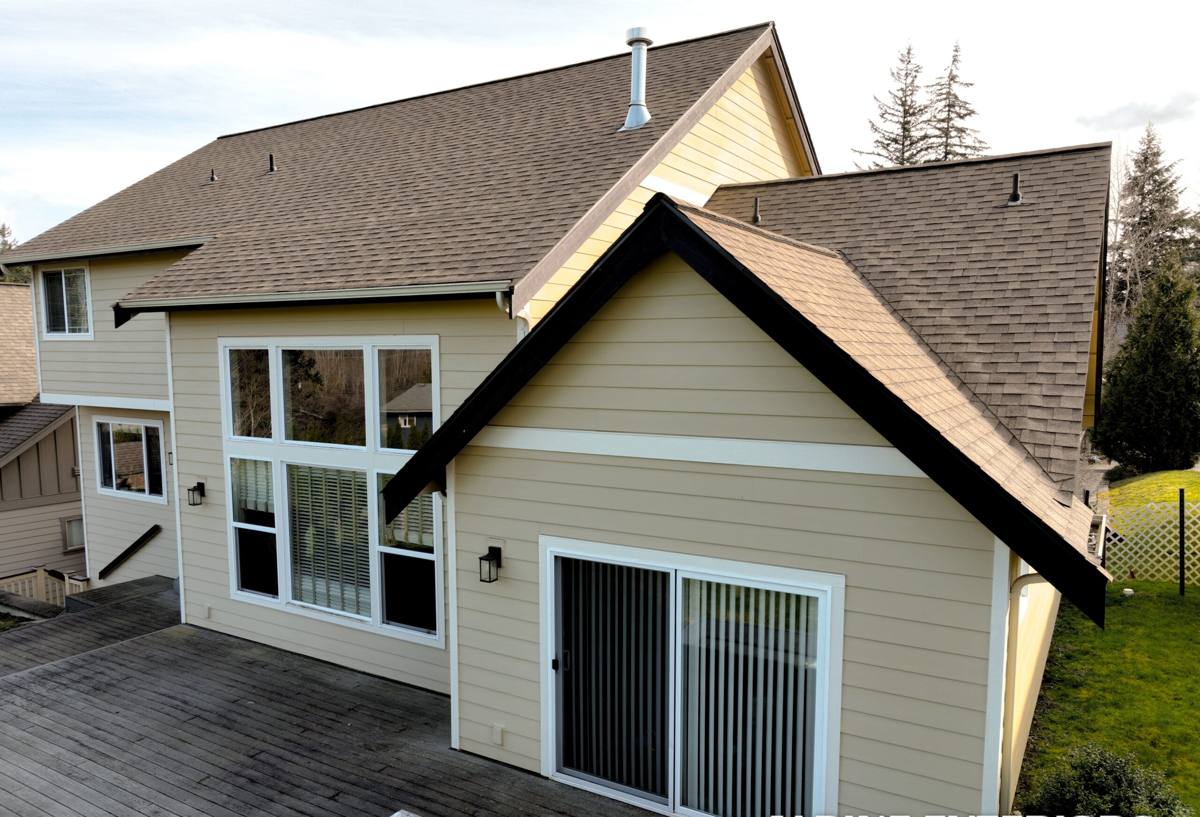
What Siding Failure Looks Like on Homes Near the Water
Coastal-adjacent siding rarely fails all at once. It shows up first as small, localized problems that get worse the longer they're ignored.
Common Warning Signs
- Soft or spongy spots near the bottom courses of siding, especially close to grade or sprinkler spray zones
- Paint that's chalking, fading unevenly, or peeling in sheets rather than wearing gradually
- Rust streaks bleeding from nail heads or fastener locations
- Visible gaps, warping, or buckling at panel seams and butt joints
- Soft trim boards around windows, doors, or roofline transitions
- A musty smell or discoloration on interior walls that back up to exterior siding
On older wood or engineered wood siding, these symptoms usually mean moisture has already gotten behind the material. On vinyl, UV exposure typically shows up as brittleness and fading long before any structural failure — the material simply stops doing its job as a weather barrier while still looking intact from the curb. Either way, by the time these signs are visible, the underlying wall assembly has usually been absorbing damage for a while.
Why We Install Only James Hardie Fiber Cement Siding
We made a deliberate decision to install one siding system — James Hardie fiber cement — and nothing else. Not vinyl, not LP SmartSide, not primed spruce or cedar, not other fiber cement brands. That's not a marketing gimmick; it's a standard we hold because of how these products actually perform once they're on a wall in this climate.
Vinyl siding is inexpensive and easy to install, and for many parts of the country it does its job fine. In a high-UV, high-wind, salt-air environment, though, it tends to fade and become brittle faster than manufacturers' warranties assume, and it can deform or crack under sustained heat and wind loading. LP SmartSide and other engineered wood products perform reasonably well when installation and maintenance are handled exactly right, but they remain wood-based — meaning moisture intrusion at a cut edge, fastener hole, or failed caulk joint can lead to swelling and rot in a way that non-combustible fiber cement simply doesn't experience. Primed spruce and cedar require the most ongoing maintenance of all these options and are the least forgiving of gaps in that maintenance schedule.
James Hardie fiber cement is manufactured from cement, sand, and cellulose fiber. It doesn't absorb moisture the way wood-based products do, it's non-combustible, and it holds paint and factory finishes far longer than vinyl or wood alternatives because the material itself is dimensionally stable — it doesn't expand and contract with heat and humidity the way vinyl and wood do. James Hardie also engineers specific product formulations for different climate zones, and the HZ10 designation used for Florida and other high-humidity, coastal regions is built around exactly the conditions Whitfield Estates deals with: sustained moisture exposure, salt air, and intense sun. That's the version we install here, not a generic national product.
The ColorPlus Advantage
Most of what we install uses James Hardie's ColorPlus factory-applied finish rather than field-applied paint. It's baked on in a controlled environment, resists fading and chipping better than site-applied paint, and comes with its own dedicated finish warranty separate from the substrate warranty. For a coastal-adjacent neighborhood where UV and salt air are working against a finish every single day, that difference matters more than it does inland.
What Correct Installation Actually Involves
The siding material is only part of the equation. Most of the failures we get called out to inspect on other companies' work trace back to installation shortcuts, not the product itself. A correct James Hardie installation in this climate involves several things that are easy to skip and hard to notice until years later.
| Installation Step | Why It Matters Here |
|---|---|
| Proper weather-resistive barrier and flashing at every penetration | Wind-driven rain during storms finds any gap; flashing is what actually stops water, not the siding surface |
| Correct fastener type, spacing, and penetration depth | Salt air corrodes the wrong fasteners quickly; James Hardie specifies exact fastener requirements by product and application |
| Manufacturer-specified clearances from grade, roofing, and decks | Standing moisture and splash-back at low clearances is one of the most common causes of early siding failure |
| Properly caulked and sealed joints, corners, and trim transitions | Every open seam is a path for wind-driven rain to reach the wall sheathing |
| Factory-cut edges used wherever possible; field cuts sealed per spec | Cut edges of fiber cement need sealing to maintain the product's moisture resistance |
Skipping any one of these doesn't necessarily cause a visible problem right away. It shows up two, five, or ten years later as a soft spot, a stain, or a warranty claim that gets denied because the installation didn't meet the manufacturer's requirements. That's the gap between siding that's "up on the wall" and siding that's actually installed correctly.
Our Process, Start to Finish
1. On-Site Assessment
We walk the full exterior, check the condition of the existing siding and trim, and look at what's happening behind it where accessible — soft spots, water staining, or evidence of prior repairs tell us a lot about what we're working with before a single panel comes off.
2. Scope and Estimate
We put together a clear, written scope: what's being removed, what's being replaced, which James Hardie products and profiles fit the home, and an honest cost range. No pressure, no inflated urgency.
3. Tear-Off and Substrate Check
Old siding comes off and we inspect the sheathing underneath. Any rot or moisture damage gets addressed before new siding goes up — covering a compromised substrate with new siding just hides the problem.
4. Weather Barrier and Flashing
This is the step that actually keeps water out. We install or repair the weather-resistive barrier and flash every window, door, and penetration to manufacturer spec.
5. Installation to Manufacturer Specification
James Hardie panels, planks, or trim go up following the fastener, clearance, and sealing requirements specific to the HZ10 product line and the application on that home.
6. Final Walkthrough
We go over the finished job with the homeowner, point out anything worth knowing for future maintenance, and make sure everything matches what was scoped and priced up front.
Comparing Siding Options for This Neighborhood
| Factor | James Hardie Fiber Cement | Vinyl | Wood / Engineered Wood |
|---|---|---|---|
| Salt air / coastal exposure | Engineered for it (HZ10 line) | Fades and becomes brittle faster | Vulnerable without diligent maintenance |
| Hurricane-force wind resistance | Rated for high wind zones when installed to spec | Can deform, crack, or blow off in high winds | Performance varies with age and moisture condition |
| Fire resistance | Non-combustible | Combustible | Combustible |
| Moisture / rot risk | Does not absorb moisture like wood fiber | Doesn't rot but traps moisture behind it if installed poorly | Highest risk if finish or caulking fails |
| Finish longevity | Factory ColorPlus finish holds color and adhesion long-term | Color molded in but fades; can't be easily refreshed | Requires repainting/resealing on a recurring cycle |
This isn't a claim that other materials are worthless everywhere — it's a straightforward look at how each performs under the specific stresses a Whitfield Estates home deals with. That's the reasoning behind why we standardized on one product line rather than offering several.
Cost Factors Homeowners Should Understand
Every home is different, so we don't publish blanket prices, but the real cost of a siding project is driven by a consistent set of factors:
| Factor | How It Affects Cost |
|---|---|
| Home size and wall complexity | More square footage, corners, and architectural detail means more material and labor |
| Extent of substrate repair needed | Rotted or water-damaged sheathing found during tear-off adds scope |
| Siding profile and trim selection | Lap width, panel style, and trim detail all vary in material cost |
| Existing conditions to remove | Removing multiple layers of old siding or extensive prior repairs takes more labor than a single clean tear-off |
| Access and site conditions | Landscaping, fencing, and property layout can affect setup and staging time |
We walk through these factors on-site so the estimate reflects the actual home, not a generic average.
Maintenance After Installation
James Hardie siding installed correctly is low-maintenance, not no-maintenance. A little attention keeps it performing the way it's designed to, especially this close to salt air.
- Rinse the exterior periodically to clear salt residue and airborne debris, especially on elevations facing open water
- Keep sprinklers and irrigation heads from spraying directly on siding
- Inspect caulking at trim, corners, and penetrations annually and have any cracked or missing caulk addressed
- Trim back vegetation that holds moisture against the wall or blocks airflow
- Watch for any soft spots, staining, or fastener corrosion after major storms and have them checked promptly
- Keep gutters and downspouts clear so roof runoff isn't dumping onto siding below
Why Hiring a Crew That Already Works This Neighborhood Matters
Siding installation isn't just about the product — it's about knowing how a specific area's homes were built, what their common trouble spots are, and how the local climate actually behaves against a wall. A crew that regularly works in and around Whitfield Estates and the broader Bradenton area already knows which flashing details tend to fail on homes of a certain age, how much clearance matters near irrigation and low grade, and what wind exposure looks like on different elevations depending on how close a property sits to the water. That familiarity shows up in fewer surprises during tear-off and a tighter, more accurate estimate up front.
It also means accountability. A contractor who works this area consistently has a reputation to protect with neighbors who talk to each other — that's a different incentive structure than an out-of-area crew moving through on a single job.
If your Whitfield Estates home has siding that's showing its age, or you're planning ahead rather than reacting to a problem, we're glad to take a look and put together a free, no-pressure estimate using the form below.