 Bradenton Siding
 Siding Built for Bayshore Gardens' Coastal Exposure
Bayshore Gardens sits close to the water on Bradenton's west side, and that proximity shapes what a home's exterior has to survive. Homes here take on a heavier dose of salt-laden air than properties farther inland, and many sit low enough to catch wind off open water during a squall or a tropical system. Add in Manatee County's year-round UV load and the wind-driven rain that comes with almost every serious summer storm, and you have an environment that is genuinely tough on exterior building materials. Siding that performs fine in a drier, cooler climate can fail here years ahead of schedule.
We install exclusively James Hardie fiber cement siding, and Bayshore Gardens is one of the neighborhoods where that decision matters most. This page walks through what the local climate actually does to a home's exterior, what correct James Hardie installation looks like in this setting, and how our process is built around the realities of working this close to the coast.
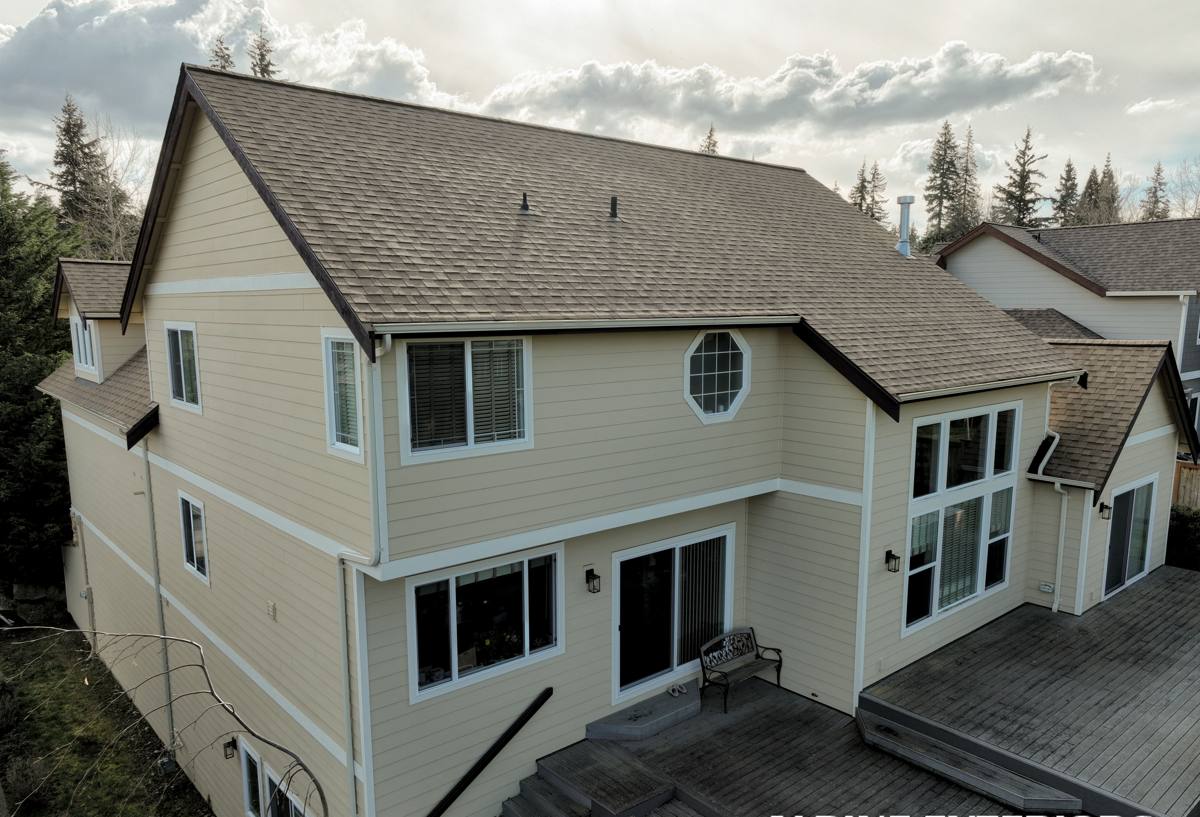
What Salt Air, UV, and Wind-Driven Rain Do to Siding
Salt Air
Airborne salt is corrosive and it doesn't stay near the shoreline — it travels on the wind and settles on every exterior surface it touches, including siding, fasteners, and trim. Over time it accelerates the breakdown of paint films, promotes chalking and fading, and can corrode lower-quality metal fasteners and flashing if they aren't rated for coastal exposure. A siding product's finish and hardware need to be chosen with that in mind, not treated as an afterthought.
UV Exposure
Florida sun is intense and constant. Standard site-applied paint jobs on wood-based or composite sidings tend to chalk, fade, and crack years before a homeowner expects to repaint, because the pigment and resin in a field-applied coat simply aren't engineered for this much sun load. A finish that's baked on and formulated for UV resistance holds its color and integrity far longer.
Wind-Driven Rain
It's rarely the rain falling straight down that causes damage — it's rain being driven sideways into seams, laps, and penetrations during a storm. If siding isn't installed with the right laps, clearances, and flashing details, wind-driven rain finds its way behind the cladding and into the wall assembly, where it can sit against sheathing and framing long after the storm has passed.
Why James Hardie Fits This Environment
James Hardie fiber cement is a cement, sand, and cellulose fiber composite. It doesn't rot, it isn't attractive to termites or wood-boring insects, and it's non-combustible — all relevant advantages in a humid, insect-active coastal climate. Hardie's ColorPlus factory finish is baked on under controlled conditions rather than applied on site, which gives it much stronger UV and fade resistance than field-painted alternatives, and its HZ5 product line is specifically engineered for high-humidity, storm-prone climates like ours.
None of that means fiber cement is maintenance-free or installer-proof. Fiber cement is unforgiving of shortcuts — poor flashing, wrong nail placement, missed clearances, or skipped caulking joints will show up as problems within a few years, coastal exposure or not. The material only performs to spec when the installation matches the spec.
| Climate Factor | What It Does to Siding | What Correct Hardie Installation Addresses |
|---|---|---|
| Salt air | Accelerates fastener corrosion and finish breakdown | Corrosion-resistant fasteners, factory-baked ColorPlus finish |
| UV exposure | Fades and chalks field-applied paint | Factory finish engineered for UV stability |
| Wind-driven rain | Pushes moisture behind laps and penetrations | Correct lap spacing, flashing, and sealed penetrations |
| Humidity | Promotes rot and mold on organic materials | Non-organic cement composite, doesn't support rot |
| High wind events | Tests fastening pattern and edge attachment | Manufacturer-specified nailing pattern and clearances |
What a Correct James Hardie Job Involves
A lot of what separates a siding job that lasts 30+ years from one that needs attention in five happens in steps a homeowner never sees once the siding is up. For a Bayshore Gardens home, that includes:
- Removing the old siding and inspecting the sheathing underneath for hidden moisture damage before covering it back up
- Installing a proper weather-resistive barrier, lapped and sealed correctly at every seam and penetration
- Flashing windows, doors, and any wall penetrations so wind-driven rain has nowhere to enter
- Maintaining Hardie's specified minimum clearances from roof lines, decks, and grade so the bottom edge of the siding never sits in standing water or constant moisture
- Following the manufacturer's exact nailing pattern and fastener spacing, using fasteners rated for coastal, corrosion-prone environments
- Caulking and sealing joints with a product compatible with the ColorPlus finish, not a generic sealant that will fail or discolor
Skipping or rushing any one of these steps is usually invisible on installation day and becomes a visible problem two, five, or ten years later — a streak of moisture staining, a soft spot near a window, a seam that's opened up. That gap between "looks fine today" and "performs for decades" is almost entirely a function of installation discipline, not the material itself.
Our Process for Bayshore Gardens Homes
1. On-Site Assessment
We walk the exterior with you, look at the current siding's condition, check for signs of past moisture intrusion, and take note of anything specific to the home's exposure — proximity to open water, prevailing wind direction, shade versus full sun.
2. Product and Line Selection
James Hardie offers different plank profiles, textures, and their HZ5 line is built for this climate zone. We help you choose based on the home's architecture and exposure, not a one-size-fits-all default.
3. Written Scope and Estimate
You get a clear, itemized scope before any work starts — what's being removed, what's being installed, what the flashing and moisture-barrier plan looks like, and a straightforward cost range. No surprise change orders for basics that should have been scoped from the start.
4. Installation to Manufacturer Spec
Our crews install to James Hardie's published specifications, not a shortcut version of them — the fastening pattern, clearances, and flashing details are non-negotiable, because they're what determines whether the siding actually holds up here.
5. Final Walkthrough
We walk the finished job with you, check every elevation, and make sure caulking, trim, and finish work meet the standard before we consider the job done.
Why a Crew That Already Works This Neighborhood Matters
Siding installation isn't one-size-fits-all across Manatee County. A crew that regularly works in Bayshore Gardens already understands the exposure profile of homes this close to the water — how much salt air matters, how storms tend to move through, and where wind-driven rain tends to find weak points on this style of home. That local pattern recognition shows up in small decisions on the job: where to add extra flashing attention, which clearances to double-check, which details tend to get missed on homes with this kind of exposure. It's the difference between a crew applying a generic install checklist and one applying judgment earned from doing this work, in this area, repeatedly.
It also matters for accountability. A local, established crew is easy to reach if a question comes up five years down the road, and has a reputation in the immediate area worth protecting.
Signs Your Current Siding May Be Falling Behind
- Visible fading, chalking, or peeling paint that's returned within a few years of a repaint
- Soft spots, warping, or bulging panels, especially near ground level or roof lines
- Staining or streaking that suggests water is tracking behind the siding rather than off it
- Visible gaps opening up at seams, corners, or trim joints
- Increasing pest activity — termites and wood-boring insects are drawn to compromised wood-based siding
- A noticeable rise in cooling costs, which can indicate the wall assembly behind the siding has taken on moisture
Any one of these on its own isn't necessarily an emergency, but on a home this close to the water, they're worth having a professional look at sooner rather than later — moisture problems behind siding tend to compound quietly before they become visible on the surface.
What to Expect Cost-Wise
Every Bayshore Gardens home is different — square footage, number of stories, trim detail, and how much of the substrate needs repair before new siding goes on all move the number. Rather than quote a figure that won't reflect your actual home, we provide a detailed, itemized estimate after seeing the property in person, so you know exactly what you're paying for and why.
If your Bayshore Gardens home's siding is showing its age or you're planning ahead for a hurricane season, we're glad to walk the exterior with you and put together a free, no-pressure estimate — use the form below to get started.