 Bradenton Siding
 Why Tara Homes Put Extra Demand on Their Windows
Tara sits inland from the coast, but "inland" in Manatee County still means salt-laden air, brutal summer UV, and the same windstorm exposure that the rest of the Bradenton area deals with every hurricane season. Homes here were built across several different decades and builder programs, which means window openings, frame depths, and original construction quality vary a lot from one property to the next — even on the same street. A window that fits and performs well in one house may be the wrong call two doors down.
That variety is exactly why "custom" matters more than it sounds like it should. A stock big-box window ordered to the nearest standard size, then shimmed and trimmed to fit, is a different product than one measured and built for the actual opening in your wall. Over a few Florida summers, that difference shows up as air leaks, water intrusion, and premature seal failure.
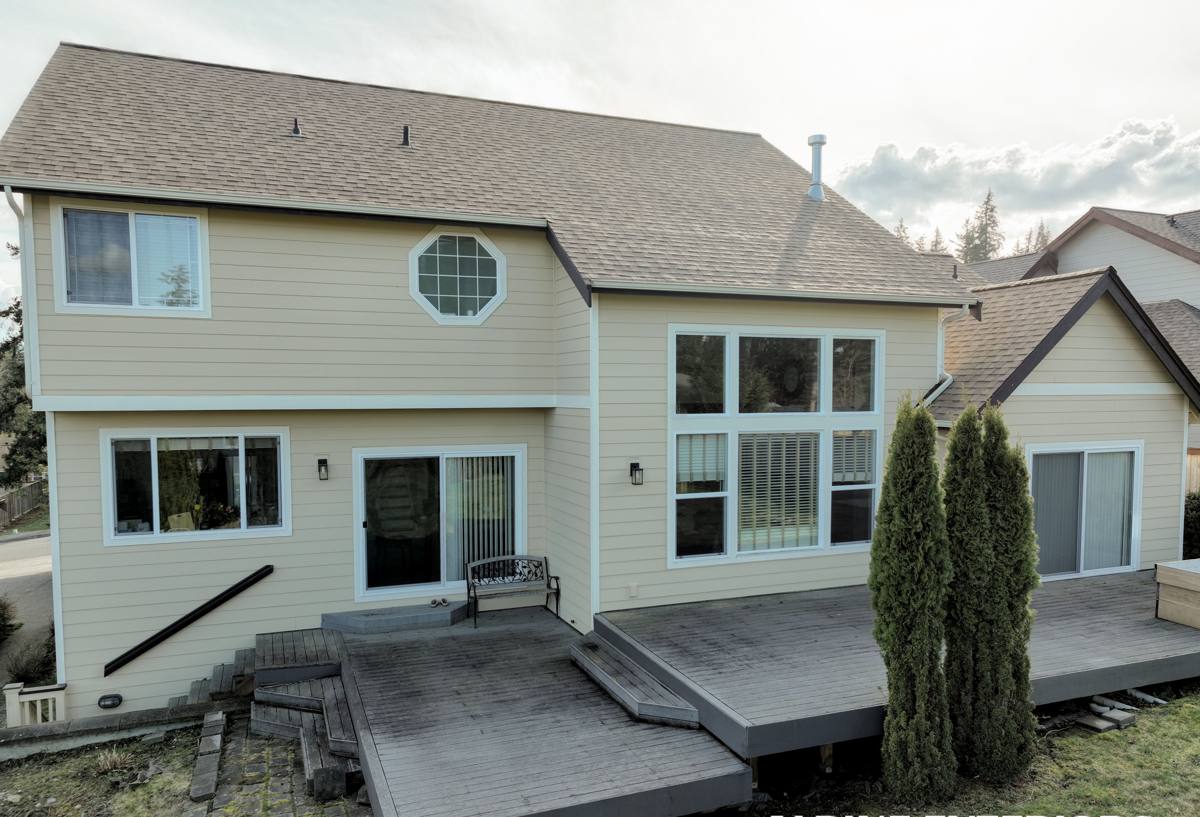
What Hurricane and Sun Exposure Actually Do to Windows
It helps to be specific about what's working against a window in this part of Florida, because it changes what "correct installation" means:
- Wind-driven rain gets forced sideways and upward during tropical storms and squalls, finding any gap in flashing or sealant that a calm-weather install would never expose.
- Sustained high winds and pressure cycling flex a window frame and glazing thousands of times over a storm's duration, which is why impact and pressure ratings — not just glass thickness — matter.
- Intense, near year-round UV breaks down vinyl, weatherstripping, and low-grade sealants faster than in most of the country, leading to brittle gaskets and cracked caulk lines well before a window's expected lifespan is up.
- Salt air, even well away from the immediate coastline, accelerates corrosion on hardware, screws, and lesser-grade aluminum components over time.
None of this means every window has to be over-built for a bunker. It means the frame material, glazing, hardware, and installation details all need to be chosen and installed with these specific stresses in mind, not generic ones.
What "Custom" Means on a Real Job
Measuring the Opening, Not the Catalog
Every rough opening gets measured on-site — width, height, and diagonal, at multiple points, because framing can be slightly out of square even on a well-built home. The window is then ordered or built to that exact opening, with proper allowance for shimming and sealant, instead of forcing a standard size to fit.
Retrofit vs. Full-Frame Replacement
There are two honest approaches, and the right one depends on the condition of your existing frame:
- Retrofit (insert) replacement — the new window is installed into the existing frame, which stays in the wall. Faster, less invasive, and appropriate when the existing frame is square, dry, and structurally sound.
- Full-frame replacement — the old frame is removed down to the rough opening, exposing the framing and allowing us to check for and repair any hidden water damage, rot, or old flashing failures before the new window goes in. This is the right call whenever there's evidence of past leaks or the existing frame has shifted out of square.
We'll tell you honestly which situation you're in rather than defaulting to whichever is faster for us.
Impact Ratings and Local Code Requirements
Manatee County follows the Florida Building Code's wind-borne debris and pressure requirements, and the specific wind speed and pressure design your home falls under depends on your exact location, the home's height, and its exposure category. In practice, homeowners in the Bradenton area meet these requirements one of two ways:
- Impact-rated windows — laminated glass built to resist wind-borne debris impact, tested and labeled to a Florida product approval or Miami-Dade Notice of Acceptance. These stay in place permanently — no shutters to install before a storm.
- Non-impact windows paired with code-compliant shutters or panels — a lower upfront cost, but it depends on someone being home (or hired) to deploy protection before every storm.
We pull permits and make sure the product data plate, the Florida Product Approval number, and the installation method are all documented and match what the county requires for your address. That paperwork matters at resale and for insurance — skipping it to save a few days is not a shortcut we take.
Frame and Glass Options Compared
There's no single "best" window for every Tara home — it depends on budget, the home's architecture, and how much of the storm-protection burden you want built into the glass itself versus handled with shutters. Here's how the common choices stack up for this climate:
| Option | Strength in This Climate | Trade-Off to Know |
|---|---|---|
| Vinyl impact frame | Won't corrode in salt air; good insulation value; lower cost | Can expand/contract more than other frames in extreme heat; quality varies a lot by manufacturer |
| Aluminum impact frame | Slim sightlines, strong, common on more modern architectural styles | Conducts heat more than vinyl or fiberglass; needs a quality thermal break for efficiency |
| Fiberglass frame | Very stable through heat cycling, resists warping and UV degradation | Higher upfront cost than vinyl or standard aluminum |
| Laminated impact glass | Meets wind-borne debris code without shutters; also cuts UV and outside noise | Heavier — requires correctly rated hardware and a frame built to carry the extra weight |
| Low-E coated glass | Blocks a significant share of solar heat gain year-round | Adds cost; benefit is reduced (not eliminated) without impact-rated glass underneath |
We'll walk through this table against your actual home and budget rather than pushing a single product line — the right answer for a single-story block home is often different from the right answer for a two-story home with more sun exposure on the upper level.
How We Handle a Window Project
- On-site assessment — we inspect existing frames, check for prior water damage or settling, and measure every opening individually.
- Product selection — we go through frame material, glass, and impact-vs-shutter options based on your home's exposure and your budget, honestly, including what we would and wouldn't recommend.
- Permitting — we handle the Manatee County permit application and make sure the product approval documentation is on file before work starts.
- Removal and prep — old windows come out, and on full-frame jobs we inspect and repair the rough opening, flashing, and sheathing before anything new goes in.
- Installation — windows are set plumb, level, and square, properly shimmed, mechanically fastened per the manufacturer's and code's approved method, and sealed with the correct flashing and sealant system — not caulk alone.
- Final inspection and walkthrough — we confirm proper operation, check seals, and pass county inspection where required, then walk you through what to expect.
Problems We Commonly Find on Older Tara Homes
Because a lot of the housing stock in this area spans several building eras, a handful of issues show up repeatedly when we open up an existing window:
- Original aluminum single-pane windows with hardened, cracked glazing putty and no meaningful storm protection
- Flashing that was skipped or installed backward, letting wind-driven rain track behind the frame instead of shedding away from it
- Foam-only "sealing" with no mechanical fastening to code, which fails under real wind pressure even though it looks fine day to day
- Hardware and screws corroded from years of salt-air exposure, making windows difficult to open, close, or lock properly
Any of these can be present without an obvious symptom until a storm — or a home inspection ahead of a sale — brings it to light.
Living With Your Windows in This Climate
Even a correctly installed window benefits from basic upkeep in a coastal-influenced climate like ours:
- Rinse frames and tracks periodically to clear salt residue, especially after storms
- Check weatherstripping and sealant lines once a year for cracking or gaps, since intense UV shortens their working life
- Lubricate locks and hardware to keep salt air from seizing moving parts
- Keep an eye on interior sills and drywall near windows after heavy wind-driven rain events as an early warning sign of a seal issue
Why a Crew That Already Works in Tara Makes a Difference
Window replacement done right depends on knowing the local permitting process, the wind and pressure requirements that actually apply to your address, and the kinds of construction quirks that show up in this particular part of Bradenton. A crew that pulls Manatee County permits regularly moves through that process without delays, and one that's opened up enough older Tara-area homes knows what to check for before a small fix turns into a bigger one. That local familiarity is worth more than a lower bid from a crew unfamiliar with the area's building patterns and code specifics.
Questions Worth Asking Before You Hire
- Are you licensed and insured to do window installation work in Manatee County?
- Will you pull the required permit, and is the product's Florida Product Approval number documented?
- Is this a retrofit or full-frame replacement, and why do you recommend that for my home specifically?
- What's the manufacturer's warranty, and what does your own installation warranty cover separately?
- Can you explain the trade-offs between the frame and glass options you're proposing, in plain terms?
If you're weighing your options for a window project in Tara, we're happy to take a look and give you a straight assessment — no pressure, no hard sell. Use the form below to request a free estimate and we'll go over what your home actually needs.