 Bradenton Siding
 Siding Installation Built for Bayshore Gardens
Bayshore Gardens sits close to the water in Manatee County, which means homes here take a harder hit from the elements than siding manufacturers usually design for on their glossy brochures. Salt-laden air drifts in off the bay, afternoon humidity swings hard against sun-baked walls, and every hurricane season brings the real possibility of sustained high winds and horizontal rain. Siding in this neighborhood isn't just a cosmetic choice — it's the first line of defense for the wood framing, sheathing, and insulation behind it.
We install siding specifically for homes in this kind of environment, and we do it as a specialty, not a side offering. This page walks through what Bayshore Gardens homes actually need from their siding, what a correct installation looks like, and why a crew that already works this neighborhood is worth choosing over a contractor who's never dealt with Manatee County wind and moisture conditions before.
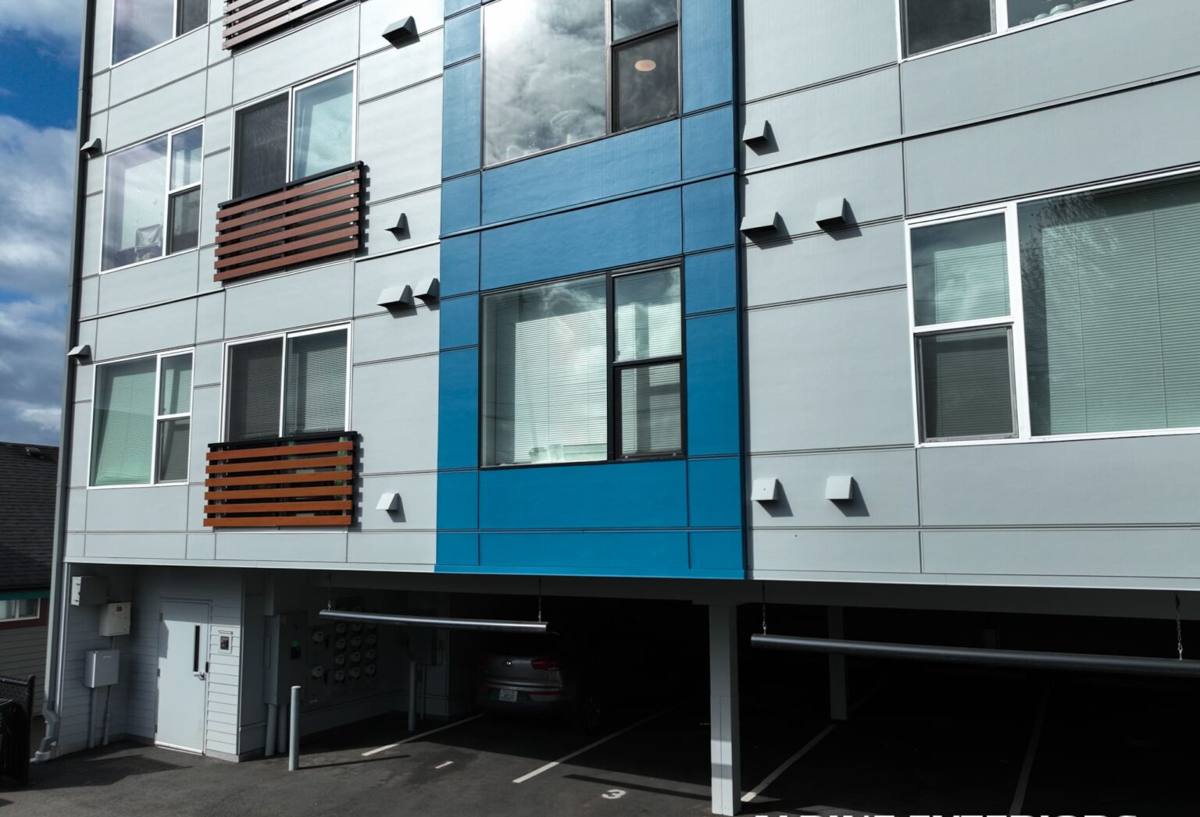
What This Climate Does to Siding
Every material reacts differently to the specific stresses of a bayfront-adjacent Florida neighborhood. Four factors matter most for Bayshore Gardens homes:
Wind Load
Tropical storms and hurricanes push wind-driven pressure against exterior walls, and that pressure looks for any weak point — a poorly nailed panel, an under-fastened corner, a gap in the water-resistive barrier. Siding that isn't installed to the local wind zone requirements can loosen, crack, or peel away entirely during a storm, and once panels are compromised, wind-driven rain gets straight into the wall assembly.
UV Exposure
Florida sun is intense and nearly constant. Paint-grade siding and low-quality factory finishes chalk, fade, and break down faster here than almost anywhere else in the country. A finish that isn't engineered for this level of UV exposure will visibly age within a few years, long before the underlying material has actually worn out.
Wind-Driven Rain
Rain in this area rarely falls straight down. Storms push it sideways, driving water up under laps, around trim, and into any seam that isn't properly flashed and sealed. Siding systems depend on correct overlap, flashing details, and a functioning drainage plane behind the cladding — not just a tight-looking surface.
Salt Air
Being close to Sarasota Bay means airborne salt settles on exterior surfaces even without direct water exposure. Salt accelerates corrosion of fasteners and trim hardware and can degrade materials that aren't formulated to resist it. This is a slow, cumulative process — it shows up as pitting, staining, and premature failure years down the line, not immediately.
Why We Only Install James Hardie Fiber Cement
We made a decision as a company to install one siding system: James Hardie fiber cement. We don't install vinyl, LP SmartSide, primed wood, or other fiber cement brands, and that's not a marketing gimmick — it's because we've seen how each of those products performs under exactly the conditions Bayshore Gardens deals with every year.
Fiber cement is non-combustible, dimensionally stable in heat and humidity swings, and doesn't soften, warp, or become brittle the way some engineered wood and vinyl products can under sustained UV and moisture exposure. James Hardie also builds specific product lines engineered for humid, storm-prone climates — their HZ10 designation is formulated for exactly the conditions found along the Florida coast, including this part of Manatee County. Pairing that engineered substrate with a factory-applied ColorPlus finish means the color coat is baked on under controlled conditions, not brushed on in the field, which gives it far better UV and fade resistance than field-applied paint.
Standardizing on one product line also means our crews aren't relearning installation details from job to job. Every fastening pattern, clearance requirement, and flashing detail is second nature because it's the only system we install.
What a Correct Installation Actually Involves
Siding failures in Florida are rarely about the material itself — they're almost always about installation shortcuts. A correct James Hardie installation for a Bayshore Gardens home includes:
- Removal of old siding and inspection of the sheathing underneath for rot, delamination, or prior water damage
- Repair or replacement of any compromised sheathing before new material goes up
- A continuous, properly lapped water-resistive barrier — this is the actual waterproofing layer, not the siding itself
- Correct flashing at every window, door, roofline, and penetration, installed to shed water outward and downward
- Proper starter strips, clearances, and gapping per James Hardie's published installation specifications
- Fastening with corrosion-resistant fasteners, placed and spaced to the manufacturer's wind-zone requirements
- Sealed and caulked joints only where specified — not as a substitute for correct flashing
- A final inspection against the manufacturer's installation checklist before the job is called complete
Skipping or rushing any one of these steps is how a home ends up with hidden moisture damage that doesn't show itself until years later, usually as soft trim, bubbling paint, or a musty smell inside an exterior wall.
Our Process for Bayshore Gardens Homes
- On-site assessment. We walk the exterior, check the condition of existing siding and trim, and look for signs of moisture intrusion or structural issues that need addressing before new siding goes on.
- Written estimate. You get a clear scope of work and pricing before anything is scheduled — no vague allowances.
- Permitting. Manatee County requires permits for siding replacement, and we handle that process, including making sure the installation plan meets local wind-zone requirements.
- Tear-off and sheathing inspection. Old material comes off and we inspect what's underneath before covering it back up.
- Water-resistive barrier and flashing. This is the step that actually keeps water out, done before a single piece of visible siding is hung.
- Hardie installation. Panels, planks, or shingle-style siding installed to manufacturer spec, with attention to fastening pattern and clearances.
- Final walkthrough. We review the finished job with you and make sure everything meets both our standards and the manufacturer's requirements for warranty coverage.
Comparing Siding Options for This Climate
| Material | Wind & Storm Performance | UV & Salt Air Durability | Long-Term Maintenance |
|---|---|---|---|
| Vinyl | Can crack or blow off in high wind if not rated and installed correctly | Prone to fading and can become brittle under intense, sustained UV | Low upfront maintenance, but limited repair options once damaged or faded |
| LP SmartSide / engineered wood | Performs reasonably when installed correctly, but seams are moisture-sensitive | Vulnerable to swelling and edge deterioration if moisture gets behind it | Requires consistent caulking and paint upkeep to stay protected |
| Primed wood or cedar | Wind performance depends heavily on fastening; can split over time | Needs regular repainting and sealing to resist UV and salt exposure | Highest ongoing maintenance of the common options |
| James Hardie fiber cement | Engineered and rated for high-wind installation when done to spec | Non-combustible, dimensionally stable, factory-baked ColorPlus finish resists fading | Low maintenance; occasional rinsing and caulk inspection |
What Affects the Cost of Your Project
Every home is different, so we don't quote sight unseen — but these are the factors that typically move the price up or down:
| Factor | Why It Matters |
|---|---|
| Home size and wall complexity | More corners, gables, and dormers mean more cutting, flashing, and labor time |
| Condition of existing sheathing | Rot or water damage found during tear-off requires repair before new siding goes on |
| Siding profile chosen | Lap siding, shingle-style, and panel systems differ in material and labor cost |
| Trim and accent work | Additional trim boards, batten details, or accent siding add to scope |
| Access and site conditions | Tight lot lines, landscaping, or second-story work can affect labor time |
We provide a written, itemized estimate so you know exactly what you're paying for and why — no vague lump-sum numbers.
Why Hiring a Crew That Already Works Bayshore Gardens Matters
A contractor who regularly works this neighborhood already understands the practical realities that a crew unfamiliar with the area would have to learn on your job. That includes knowing what Manatee County's permitting and inspection process actually requires, understanding how close-to-the-water conditions accelerate wear on fasteners and trim, and having a feel for how local storms typically move through and what kind of wind exposure a given lot faces. It also means being available and responsive if a hurricane damages siding and you need repairs handled quickly, rather than waiting on a crew that has to travel in from outside the area.
Local experience also shows up in the small decisions — where extra flashing attention is worth the time, which parts of a home face the harshest sun exposure, and how to sequence a job around Florida's rainy-season weather patterns so the wall assembly isn't left exposed longer than necessary.
Warranty and What It Actually Covers
James Hardie backs its siding products with a transferable limited warranty, and the ColorPlus finish carries its own separate finish warranty. Warranty coverage depends on the product being installed according to James Hardie's published specifications — which is exactly why correct installation isn't optional, it's what keeps the warranty valid if you ever need to use it. We install to manufacturer spec as standard practice, not as an upsell.
Before You Hire Anyone, Ask This
- Are they installing to the manufacturer's published specifications, or their own shortcuts?
- Do they pull the required Manatee County permits, or ask you to skip that step?
- Will they inspect and repair sheathing issues found during tear-off, or just cover them up?
- Do they provide a written, itemized estimate before work begins?
- Have they actually worked in this area before, or is this their first job near the bay?
If your Bayshore Gardens home needs new siding, we're happy to take a look and walk you through what we'd recommend — no pressure, no obligation. Fill out the form below for a free estimate.