 Bradenton Siding
 Board & Batten Siding on Bradenton Beach: What the Coastal Setting Demands
Bradenton Beach sits right where Anna Maria Sound meets the Gulf, and that location shapes everything about how a home's exterior should be built. Board and batten siding has a strong, vertical-line look that suits the beach cottage and coastal-craftsman styles common in this stretch of Manatee County, but the style only holds up if the material underneath it is chosen and installed with the local environment in mind. Salt-laden air, near-constant humidity, intense UV exposure, and the real possibility of hurricane-force wind and wind-driven rain are not occasional stresses here — they are the baseline conditions a home's siding lives in every day.
That combination is harder on exterior materials than most inland climates. Salt air accelerates corrosion of fasteners and trim hardware. UV breaks down pigments and surface coatings faster than in shaded or northern climates. Wind-driven rain finds any gap in flashing or caulking and pushes moisture where it doesn't belong. A board and batten installation that isn't detailed for this specific set of conditions may look fine for a year or two and then start showing problems — cupping boards, failing seams, or moisture intrusion behind the battens — well before it should.
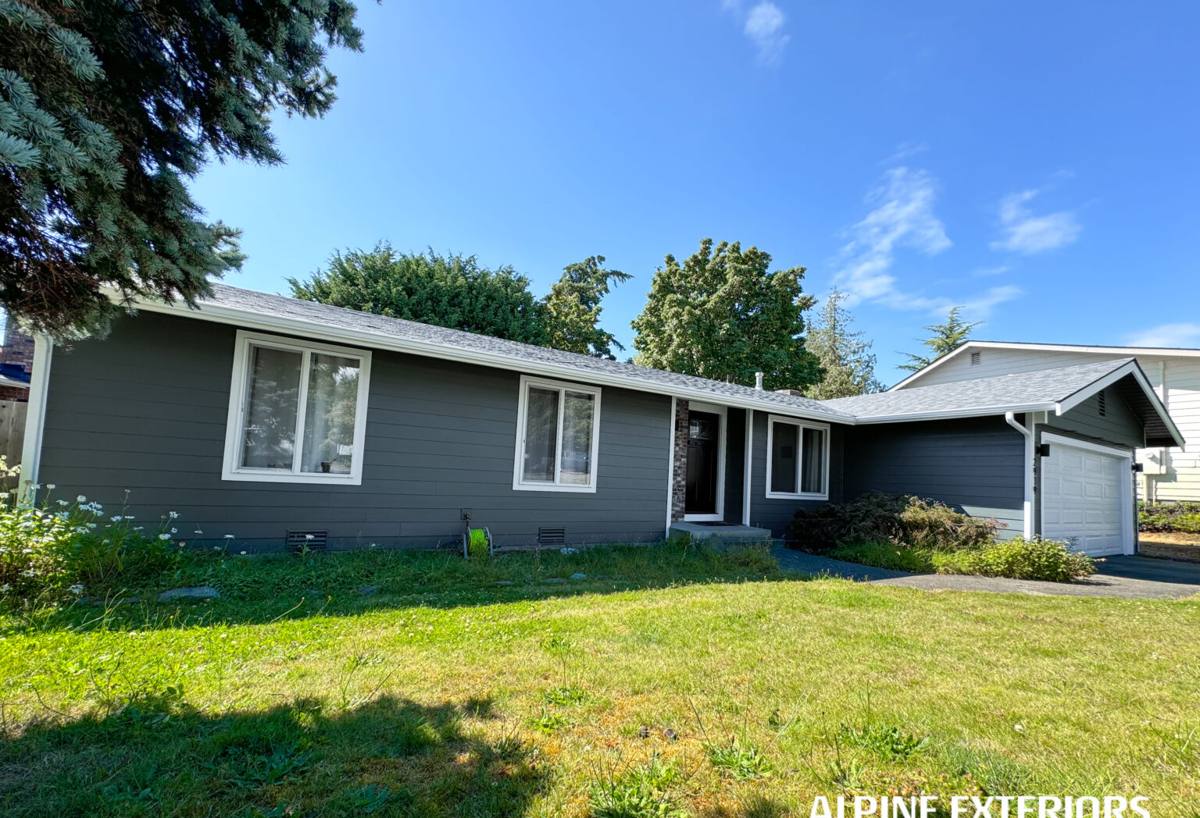
Why Board & Batten Fits Bradenton Beach Homes
Board and batten isn't just an aesthetic choice for this neighborhood — it works with the architecture already here. Many homes in and around Bradenton Beach are single-story or raised coastal cottages, bungalows, and Old Florida-style builds where a vertical board and batten profile reads as authentic rather than trendy. It also pairs well with the shutters, metal roofing, and covered porches common on barrier island homes.
Functionally, the wide flat boards and narrow battens create a rain-screen-like profile when installed correctly, encouraging water to shed downward rather than pool in horizontal seams the way some lap sidings can in driving rain. That's a real advantage in a wind-driven rain environment, but only if the boards, battens, fasteners, and flashing details are matched to the coastal exposure rather than treated like a standard inland installation.
What Correct Board & Batten Construction Requires Here
- A weather-resistant barrier installed and lapped correctly behind the boards, not just stapled up as an afterthought
- Rain-screen or drainage gap detailing so trapped moisture has somewhere to go instead of sitting against the substrate
- Corrosion-resistant, coastal-rated fasteners — salt air will find and degrade the wrong hardware within a few seasons
- Batten spacing and fastening patterns engineered for high wind uplift, not just visual spacing
- Sealed and properly lapped flashing at every window, door, and roofline transition
- A factory-applied finish that resists UV fade and doesn't rely on field-applied paint or stain to survive the climate
Why We Install James Hardie for This Application — and Nothing Else
We only install James Hardie fiber cement siding, including for board and batten profiles, and Bradenton Beach's climate is a big part of why. Fiber cement doesn't absorb and swell with humidity the way wood-based boards can, and it isn't a food source for the rot and insect issues that plague organic siding materials in warm, humid coastal air. Hardie's ColorPlus factory finish is baked on and engineered to resist UV fade far better than field-applied paint, which matters enormously this close to the Gulf where sun exposure is constant nearly year-round.
Just as important, James Hardie manufactures HZ5 products specifically engineered for high-humidity, hurricane-prone climates like Florida's Gulf Coast — thicker, denser formulations built to hold up against moisture cycling and wind-driven rain better than standard fiber cement. Fiber cement is also non-combustible, which matters in a region where wildfire risk and lightning-driven brush fires are a real, if secondary, consideration. And Hardie backs the product with a strong, transferable warranty — a meaningful protection on a coastal home where exterior materials work harder than almost anywhere else in the country.
We won't put LP SmartSide, vinyl, Cemplank, Allura, primed spruce, or cedar board and batten on a Bradenton Beach home. Vinyl can warp and become brittle under intense sun and heat cycling, and it has real limits in extreme wind events. Wood species like primed spruce or cedar look beautiful initially but require an ongoing maintenance commitment — re-sealing, re-painting, watching for rot at seams — that coastal humidity makes more frequent, not less. Other fiber cement brands may perform reasonably well, but we've standardized on Hardie because of its climate-specific product engineering, finish durability, and warranty structure, and we'd rather install one product line extremely well than juggle several we trust less in this environment.
Our Board & Batten Installation Process
1. On-Site Assessment
We start with a walk of the home's exterior, checking existing siding condition, substrate and sheathing health, window and door flashing, and any areas showing prior water intrusion. Coastal homes — especially older ones near the water — sometimes have hidden moisture damage behind the existing siding that needs to be addressed before new material goes up.
2. Weather Barrier & Drainage Plane
Old, damaged siding and any compromised sheathing are removed and replaced as needed. A code-compliant weather-resistant barrier is installed with correct lapping, and we build in drainage plane detailing so the wall assembly can shed incidental moisture instead of trapping it.
3. Board & Batten Installation
James Hardie boards and battens are installed per manufacturer specification with fastener spacing and type matched to wind zone requirements for this part of Manatee County. Every seam, corner, and penetration is treated as a potential water entry point and detailed accordingly.
4. Flashing, Trim & Sealant Detail
Windows, doors, and roof-to-wall transitions get properly lapped flashing rather than relying on sealant alone. We use sealants and trim products rated for coastal, high-UV exposure so the finish work doesn't become the weak point of an otherwise solid installation.
5. Final Walkthrough
We walk the finished exterior with the homeowner, review the work, and go over basic care so the siding performs the way it's designed to for years to come.
What Drives Cost on a Board & Batten Project Here
| Factor | Why It Matters in Bradenton Beach |
|---|---|
| Substrate condition | Coastal humidity and prior water intrusion can mean sheathing repair before new siding goes on |
| Home height and access | Multi-story or elevated coastal homes require more scaffolding/staging time |
| Wind zone fastening requirements | Higher wind exposure areas need denser fastening patterns and rated hardware |
| Trim and flashing complexity | More windows, dormers, and roof transitions mean more detail work per linear foot |
| Board width and reveal choice | Wider boards or custom batten spacing affect material takeoff and labor time |
| ColorPlus finish selection | Standard vs. premium color offerings can shift material pricing slightly |
We don't publish a flat price per square foot because every one of these factors changes the real number, and a quote that ignores them isn't a useful quote. A site visit and written estimate is the only honest way to price a board and batten job correctly.
Questions to Ask Before You Hire a Board & Batten Contractor Here
- Are you James Hardie certified, and do you install their HZ5 coastal-rated products?
- How do you detail flashing at windows, doors, and roof transitions on a board and batten job?
- What fastener type and spacing do you use for this wind zone?
- Do you inspect and repair substrate/sheathing before installing new siding, or install over existing damage?
- Can you show proof of licensing and insurance specific to exterior work in Manatee County?
- What does your warranty cover, and is it transferable if the home sells?
Why Local Coastal Experience Matters
Bradenton Beach isn't a generic Florida job site — it's barrier island construction with its own wind exposure category, humidity load, and salt air intensity that differs even from inland Bradenton or Manatee County neighborhoods a few miles east. A crew that regularly works this specific stretch of coastline already knows how the local wind zone requirements apply, how quickly unprotected fasteners corrode this close to the water, and where moisture tends to find its way into a wall assembly on an island home. That familiarity shows up in the details — the flashing laps, the fastener choice, the drainage plane — not in anything visible from the curb on day one, but in how the siding performs five, ten, and twenty years out.
Get a Straightforward Estimate
If you're considering board and batten siding for a home in Bradenton Beach, we're happy to walk the property, look at what you're working with, and give you a clear, no-pressure written estimate. There's a form below to get started — no games, no pressure, just a straight answer on what your home needs.