 Bradenton Siding
 Composite Decking Built for the Way Rosedale Actually Weathers
Rosedale sits inland enough from the Gulf to feel like a break from the coast, but it isn't one. Manatee County still gets salt-laden air on onshore winds, the same intense year-round UV load as the rest of the Bradenton area, and the same wind-driven summer storms and hurricane risk that shape every outdoor building decision here. A deck that's installed the way it would be in a drier, milder climate will show it within a few seasons — fading unevenly, fasteners weeping rust streaks, boards cupping where water sits. A deck built for this specific environment holds its look and its structure for decades instead.
We work in Rosedale regularly, which matters more than it sounds like it should. Composite decking is a forgiving material in a lot of ways, but the installation details that keep it flat, tight, and dry over time are learned by doing the work in this exact climate, not by reading a manufacturer's install guide written for a national market.
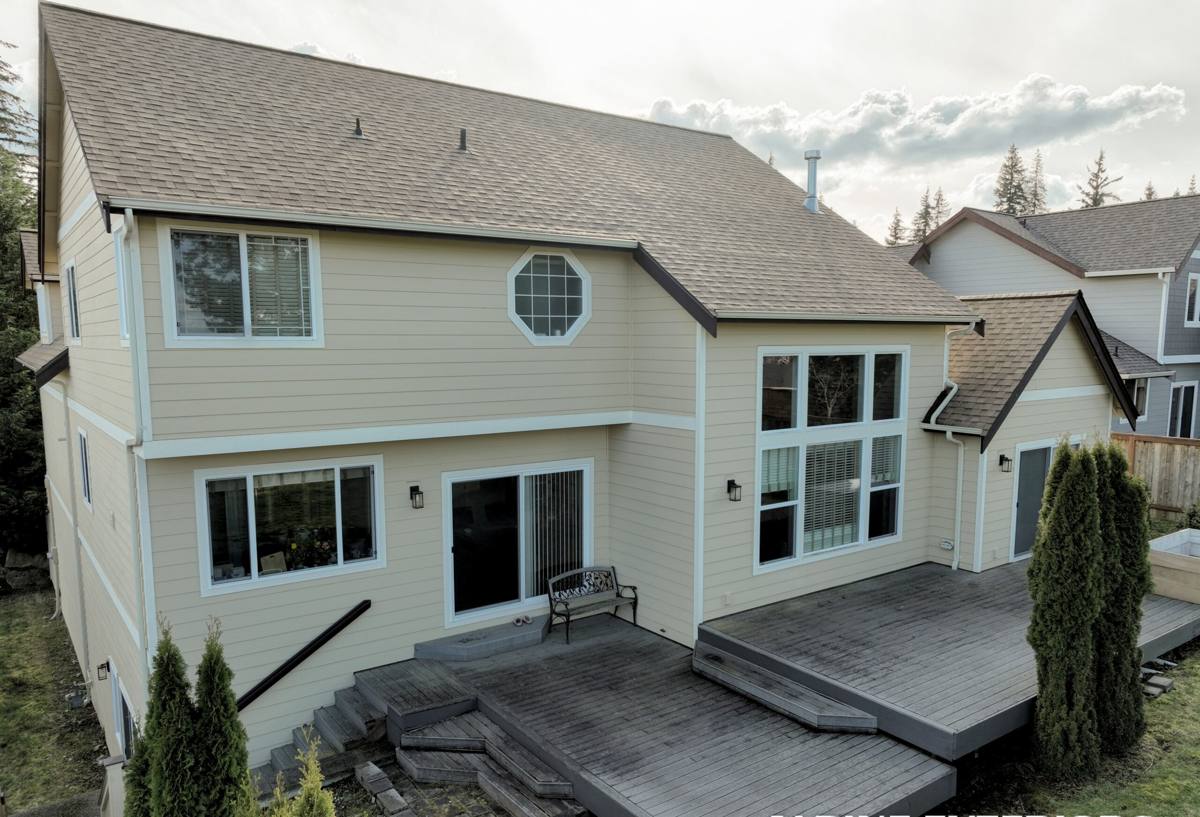
What Heat, Salt Air, and Storms Do to an Outdoor Deck Here
Before getting into materials and methods, it helps to know what the deck is actually up against in Bradenton:
- Intense, near-constant UV — Florida sun breaks down unprotected wood fibers and cheaper composite formulations faster than almost anywhere else in the country, driving fading, graying, and surface roughness.
- Wind-driven rain — Storms here rarely fall straight down. Rain gets pushed sideways into board gaps, fastener heads, and end cuts, which is where moisture problems actually start.
- Salt air — Even away from the immediate coastline, airborne salt accelerates corrosion on any exposed metal hardware, fasteners, and ledger connections.
- Hurricane-force wind loads — Ledger attachment, joist hangers, and railing anchoring all need to be sized and fastened for real wind events, not just everyday use.
- Heat cycling — Composite boards expand and contract more than people expect in Florida's swing between summer surface temperatures and cooler nights, which is a framing and fastening detail, not just a material choice.
None of this means composite decking is a poor fit for Rosedale — it's actually one of the better options for this climate. It means the installation has to account for these stresses on purpose.
What a Correctly Installed Composite Deck Involves
Substructure and Framing
The composite boards get most of the attention, but the framing underneath determines whether the deck stays flat and quiet for the next 20-plus years. In our humidity and rainfall pattern, we frame with lumber rated for ground contact or full outdoor exposure where it's called for, and we set joist spacing tighter than the bare minimum on composite spans — composite has more flex than wood over the same span, and under-spaced joists are one of the most common causes of bounce and long-term sag we see on decks that weren't built by people used to this material.
Fasteners and Hardware
Salt air is hard on hardware, full stop. We use stainless or coated fasteners and connectors rated for coastal exposure — not standard galvanized hardware that's fine inland but starts rusting and staining boards within a couple of years near salt air. This is one of the cheapest details to get right and one of the most expensive to fix later, since corroded structural hardware means pulling boards to replace it.
Drainage and Ventilation
Standing water under a deck, or water trapped between boards and framing, is what actually shortens a deck's life in this climate — not the sun exposure most homeowners worry about first. We grade and gap decks so wind-driven rain sheds properly, keep airflow open underneath so the substructure can dry out between storms, and flash ledger connections against the house so water doesn't track back into the structure or the siding behind it.
Expansion and Fastening Pattern
Composite boards need gap spacing and fastening that accounts for Florida's daily and seasonal temperature swings. Get this wrong and boards buckle, gaps go uneven, or hidden fastener clips fail early. This is a detail that's easy to shortcut and hard to notice until a year or two in.
Composite vs. Other Decking Materials for This Climate
| Material | How It Handles Bradenton's Climate | Typical Maintenance |
|---|---|---|
| Capped composite | Strong UV and moisture resistance; stable in heat and humidity when installed correctly | Periodic washing; no staining or sealing |
| Pressure-treated wood | Prone to cupping, splitting, and fastener corrosion in salt air and heavy rain; needs consistent upkeep to hold up | Annual sealing/staining, regular inspection |
| PVC decking | Very moisture-resistant and lightweight; can run hotter underfoot and flex more in heat than composite | Low; occasional cleaning |
| Uncapped composite (older-style) | More prone to moisture absorption, mold, and fading than capped boards | Higher — cleaning and occasional sealing |
We install capped composite as our standard recommendation for Rosedale because it strikes the best balance of durability, low upkeep, and consistent appearance under this level of sun and moisture exposure. We won't push a client toward wood or uncapped product as a "budget" option without being upfront about the added maintenance burden it carries in this specific climate — that's a trade-off worth understanding before you commit, not after.
Understanding Composite Board Types
Not all composite decking is built the same way, and the differences matter more in Florida than in milder climates.
- Fully capped vs. partially capped: Fully capped boards have a protective shell on all sides, which matters most at cut ends and board edges where moisture and UV attack first.
- Grooved vs. solid edge: Grooved boards use hidden fastener systems for a clean surface look; solid boards are typically face-screwed. Both work well when fastened correctly for heat expansion.
- Streaked vs. solid color grain patterns: Purely aesthetic, but darker solid colors run noticeably hotter underfoot in direct Florida sun than lighter, variegated tones.
- Solid-core vs. lightweight-core boards: Density affects both underfoot feel and long-term sag resistance over wider joist spacing.
We'll walk through actual samples during your estimate rather than steering you toward one brand — the right board comes down to your budget, the look you want, and how much heat and glare the deck's orientation will get.
Our Installation Process
- On-site assessment: We evaluate the existing structure (for replacements), ledger attachment point, drainage path, and sun/wind exposure specific to your lot.
- Design and material selection: Board type, color, railing style, and layout, sized to actual structural spans rather than generic assumptions.
- Permitting: We handle the Manatee County permit and inspection process for new decks and structural work.
- Framing and structural work: Ledger flashing, joist layout, and hardware sized for wind load and coastal exposure.
- Composite installation: Board fastening, gap spacing for thermal movement, and fascia/trim detailing.
- Final walkthrough: We check the deck with you before calling the job done — level, secure railings, clean fastening, proper drainage.
What Affects the Cost of a Composite Deck Project in Rosedale
| Factor | Why It Moves the Price |
|---|---|
| Deck size and shape | Square footage and the number of angles, curves, or level changes affect labor and material |
| Board tier | Entry-level capped composite vs. premium multi-tone or PVC-hybrid boards |
| Substructure condition | New framing vs. reusing and reinforcing an existing structure |
| Railing and stair details | Composite, aluminum, or cable railing all price differently; stairs add labor |
| Site access and height | Elevated decks or difficult site access increase labor time |
| Permit and inspection scope | Structural changes near the home may require additional engineering review |
Most composite deck projects in this area land in a broad mid-to-upper range depending on size and material tier — we'll give you an itemized number after seeing the site, not a phone-quote guess.
Maintaining a Composite Deck in a Salt-Air Climate
Composite decking is low-maintenance, not no-maintenance, especially this close to salt air. A simple seasonal routine keeps it performing the way it should:
- Rinse or wash the deck surface periodically to clear salt residue, pollen, and organic buildup before it stains the cap layer.
- Keep gaps between boards clear of debris so water keeps draining as designed.
- Check railing posts, stair connections, and ledger flashing yearly — hardware is the first thing salt air affects, well before the boards themselves show wear.
- Trim back landscaping that keeps the deck surface shaded and damp for long stretches, which slows drying after storms.
- After a major storm, walk the deck and check for loosened fasteners, lifted boards, or new gaps at the ledger connection.
Why Hiring a Crew That Already Works in Rosedale Matters
A deck contractor who mainly works inland or in a different climate zone can still build something that looks right on installation day. The problems show up later — in the hardware choices, the fastening pattern, and the drainage details that only matter once the deck has been through a few Florida summers and a couple of real storms. Working regularly in and around Rosedale means we already know the Manatee County permitting process for this type of project, understand the wind exposure specific to this part of the county, and build with the fastener and framing standards this climate actually requires — not the national-average standard.
Many communities in this area also have HOA architectural guidelines covering deck materials, colors, and railing styles. We factor that into the design conversation up front so you're not redoing paperwork or resubmitting plans after the fact.
Choosing the Right Contractor for Your Rosedale Deck
Whoever you hire, it's worth checking a few things before signing anything:
- Are they licensed and insured to do structural work in Manatee County?
- Do they pull their own permits, or expect you to?
- Will they specify the fastener and hardware grade in writing, not just the board brand?
- Do they explain drainage and ventilation as part of the plan, or only talk about the surface material?
- Can they explain the trade-offs between board types honestly, without steering you toward whatever's easiest for them to install?
- Do they offer a written warranty covering both materials and workmanship?
A contractor who answers these clearly, without hedging, is generally one who's actually done this work in this climate before.
If you're considering a new or replacement composite deck in Rosedale, we're glad to come take a look and walk the site with you. The estimate is free, there's no pressure, and you'll get a straight answer about what your specific property needs — just fill out the form below to get started.