 Bradenton Siding
 Cortez sits right on Sarasota Bay, a working fishing village tucked into the west side of Manatee County between Bradenton and Anna Maria Island. It's one of the few stretches of this coastline where the water is still the reason the community exists, and that closeness to open water is exactly what makes exterior work here different from a job five or ten miles inland. Board and batten has become one of the most requested looks for Cortez homes — the vertical lines and crisp shadow gaps suit both the older cottage-style houses near the water and the newer elevated coastal builds going up around them. But "board and batten" describes a pattern, not a material, and on a stretch of coast this exposed to wind, salt, and sun, the material underneath the pattern is what decides whether that look holds up.
We install board and batten in James Hardie fiber cement, exclusively, and we've worked enough jobs in and around Cortez to know exactly what this part of the coastline does to an exterior over time. This page walks through what board and batten actually involves, why the substrate matters so much here, and what a correctly built system looks like from the framing out.
What Cortez's Waterfront Location Actually Does to Siding
Cortez isn't just "near the coast" — it sits directly on Sarasota Bay, with open water on multiple sides of the community. That proximity means a home's exterior deals with a combination of stresses that homes a few miles inland in Manatee County see in a much milder form:
- Hurricane-force wind gusts that load siding, fasteners, and trim directly, without miles of tree cover or development to break the wind first
- Wind-driven rain that gets pushed sideways and upward into seams, laps, and trim joints during tropical systems and even routine summer storms
- Salt air drifting off the bay and Gulf around the clock, which accelerates corrosion on exposed fasteners and breaks down finishes that aren't formulated to resist it
- Intense, near-constant UV exposure that fades and chalks unstable coatings faster than most of the country ever sees
Any one of these on its own is manageable. All four hitting the same wall, on the same house, year after year, is what separates a Cortez siding job from a generic "Florida siding" job — and it's why the material decision matters as much as the design decision.
What Board & Batten Actually Is
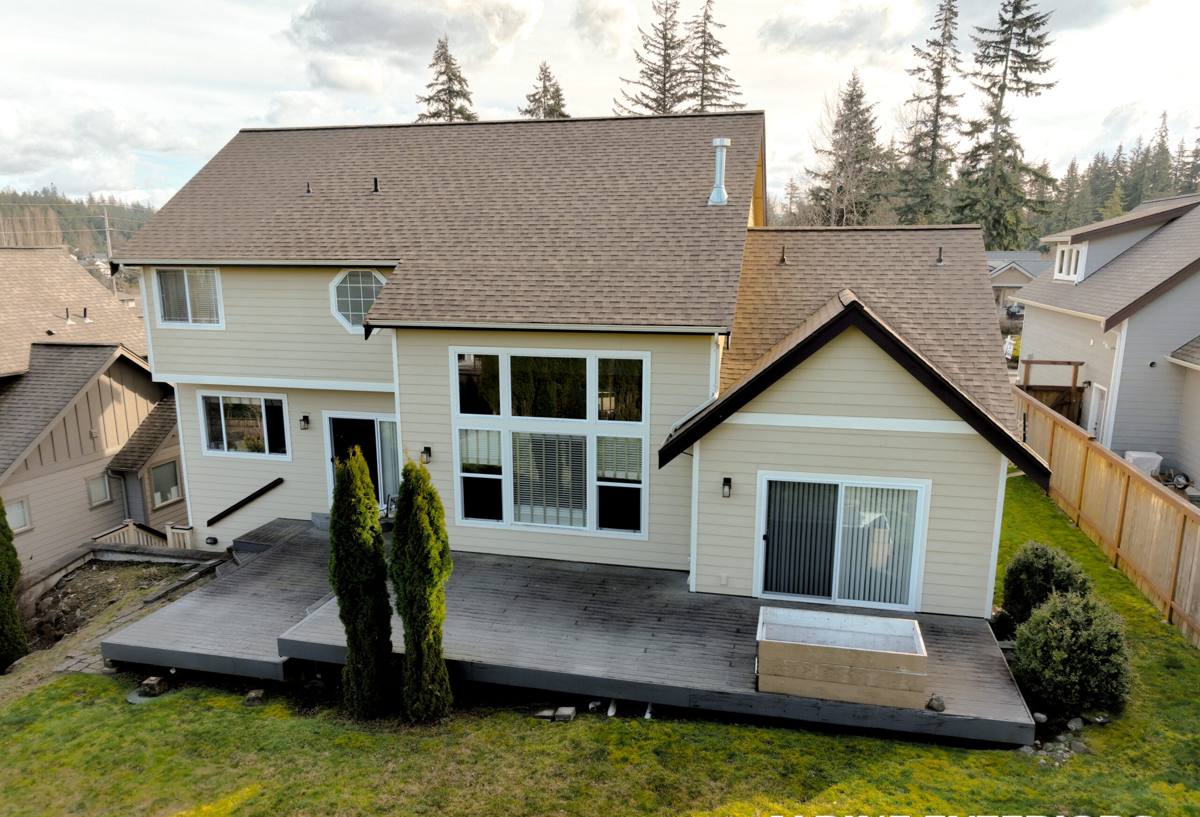
Board and batten is a two-layer vertical siding system — wide boards or panels installed first, then narrower strips (the battens) fastened over the seams between them. The result is a rhythm of raised vertical lines with real shadow depth, which reads as more custom and architectural than flat lap siding.
There are two common ways it gets built:
- Engineered panel systems — factory-manufactured panels designed specifically for this pattern, with batten spacing built in
- Site-built board and batten — flat boards installed as a base layer, with individual battens fastened over each seam on site
Both approaches can look nearly identical from the curb. What actually determines how the job performs over the next twenty years is whether the boards and battens are dimensionally stable and moisture-resistant enough to handle direct bay exposure without swelling, cupping, or opening up at the seams.
Why This Style Suits Cortez's Architecture
A lot of the housing stock around Cortez — from smaller, older waterfront cottages to newer homes built up on elevated foundations for flood compliance — has simple, functional massing that board and batten dresses up without fighting the existing lines of the house. It works especially well on gables, dormers, and street-facing elevations, which describes a good share of the housing in and around this fishing village.
Why the Substrate Decision Matters More in Cortez Than Almost Anywhere Else
Board and batten has more seams and fastener penetrations per square foot than flat lap siding — every batten is fastened directly over a seam between boards, and each of those seams is a potential water entry point if the material behind it moves the wrong way. In a mild, dry climate, that's a minor detail. On a home with open bay exposure on one or more sides, it's the detail that determines how long the job lasts.
A substrate that swells and shrinks with humidity, or that depends on a field-applied paint film as its only real weather barrier, is asking a lot of that paint in an environment that stresses it from every direction — salt, UV, and wind-driven moisture, simultaneously, for most of the year. Fiber cement doesn't carry that weakness, which is the core reason we don't offer board and batten in anything else for homes in this area.
How We Build Board & Batten Siding in Cortez
We use James Hardie's HardiePanel vertical siding system with HardieTrim battens — engineered fiber cement made from Portland cement, sand, and cellulose fiber, cured into a dense board that doesn't absorb and release moisture the way wood or wood-composite products do. That stability is what keeps the boards flat and the seams tight through years of bay-front humidity swings, instead of gapping, cupping, and telegraphing movement through the finish.
HZ5 Formulation
James Hardie builds its siding to different regional specifications, and homes in our part of Florida receive the HZ5 product line, engineered specifically for high-humidity, high-moisture climates. That's a real difference in the material itself, not a marketing label — it's a different mix tuned to hold up where humidity and rain exposure are constant rather than occasional.
ColorPlus Factory Finish
On a style where seams and edges are the most exposed part of the wall, the finish carries a lot of the long-term performance. ColorPlus is baked on in multiple coats under factory conditions rather than applied on site, which gives it meaningfully better fade and chip resistance than field-applied paint — a real advantage on a style with this many exposed edges catching direct sun and salt spray off the water.
What Correct Installation Involves
Board and batten punishes installation shortcuts more than flat siding does, because there are more seams and fastener points for water to find its way behind the wall. On a Cortez job, a correct installation includes:
- A properly lapped, sealed weather-resistant barrier behind the panels — not house wrap stapled up and left as-is
- Correct panel gaps at every butt joint and termination, following James Hardie's published clearance specifications
- Battens fastened at the right spacing and penetration depth, secure enough for hurricane-force gusts without over-driving fasteners through the board
- Flashing at every horizontal transition — window heads, roof-to-wall intersections, and anywhere the vertical pattern meets a horizontal element
- Correct clearance at the base of the wall, especially important on homes built up on elevated foundations near the water, keeping siding clear of grade, decking, and roofing
- Fasteners and trim hardware selected to resist the corrosion that comes with direct bay-air exposure
- Caulking used only where James Hardie specifies it — never as a stand-in for proper flashing and gapping elsewhere
None of these steps are unique to Hardie as a brand — they're the difference between a board and batten job that survives storm seasons on the water and one that starts failing at the seams within a few years, regardless of what's behind the battens.
Board & Batten vs. Other Vertical Siding Approaches
| Material | How It Handles Bay Humidity | Finish Durability | Fit for Hurricane Wind Zones |
|---|---|---|---|
| James Hardie fiber cement | Dimensionally stable; doesn't swell or shrink with moisture | Factory-baked ColorPlus finish, resists fading and chipping | Engineered and tested specifically for high-wind installation |
| Engineered wood composite | More sensitive to moisture at cut edges and seams | Depends on factory or field coatings with a shorter service life | Varies by manufacturer and product line |
| Primed spruce or cedar boards | Absorbs and releases moisture readily; prone to cupping and swelling at seams | Fully dependent on a repainting maintenance cycle | Not engineered specifically for hurricane wind zones |
| Vinyl board and batten panels | Doesn't absorb water, but flexes and can gap at seams with thermal movement | Through-body color, but can fade and chalk under sustained UV | Wind rating depends heavily on fastening pattern and panel gauge |
This isn't a claim that every alternative is a bad product across the board — it's the reasoning behind why board and batten work on a home this close to open water only leaves our crew's trucks in Hardie.
Why a Crew That Already Works Cortez Matters
Cortez is a small area, and it's a different install environment than a subdivision a few miles inland. Working here regularly means already knowing things a crew that shows up once doesn't:
- How elevated and older waterfront homes are typically framed, and what that means for furring, flashing, and attachment details before a single panel goes up
- What Manatee County's coastal wind zone requires for fastening schedules and product ratings, so the job passes inspection the first time
- Where salt exposure tends to be worst on a given lot based on which direction the house faces relative to the bay, and adjusting fastener and hardware choices accordingly
- How to sequence a job around this area's storm patterns so panels and battens aren't left exposed when a system rolls in off the Gulf
None of that shows up in a bid on paper, but it shows up in how the finished job performs three, five, and ten years out. A crew that treats a Cortez home the same as a job in a dry inland subdivision is skipping decisions that matter here specifically.
Maintenance Expectations on the Water
One practical advantage of a Hardie board and batten system in Cortez is what it takes off a homeowner's plate. There's no annual caulk-and-repaint cycle to chase, and the boards aren't absorbing humidity between rain events the way wood can. Realistic upkeep looks like:
- Periodic rinsing to clear salt residue and grime, more often on wall faces that face open water directly
- A visual check after any major storm for loosened battens or shifted flashing
- Keeping irrigation and landscaping from spraying directly onto the base of the wall
- Touch-up only where physical damage occurs, not as a scheduled maintenance item
What This Means for a Cortez Project
Board and batten is a style choice; James Hardie is a material and installation standard. We're glad to help homeowners get the board and batten look they're after — full elevation, gable accent, dormer, or a street-facing feature — but on homes this close to Sarasota Bay, we build it exclusively out of Hardie fiber cement, installed to the manufacturer's fastening, gapping, and flashing specifications, because that combination is what actually holds up to what this coastline does to a home's exterior year after year.
If you're weighing board and batten for a Cortez home, we're happy to walk the property, talk through where the style makes the most sense for your house, and put together a free, no-pressure estimate.