 Bradenton Siding
 Building Decks That Actually Hold Up in Samoset
Samoset sits inland enough from the open Gulf to feel a little sheltered, but make no mistake — this is still Manatee County, Florida, and every outdoor structure here answers to the same set of conditions. Hurricane-force winds move through on a predictable schedule. The sun is intense and constant, not seasonal. Wind-driven rain finds its way into any gap that isn't sealed correctly. And salt-laden air drifts inland from Tampa Bay and the Gulf, working on metal fasteners and connectors year-round whether you notice it or not. A deck that isn't specifically built with those four things in mind will show problems within a few seasons — not decades from now, but soon.
We build custom decks for homeowners throughout the Bradenton area, and Samoset properties get the same attention to structural detail as anywhere else on our route. This page is about what that actually means in practice: what a deck built for this neighborhood's conditions requires, how we approach the build, and what questions are worth asking any contractor before you sign a contract.
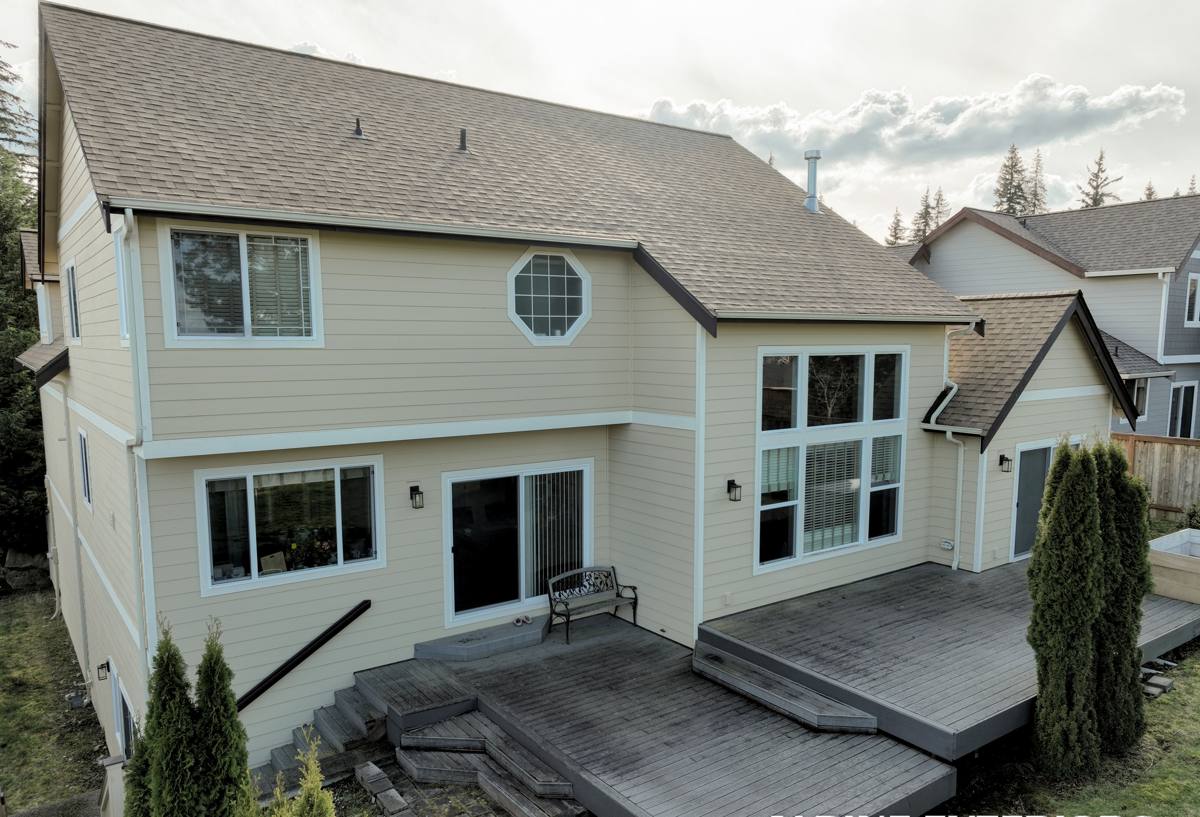
What Samoset's Climate Actually Does to a Deck
Wind Load
Manatee County building code requires outdoor structures to meet specific wind-load ratings, and that's not a bureaucratic formality — it reflects real storm history for this part of the Gulf Coast. A deck's railings, post connections, and ledger attachment are the parts most likely to fail in high wind if they weren't engineered correctly to begin with. Undersized posts, missing hurricane ties, or a ledger board that's only lag-bolted instead of properly through-bolted and flashed are the kind of shortcuts that look fine on installation day and fail during the first real storm.
UV Exposure
Florida sun is harder on exterior wood and composite than most other parts of the country, simply because there's so much of it, year-round, at a fairly direct angle. Untreated or poorly sealed wood grays and checks fast. Lower-grade composite boards can fade unevenly, especially on a deck with mixed sun and shade exposure across the day — which describes a lot of Samoset's tree-lined residential lots.
Wind-Driven Rain and Moisture
Rain in this region rarely falls straight down. It comes in sideways during storms, which means flashing, gapping, and drainage details matter more here than in drier climates. Any spot where two deck materials meet — ledger to house, post to footing, board to board — is a place water can get trapped if it wasn't detailed correctly. Trapped moisture under a deck board or behind a ledger is where rot and fastener corrosion start, and it's invisible until the damage is already done.
Salt Air
Samoset isn't beachfront, but Bradenton's whole coastal footprint means salt content in the air is higher than inland Florida, and it travels. Standard zinc-coated deck screws and brackets corrode faster here than their ratings suggest. This is one of the most common corner-cutting spots we see on decks built by out-of-area or lower-bid crews — using hardware that's fine for a landlocked state but undersized for coastal Florida exposure.
What a Correctly Built Deck Involves
A deck is really a structural project wearing a furniture-grade finish. The parts nobody sees are what determine whether it lasts. Here's what we consider non-negotiable on every build:
- Engineered footings sized to Manatee County soil and load requirements, not just poured to a generic depth
- Ledger board properly through-bolted (not just lag-screwed) and flashed to prevent water intrusion into the house band board
- Hot-dip galvanized or stainless fasteners and connectors rated for coastal exposure, not standard interior-grade hardware
- Hurricane ties and structural connectors at every post-to-beam and beam-to-joist connection, matched to current wind-load code
- Proper board spacing and drainage slope so water sheds off the surface instead of pooling or wicking into end grain
- Correct joist spacing for the specific decking material chosen — composite and PVC often require tighter spacing than solid wood
None of this is exotic. It's standard good practice — but it takes longer and costs a little more than the version that skips it, which is exactly why it gets skipped by crews racing to underbid a job.
Choosing a Decking Material for a Samoset Property
There's no single right answer here — it depends on your budget, how much upkeep you want to do, and how much direct sun the deck location gets. We'll walk through the real trade-offs on site, but here's the honest comparison:
| Material | Upfront Cost | Maintenance | How It Handles This Climate |
|---|---|---|---|
| Pressure-treated wood | Lowest | Annual sealing/staining recommended | Good if maintained consistently; UV and humidity will find any gap in upkeep quickly |
| Tropical hardwood (e.g. ipe) | High | Periodic oiling to maintain color; low structural upkeep | Naturally dense and rot-resistant; handles UV and moisture well but needs correct fastening due to hardness |
| Composite decking | Mid-High | Low — occasional washing | Resists rot and doesn't need staining; quality varies a lot between product tiers |
| PVC/capped polymer | Highest | Lowest | Best resistance to moisture and fading; a strong fit for full-sun Gulf Coast exposure |
We don't push one product line over another as a blanket rule. What we do insist on is matching the material to how the space will actually be used and how much sun it gets — a north-facing, tree-shaded deck can perform fine in a mid-tier composite, while a wide-open, south-facing deck is where the maintenance difference between tiers shows up fastest.
A Note on Why We're Selective About What We Install
Not every decking product on the market gets the same recommendation from us. Some lower-tier composite boards have known issues with moisture absorption at cut edges or inconsistent capping that shows up as fading or staining within a few years — not a failure of the whole category, just a reason we're particular about which manufacturers and product lines we put our name behind. If we steer you away from a specific option, it's because we've seen how it performs in Florida conditions specifically, and we'd rather tell you that upfront than let you find out in year three.
Design Considerations Specific to Samoset Lots
Samoset's residential lots tend to be established, with mature landscaping and a mix of lot orientations relative to the street. A few things we always account for during design:
- Tree canopy and root systems near the footing locations — we adjust footing placement rather than damage established trees
- Drainage flow across the yard, so the deck doesn't create a dam that redirects water toward the house foundation
- Setback and permitting requirements specific to the property, which we confirm with the county before design is finalized
- Sun exposure by time of day, which affects both material choice and where you'll actually want to sit
Our Process, Start to Finish
1. On-Site Assessment
We come to the property, look at the house's existing structure where the deck will attach, assess drainage and soil, and talk through how you actually want to use the space.
2. Design and Material Selection
We put together a design with material options and honest cost ranges for each, so you're choosing based on real trade-offs rather than guessing.
3. Permitting
Manatee County requires permits for most deck construction, and skipping this step is a real liability — it can affect your homeowner's insurance and create problems when you sell the house. We handle the permit process as part of the job.
4. Construction
Footings, framing, and structural connections go in first and get inspected before decking material goes down. This is the phase where the climate-specific details described above actually get executed, not just specified on paper.
5. Final Walkthrough
We walk the finished deck with you, confirm everything meets what was discussed, and go over basic care for whatever material you chose.
Permitting and Code in Manatee County
Deck permitting exists for a reason that's especially relevant here: structural failure of an outdoor deck during high wind or after water damage is a real injury risk, and the county's inspection process is what catches undersized framing or improper attachment before it becomes a problem. An unpermitted deck can also complicate a home sale or an insurance claim down the line. Any contractor offering to skip the permit "to save time" is asking you to take on that risk yourself.
Maintaining Your Deck in a Coastal Florida Climate
Whatever material you choose, a little seasonal attention goes a long way in this climate. Here's a simple maintenance checklist:
- Rinse the deck surface periodically to clear salt residue and organic debris, especially after storms
- Check fastener heads and connectors annually for early signs of corrosion, particularly near the coast-facing side of the house
- Reseal or restain wood decking on the schedule appropriate to the product — don't wait for visible graying
- Keep gutters and downspouts clear so runoff isn't dumping extra water directly onto or under the deck
- Trim back vegetation that's shading the deck surface long enough to trap moisture against the boards
Why It Matters to Hire a Crew That Already Works This Area
A contractor who works Bradenton and Manatee County regularly already knows the county's permitting process, the wind-load requirements, and — just as important — what actually fails on decks built here versus decks built the same way in a drier, calmer climate. That's not something you can fully substitute with a generic national framing guide. It shows up in small decisions: which hardware grade to spec by default, how tight to run board spacing on composite in full sun, where flashing needs extra attention on a ledger attachment. Those are judgment calls built from doing this work in this specific climate, repeatedly.
If you're planning a custom deck for your Samoset home, we're glad to come take a look at the property, talk through material options honestly, and put together a design and estimate with no pressure to sign anything on the spot. Reach out using the form below to get started.