 Bradenton Siding
 Why Decks in Rosedale Take More Punishment Than People Expect
Rosedale sits inland from Tampa Bay but still lives under the same Gulf Coast weather pattern as the rest of Manatee County: long stretches of intense UV, sudden wind-driven downpours, tropical humidity that never fully lets up, and the real possibility of hurricane-force wind loads during storm season. None of that is unique to Rosedale, but it matters more for a deck than for almost any other exterior structure on the house, because a deck is horizontal, exposed on every side, and built low to grade where moisture lingers longest.
A roof sheds water fast and dries in the sun. A deck surface sits flat, holds standing water after a storm, bakes in direct sunlight for hours, and takes wind uplift from underneath as well as pressure from above. Add the salt-laden air that moves inland off the Gulf and Tampa Bay on a normal sea breeze, and you have an environment that will find every weak fastener, every gap in flashing, and every corner cut on framing within a few seasons. We build Rosedale decks assuming that environment from day one, not as an afterthought.
What a Correctly Built Deck Actually Involves
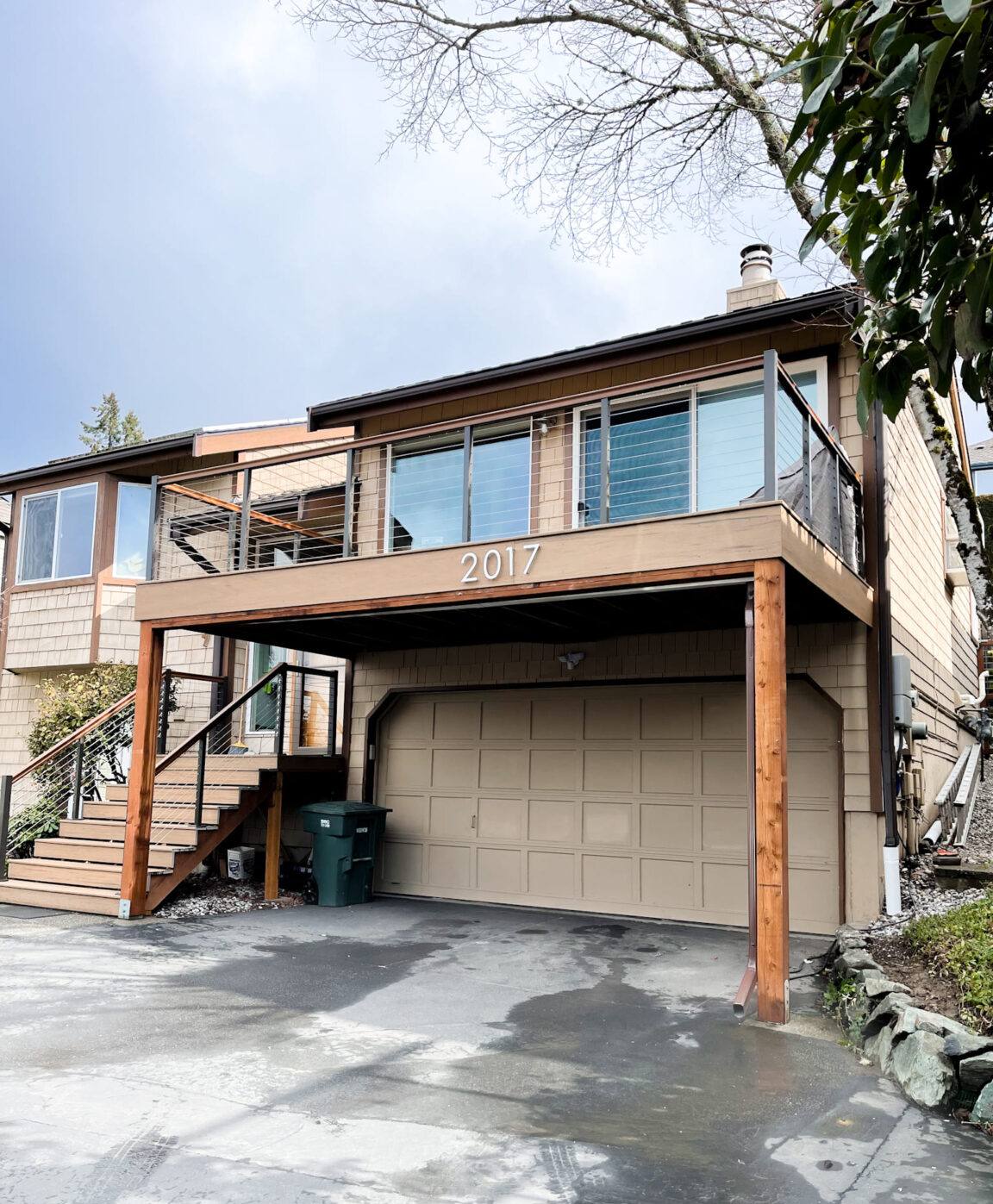
A deck looks simple from the top — boards, a railing, maybe some steps. Almost all of the work that determines whether it lasts fifteen years or three, though, is in parts a homeowner never sees once the project is done.
The Structure Underneath
Footings need to be sized and set to local frost-free, sandy-soil conditions and tied into framing that meets Florida Building Code wind provisions for our wind zone. Joist spacing, beam sizing, and post spacing all change depending on the decking material you choose and the span involved — a composite deck board typically needs tighter joist spacing than a solid wood board of the same thickness, for example. Skipping that detail is one of the most common ways a deck ends up feeling springy or develops a wavy surface within a couple of years.
The Connection to the House
If the deck attaches to the house with a ledger board, that connection is arguably the single most important joint in the entire structure — it carries a large share of the deck's live load, and it's also the most common place water intrudes into the home's framing if it's flashed incorrectly. Proper ledger attachment means correct fasteners or through-bolts, a code-compliant flashing detail that sheds water away from the house wall, and a gap or flashing membrane that keeps the ledger from trapping moisture against your siding or sheathing.
Choosing Decking Material for Rosedale's Sun and Humidity
There's no single "best" decking material — there's a best material for your budget, your maintenance appetite, and how much direct sun the deck will see. Rosedale lots with mature tree cover behave differently than open, full-sun backyards, and that should factor into the choice.
| Material | How It Handles Our Climate | Maintenance | Typical Lifespan |
|---|---|---|---|
| Pressure-treated wood | Affordable, but UV and humidity cycle it through expansion, contraction, and graying quickly | Annual cleaning and re-sealing to control moisture and splitting | 10-15 years with upkeep |
| Capped composite (e.g., Trex, TimberTech) | Cap layer resists UV fading and moisture absorption far better than uncapped composite or wood | Periodic washing; no staining or sealing | 25-30 years |
| PVC decking | Fully synthetic, handles standing water and salt air with minimal degradation | Lowest maintenance of the three; occasional washing | 25-30+ years |
| Tropical hardwood (e.g., ipe) | Naturally dense and rot-resistant, but requires regular oiling to prevent graying and checking in full sun | Oiling 1-2 times per year | 20-25 years with strict upkeep |
We don't push any one product on every job. Uncapped composite and lower-grade wood decking can still be the right call on a budget-driven project, but we're honest about the trade-off: more maintenance, and a shorter clock before boards need attention. Capped composite and PVC cost more up front and earn that cost back in years without staining, sealing, or replacing cupped boards.
Structural Considerations for Wind and Storms
Manatee County sits in a wind zone that requires decks — especially elevated ones and any deck attached to the house — to be engineered or built to prescriptive code tables that account for uplift and lateral load, not just the weight of people standing on it. A few things we pay close attention to on Rosedale projects:
- Post-to-beam and beam-to-joist connections use rated structural hardware, not just toe-nailing or a handful of deck screws
- Guardrail posts are through-bolted into the rim joist or blocking, since a railing that fails under lateral load is a genuine safety issue, not just a cosmetic one
- Elevated decks and stairs are checked against current guardrail height and baluster spacing requirements
- Freestanding decks (not attached to the house) are considered where a ledger connection would be difficult to flash correctly or where the homeowner prefers not to penetrate the home's wall assembly
None of this is exotic — it's standard code-driven deck building. But it's exactly the kind of detail that gets shortcut on a rushed or underpriced job, and it's the difference between a deck that shrugs off a summer storm and one that needs repair after it.
Fasteners and Hardware: The Details That Determine Lifespan
Salt air doesn't have to blow in off the beach to cause corrosion — it travels well inland on Gulf breezes, and Bradenton's humidity keeps metal hardware damp more often than a drier climate would. Standard zinc-coated screws and nails corrode faster here than their rated lifespan suggests, and a corroding fastener doesn't just look bad — it loses holding strength.
On every deck we build, hardware selection follows the same logic:
- Stainless steel or heavy-coated, corrosion-rated fasteners throughout the structure, not just on the visible surface boards
- Joist tape or a moisture barrier on top of framing lumber to keep fasteners and wood from sitting in trapped water
- Hurricane ties or structural connectors at critical framing joints, matched to the wind load requirements for the design
- Composite-specific hidden fastener systems where the decking calls for them, installed per the manufacturer's spacing to preserve the warranty
These parts add a small amount to the material cost of a deck. They're also the parts most likely to fail first if a builder cuts corners, and the hardest to fix once decking is installed over them.
Permitting and Inspection in Manatee County
Most new decks and significant deck rebuilds require a building permit in Bradenton and unincorporated Manatee County, along with inspections at the footing/framing stage and at final completion. Permit requirements typically depend on deck height, whether it's attached to the house, and total square footage — a small, low, freestanding deck can sometimes fall under simpler rules than an elevated deck attached to a two-story home.
If your home in Rosedale is part of a homeowners association, there may also be a separate architectural review step before construction starts, on top of the county permit. We handle the permit application and coordinate inspections as part of the project, and if there's an HOA approval process involved, we build the timeline around it rather than starting work and hoping it gets sorted out later.
Our Process for Rosedale Deck Projects
A deck project runs smoother when the sequence is clear up front. Here's how we typically move through one:
- Site visit and measurements — we walk the yard, check grade, sun exposure, existing structure (for replacements), and how the deck will tie into the house
- Design and material selection — we go through decking material, railing style, and layout options against your budget and maintenance preference
- Written estimate — a clear scope and price before anything is signed, with material choice spelled out
- Permit submission — we prepare and submit the permit package to the county (and HOA architectural review, if applicable)
- Construction — footings and framing first, inspected before decking goes down, then decking, railings, and stairs
- Final inspection and walkthrough — we confirm the final county inspection passes and walk the finished deck with you before calling the job done
Maintaining a Deck in a Coastal-Adjacent Climate
Even the most durable decking benefits from some seasonal attention in this climate. A short annual routine catches small issues before they become structural ones:
- Rinse salt residue and pollen film off the surface a few times a year, especially after dry spells followed by rain
- Check under the deck after storm season for standing water, debris buildup against framing, or signs of pest activity
- Inspect railing posts and stair stringers for movement — a loose connection almost always shows up here first
- For wood decking, plan on cleaning and re-sealing on the schedule the product calls for, typically annually in full sun
- Keep gutters and downspouts near the deck clear so runoff isn't dumping directly onto the structure or footings
- Trim back vegetation that keeps decking damp and shaded longer than the rest of the yard, which slows drying after rain
Why a Crew That Already Works Rosedale Matters
A deck built to a generic national spec isn't necessarily built for this address. A crew that regularly works in Rosedale and the surrounding Bradenton area already knows the county's permitting process and inspection expectations, has a working sense of how the local soil and drainage behave, and has seen firsthand how different decking materials actually hold up after a few Florida summers and storm seasons — not just how they're marketed to.
That local track record also shows up in smaller, practical ways: knowing which inspectors want to see which details, understanding HOA architectural review timelines in gated or deed-restricted sections of the neighborhood, and being reachable afterward if a question comes up rather than having moved on to a job three counties away. Hiring local isn't just a preference — in a climate this demanding, it's part of what makes a deck last.
If you're planning a new deck or need to replace one that's showing its age, we're happy to take a look and put together a free, no-pressure estimate. Fill out the form below and we'll go from there.