 Bradenton Siding
 Why Decks in Rosedale Wear Out Faster Than People Expect
Rosedale sits inland from Sarasota Bay but still gets the full weather package that comes with living in Manatee County: long stretches of intense UV exposure, sudden hurricane-season winds, wind-driven rain that finds its way into every gap and seam, and a steady dose of salt-laden air blowing in off the Gulf. None of that is dramatic on any single day, but it adds up year after year. A deck that would last two or three decades in a drier, cooler climate often starts showing real problems in Rosedale within ten to fifteen years, sometimes sooner if it was built with lower-grade lumber or basic fasteners.
The sun is usually the first thing homeowners notice — graying, splintering, or fading boards. But UV damage is mostly cosmetic. The bigger threat is moisture. Florida's humidity keeps wood decking damp longer than it should be, and afternoon storms mean your deck rarely gets a full day to dry out before the next soaking. That constant wet-dry cycle is what rots ledger boards, corrodes fasteners, and weakens the framing you can't see from the surface.
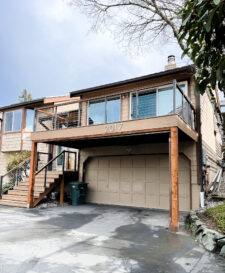
Signs a Deck Needs Replacement, Not Just Repair
Not every tired-looking deck needs to be torn out. Sometimes a few boards, some hardware, and a fresh coat of sealant will buy several more good years. But there's a point where patching becomes throwing money at a structure that's already failing underneath. Here's how we judge it during an inspection:
- Soft, spongy, or springy spots when you walk across the deck — usually a sign of rot in the joists below, not just the surface boards
- Rust streaks or crumbling around fasteners and connectors, especially near the ledger board where the deck attaches to the house
- Visible gaps, cracks, or separation where the deck meets the house — a common entry point for wind-driven rain
- Wobble or movement in the railings or posts when pushed
- Multiple boards cupping, splitting, or pulling away from fasteners at once, rather than a few isolated spots
- A deck older than 15-20 years that has never had the substructure inspected or hardware upgraded
If it's mostly surface wear on sound framing, repair or refinishing makes sense. If the framing, ledger connection, or footings are compromised, replacement is the honest recommendation — patching over structural failure just delays a bigger problem, and decks are one of the few home features where a failure isn't just cosmetic, it's a safety issue.
Choosing a Decking Material That Actually Fits This Climate
Every decking material has trade-offs. We'd rather walk you through them honestly than push whatever's easiest to install.
| Material | How It Handles Sun, Rain & Salt Air | Maintenance |
|---|---|---|
| Pressure-treated wood | Affordable up front, but UV and moisture cycles cause graying, splintering, and warping faster here than in drier climates | Needs sealing or staining every 1-2 years to hold up |
| Composite decking (capped) | Handles UV and moisture well; capped composites resist fading and moisture absorption much better than wood or uncapped composite | Occasional washing; no sealing or staining |
| PVC decking | Fully synthetic, essentially immune to rot and salt air corrosion; strong choice for coastal-adjacent exposure | Lowest maintenance of the common options; periodic cleaning only |
| Tropical hardwoods (e.g., ipe) | Naturally dense and rot-resistant, but still needs UV protection to hold its color | Requires oiling to maintain appearance; more labor-intensive upkeep |
For most Rosedale homeowners, capped composite or PVC decking offers the best balance of appearance, longevity, and low upkeep given the local climate. Wood isn't a bad choice — plenty of homeowners prefer the look and cost — but it's an honest trade: lower price now for more maintenance over the life of the deck. We'll lay out what each option means for your specific project rather than steering you toward whatever's most profitable for us.
Fasteners and Hardware Matter as Much as the Boards
A composite deck built with basic, uncoated fasteners will fail at the connections long before the boards themselves wear out. In a coastal-influenced climate, corrosion-resistant hardware — stainless steel or coated fasteners rated for exterior and coastal use — isn't an upsell, it's the difference between a deck that lasts and one that needs hardware repairs in five years.
What a Correct Deck Replacement Actually Involves
A deck replacement is more than pulling up old boards and screwing down new ones. The parts of a deck that fail first in this climate are almost always hidden: the ledger board connection to the house, the flashing that keeps water from getting behind that connection, the footings, and the joist framing. A replacement done right addresses all of it, not just the visible surface.
- Full teardown and inspection — removing old decking down to the framing so we can actually see the condition of joists, beams, posts, and footings
- Structural assessment — footings and posts are checked for movement, rot, or undersizing relative to current code
- Ledger board and flashing correction — this connection point is the single most common source of hidden rot and needs proper flashing to keep water from tracking behind the house's siding or sheathing
- Framing repair or replacement — any compromised joists or beams are replaced, not just boarded over
- Fastener and connector upgrade — corrosion-resistant hardware sized correctly for the framing and local wind exposure
- Decking installation — proper spacing for drainage and expansion, since composite and PVC boards move with temperature differently than wood
- Railings and code compliance — height, spacing, and attachment brought up to current building code, not just matched to what was there before
Permits, Code, and HOA Considerations
Deck replacement work in Manatee County typically requires a permit, especially when the structure is being rebuilt rather than simply having boards swapped. Wind load and railing requirements also matter more here than in inland, calmer climates — a deck built to code needs to handle the wind exposure Bradenton actually sees, not just the minimum for a generic build. If your Rosedale property is part of an HOA or deed-restricted community, there may also be guidelines around materials, colors, or railing style that need sign-off before work begins. We handle the permitting process and can work with HOA requirements as part of the project, so you're not stuck navigating that paperwork solo.
Our Deck Replacement Process
We keep the process straightforward and communicate clearly at each stage:
- On-site evaluation — we inspect the existing deck, framing, and attachment points, and talk through what we're seeing with you directly
- Honest material recommendation — based on your budget, how you use the space, and what holds up best given Rosedale's sun and moisture exposure
- Written estimate — clear scope, materials, and timeline before any work starts
- Permitting — handled on our end where required
- Teardown, structural correction, and rebuild — following the steps above, with attention to the parts of the deck you won't see once it's finished
- Final walkthrough — we go over the finished deck with you before calling the job done
What Affects the Cost of a Deck Replacement
Every deck is different, so we won't quote a number without seeing the project, but these are the factors that move the price up or down:
| Factor | Why It Matters |
|---|---|
| Decking material | Wood costs less upfront; composite and PVC cost more initially but less over time in maintenance |
| Deck size and shape | Multi-level decks, curves, and built-in features add labor beyond straight square footage |
| Structural condition | Rotted framing, footings, or ledger connections found during teardown add necessary repair work |
| Railing style | Cable, glass, and composite rail systems cost more than standard baluster railing |
| Height and access | Elevated decks and difficult site access increase labor time |
| Permit requirements | Full rebuilds generally require permitting and inspection, which factors into project timeline and scope |
Why a Crew That Already Works in Rosedale Makes a Difference
A contractor who works this area regularly already understands what Rosedale's homes are up against — the wind exposure, the humidity, the way afternoon storms roll through, and the general expectations around materials and appearance in a community like this. That familiarity shows up in small but meaningful ways: knowing which materials genuinely hold up locally versus which ones look good in a showroom, understanding the permitting process with Manatee County, and being able to respond quickly if something needs attention after a storm rather than scheduling you weeks out. It also means less guesswork and fewer surprises during the project, because we've built decks under these exact conditions before, not just similar ones somewhere else.
Maintaining Your New Deck for the Long Run
Whatever material you choose, a little regular attention goes a long way in this climate:
- Rinse off salt residue, pollen, and debris periodically, especially after storms
- Keep gutters and downspouts clear so runoff doesn't pool near the deck's footings
- Check railings and stair connections annually for looseness
- For wood decking, reseal or stain on the schedule the manufacturer recommends — skipping this is the single biggest reason wood decks fail early here
- Trim back nearby landscaping so boards get airflow and dry out properly after rain
A deck replacement is a significant investment, and it's one you should feel confident about — both in how it looks and in what's holding it up underneath. If your Rosedale deck is showing its age or you're just not sure whether it needs repair or a full rebuild, we're happy to take a look and give you a straight answer. Reach out using the form below for a free, no-pressure estimate.