 Bradenton Siding
 Why Decking in Village of the Arts Faces a Different Set of Conditions
Village of the Arts is one of Bradenton's older, established neighborhoods — a walkable district of early- to mid-century bungalow-style homes just off downtown, many of which double as working art studios and galleries. That mix of older construction and public-facing use creates a set of deck requirements that a lot of newer subdivisions don't have to think about. A deck here often isn't just a private backyard feature; it's an entry point, a gathering spot during art walks and open-studio events, and in some cases part of how visitors experience the property.
On top of that, these homes sit in Manatee County, close enough to Tampa Bay and the Gulf of Mexico that salt-laden air, intense UV, and hurricane-season wind and rain all reach the neighborhood, even though it isn't waterfront property. This page covers what that combination actually means for a composite deck in Village of the Arts, what a correct build involves on an older bungalow lot, and why local experience matters here specifically.
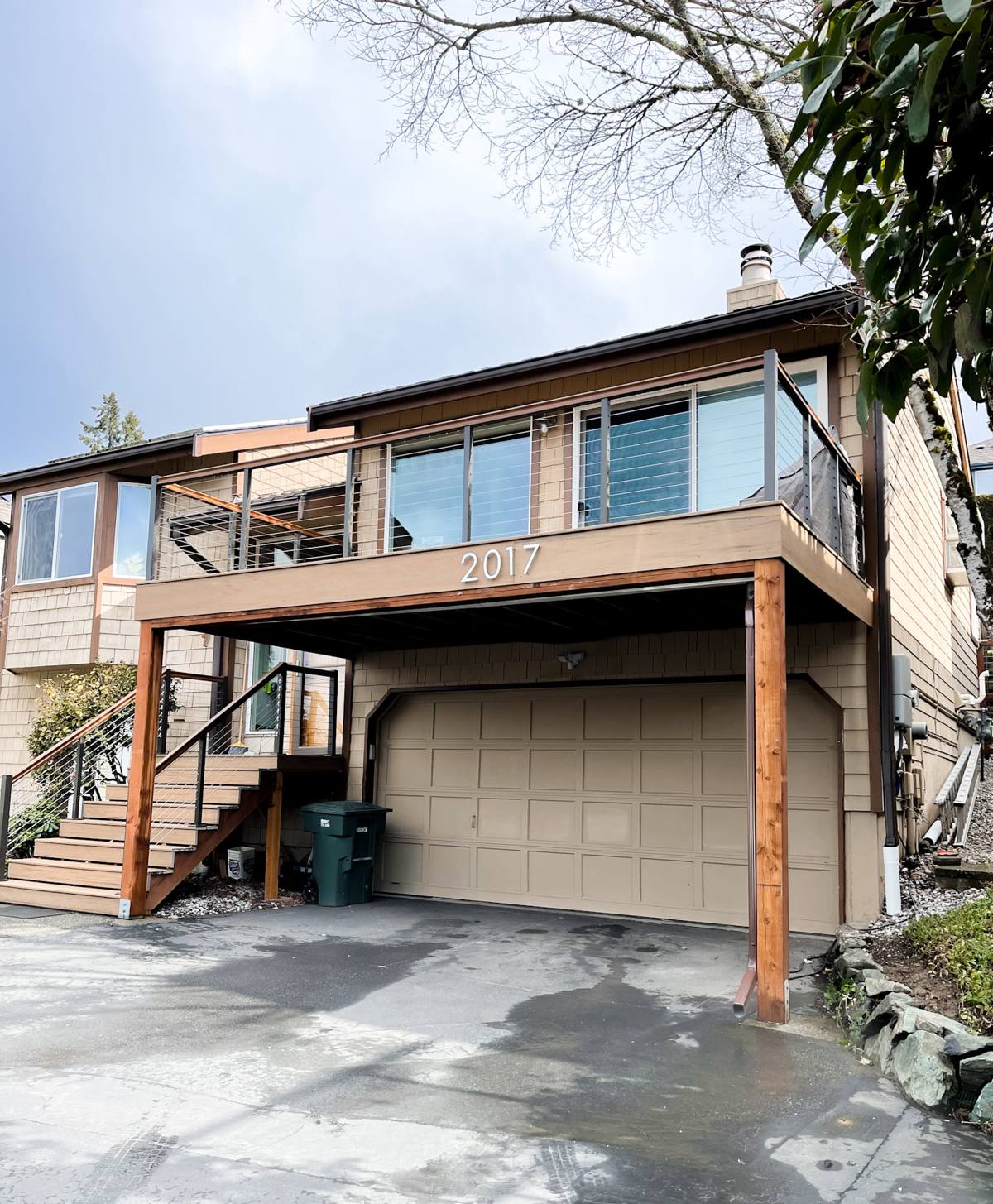
What Bradenton's Climate Does to a Deck on an Older Lot
Salt Air, Even Without a Water View
You don't need to be on the beach for salt air to matter. Village of the Arts sits inland of the immediate coastline, but Manatee County's proximity to Tampa Bay and the Gulf means salt-laden air still moves through the area, especially during onshore wind. It's a slower, lower-intensity version of what a barrier island deck deals with, but it's still enough to accelerate corrosion in standard-grade metal fasteners and hardware over years, which is one reason fastener choice isn't something to guess at even on an inland lot.
Intense, Nearly Year-Round UV
Florida's sun load is high across the state, and a deck takes it directly with no wall or roofline to break it up. UV breaks down unstabilized plastics and finishes over time, fades color, and on lower-quality boards can drive surface temperatures uncomfortably high in summer. In a neighborhood where a deck or entry might see foot traffic from visitors as well as the household, board color and cap quality both affect how comfortable and how durable that surface stays.
Wind-Driven Rain and Hurricane-Season Loads
Bradenton sits squarely in a region where hurricane-force wind is a real design condition, not a rare event to plan loosely around. Framing, ledger attachment, and railing all need to be sized and fastened for storm-level wind, and wind-driven rain gets pushed under and around deck boards in ways that straight-down rain doesn't. Drainage and airflow beneath the surface matter as much as what's visible on top.
Older Framing, Settled Soil, and Mature Trees
Because Village of the Arts is one of Bradenton's older neighborhoods, many of its homes have existing framing, foundations, and grading that have shifted or settled over decades, and lots are often shaded by mature trees that were planted long before composite decking existed as an option. A deck tying into an older bungalow's structure needs an honest look at what that structure can actually support, and shaded, moisture-retentive yards change how a substructure needs to be built and vented, even though the visible composite surface itself doesn't rot.
What "Composite Decking" Actually Means
Composite decking is generally a blend of wood fiber and plastic, but the ratio, plastic type, and finish vary widely between manufacturers. Two distinctions matter most for a Bradenton installation:
Capped vs. Uncapped Composite
Capped composite boards have a protective plastic shell wrapped around a wood-plastic core, which resists moisture absorption, staining, and UV fade. Uncapped composite is the older style of the product, exposed on all sides, which means it absorbs more moisture and tends to fade, stain, and grow mold faster in a humid, high-UV climate. Given the humidity and sun this area sees for most of the year, we standardize on capped composite for local installs rather than uncapped product.
Where PVC Fits In
Some manufacturers offer fully cellular PVC decking with no wood fiber at all. It resists moisture completely and some lines stay cooler underfoot, but it can flex more under heavy point loads and typically costs more than capped composite. For a Village of the Arts property, the right call often comes down to how the deck gets used — a quiet residential deck versus a space that also functions as gallery or event space during walks — and we'll talk through that trade-off honestly rather than defaulting to the higher-priced option.
What a Correct Composite Deck Build Involves on an Older Bungalow Lot
The decking boards get most of the attention, but on an older lot, the substructure and how it ties into the existing house are what actually determine whether the deck holds up. A build done right here includes:
- An honest assessment of the existing structure at the tie-in point, including whether ledger attachment requires sistering or reinforcing older framing before a new deck can safely load onto it
- Framing material rated for Florida's ground-contact moisture and humidity, sized appropriately for a lot that may sit in more shade and retain more moisture than an open one
- Corrosion-resistant fasteners and hardware throughout, since even inland salt exposure and constant humidity shorten the life of standard-grade metal
- Hidden fastener systems on the visible surface where the product allows, for a cleaner look and less exposed metal
- Correct board gapping for expansion, contraction, and drainage, since composite moves with temperature differently than wood
- Joist spacing matched to the specific composite product's span rating, not a generic wood-framing spacing
- Railing and post attachment sized for local wind load requirements
- Ventilation and drainage beneath the deck so moisture doesn't sit against older framing in a shaded yard
- Height and transition details that match cleanly into an existing porch, entry, or door threshold typical of a bungalow-era home
Skip any of these and it usually doesn't show up on day one. It shows up years later as a soft spot in the framing, a loosening railing post, or fasteners that have corroded enough to stain the boards around them.
How Our Process Works
We start with a site visit to look at the existing structure — framing condition if it's a replacement or an addition tying into an older porch, grading and drainage around the deck footprint, sun and shade exposure through the day, and how the space actually gets used, including whether it sees public foot traffic from studio visits or neighborhood art walks. From there we walk through composite product options that fit the budget and that use.
Permitting in Bradenton and Manatee County follows Florida's coastal construction and wind-load requirements, and older-neighborhood properties can sometimes involve additional review depending on the lot and structure. We handle that permitting as part of the job. Once permitted, the build follows the sequence above — substructure first, matched to what the existing home can actually support, then the composite surface, railing, and any trim work. We finish with a walkthrough covering what the specific product you chose actually needs for upkeep, which is usually minimal but not zero.
Composite Decking Compared to the Alternatives
| Material | How It Handles Sun, Humidity & Salt Air | Maintenance | Typical Lifespan Here |
|---|---|---|---|
| Capped composite | Strong — cap layer resists moisture, staining, and UV fade | Occasional washing; no sealing or staining | Long-term, backed by manufacturer warranty |
| Cellular PVC | Excellent — no wood fiber to absorb moisture at all | Occasional washing; no sealing or staining | Long-term, generally at a higher upfront cost |
| Uncapped composite | Moderate — absorbs some moisture, more prone to UV fade and mold in shade | Periodic cleaning to manage mold and staining | Shorter than capped products in this climate |
| Pressure-treated wood | Weak over time — absorbs moisture, corrodes fasteners faster | Regular sealing or staining required | Shortest, with the most ongoing upkeep |
| Tropical hardwood | Good natural density, but still needs finish upkeep against UV and humidity | Periodic oiling to prevent graying and checking | Long if maintained; degrades faster if neglected |
What Composite Decking Still Needs From You
Composite decking is low-maintenance compared to wood, not maintenance-free. A little routine care goes a long way in this climate:
- Rinse or wash the surface periodically to remove pollen, tree debris, and organic buildup before it stains the cap layer
- Keep gaps between boards clear so water and airflow can move through as designed
- Check railing posts and hardware annually for early signs of corrosion or loosening, especially after storm season
- Trim back trees or plantings that hold moisture against the deck edge or block airflow underneath, which matters more on a shaded, mature-tree lot
- Address any substructure concerns — soft framing, standing water underneath — right away, since that's structural, not cosmetic
Why It Matters That We Already Work Village of the Arts
A crew that mostly builds decks on newer construction can still install composite decking competently, but an older Bradenton neighborhood has variables that don't come up as often elsewhere — framing and foundations that have settled or shifted over decades, ledger connections into original bungalow-era construction, tighter lots with closer neighbor setbacks, and in some cases a deck that needs to hold up to public foot traffic during studio visits or neighborhood events, not just household use. Working in this neighborhood regularly means we're not guessing at what an older home's structure can support or learning permitting requirements on your project. We're straightforward about what a deck here realistically needs, whether that's reinforcing an old ledger connection before it becomes a safety issue or picking a board that will hold its color through a full Florida summer.
Whether you're replacing a tired deck, adding on to an existing porch or studio entry, or just want an honest read on what composite decking would take on your Village of the Arts property, we're happy to walk the site with you and lay out the options plainly. Reach out below for a free, no-pressure estimate.