 Bradenton Siding
 Siding That Has to Work in Whitfield Estates
Whitfield Estates sits close enough to Sarasota Bay and the Gulf that its homes take on a different kind of weathering than houses further inland. Salt-laden air moves through the neighborhood daily, the sun bears down on exterior walls nearly year-round, and when a tropical system or a strong summer squall rolls through, wind-driven rain gets pushed sideways into every seam, corner, and fastener point on a home's exterior. Siding here isn't just a cosmetic layer — it's the first and most exposed line of defense against a genuinely tough climate.
We install fiber cement siding for homes throughout Bradenton and Manatee County, and Whitfield Estates is one of the neighborhoods we know well. This page focuses on one thing: what fiber cement siding needs to do for homes in this specific area, what a correct installation actually involves, and why the details matter more here than they would in a milder climate.
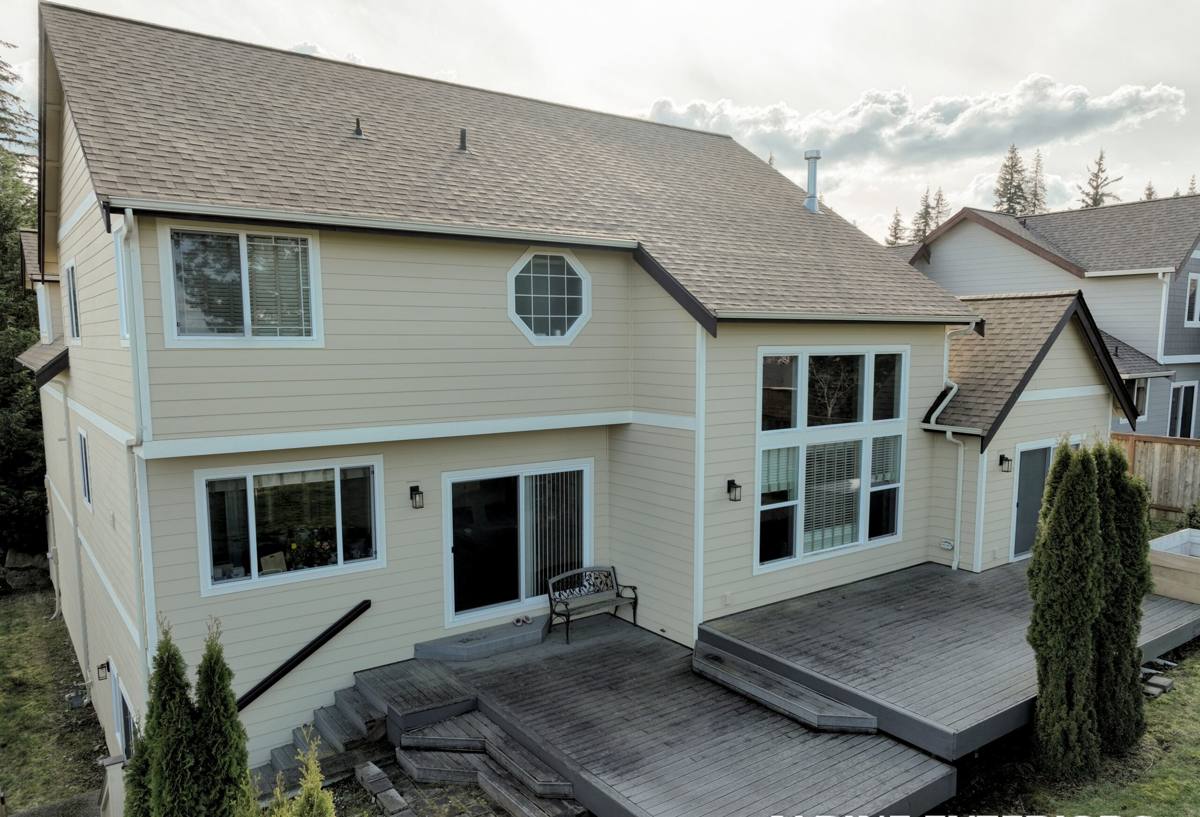
What Whitfield Estates Homes Are Up Against
Salt Air
Proximity to the bay means airborne salt settles on exterior surfaces continuously, not just during storms. Over years, salt exposure accelerates the breakdown of untreated wood, causes fasteners and trim hardware to corrode faster, and can dull or degrade paint finishes that weren't formulated to resist it.
Intense, Near Year-Round UV
Florida's sun angle and length of exposure put real stress on any exterior finish. Paint that isn't baked on and factory-cured tends to chalk, fade unevenly, and lose adhesion faster here than in most of the country — especially on south- and west-facing walls that take the brunt of the afternoon sun.
Wind-Driven Rain
It isn't just how much rain Manatee County gets — it's the angle it arrives at. Wind-driven rain finds its way behind poorly lapped siding, under-flashed windows, and gapped trim joints, then sits against sheathing where it can't dry out. This is where most siding failures actually start, and it's almost always a water-management problem rather than a "the material failed" problem.
Hurricane-Force Wind
Manatee County sits squarely in a hurricane-exposed region. Siding has to stay fastened through sustained high winds and wind gusts, not just resist water. Fastener spacing, fastener type, and how tightly panels are secured to the substrate all directly affect whether siding stays on the wall during a real wind event.
Why We Only Install James Hardie Fiber Cement
We made a deliberate decision to install James Hardie fiber cement siding exclusively — we don't install vinyl, LP SmartSide, primed wood, cedar, or other fiber cement brands. That's not a marketing position; it's a standard we hold ourselves to because of what we've seen hold up in this climate and what hasn't.
Fiber cement itself — a mix of cement, sand, and cellulose fiber — is inherently non-combustible, dimensionally stable, and far less prone to the moisture-driven swelling, rot, and pest issues that plague wood-based siding products in humid coastal climates. James Hardie is the manufacturer we trust to deliver that material consistently, backed by a factory finish process and a warranty structure that holds up to scrutiny.
Two things set Hardie apart for a neighborhood like Whitfield Estates specifically:
- ColorPlus Technology: a factory-applied, baked-on finish that resists UV fading and salt-air degradation far better than field-applied paint, because it's cured under controlled conditions rather than left to dry outdoors on the wall.
- Climate-engineered HZ product lines: Hardie manufactures different formulations for different climate zones. Homes in Manatee County should be sided with the HZ5 line, engineered specifically for high-humidity, moisture-heavy climates like ours — not a general-purpose formulation meant for drier regions.
The HZ5 Line and Why It's the Right Call Here
HZ5 fiber cement is formulated to resist the freeze-thaw concerns of northern climates less and the moisture and humidity concerns of Gulf Coast climates more. For a Whitfield Estates home, that means siding engineered around exactly the conditions it will actually face: sustained humidity, salt exposure, and heavy seasonal rain. Installing a siding product engineered for the wrong climate zone is a common corner-cutting mistake in this industry, and it's one we don't take.
What a Correct Fiber Cement Installation Actually Involves
Fiber cement siding is only as good as its installation. The material itself is durable, but nearly every real-world siding failure we see traces back to installation shortcuts, not the product. In a climate like Bradenton's, these details matter more than they would elsewhere:
Water Management Comes First
Before a single piece of siding goes up, the wall needs a correctly installed weather-resistant barrier, properly flashed windows and doors, and flashing details at every horizontal trim break. Fiber cement sheds water well on its face, but if water gets behind it and has nowhere to drain or dry, the assembly behind the siding is what fails.
Fastening for Wind Exposure
Fastener type, length, spacing, and placement all need to match Hardie's published specifications for our wind exposure category — not a generic pattern. Under-fastened siding is one of the most common reasons siding fails during high wind events, and it's invisible once the job is finished unless you know what to check for.
Proper Clearances and Gaps
Fiber cement needs clearance from grade, roof lines, and horizontal surfaces, along with correctly sized gaps at butt joints and trim to allow for expansion and drainage. Panels installed too tight to each other or too close to the ground trap moisture and invite premature paint failure and edge swelling.
Caulking and Sealant Placement
Not every joint should be caulked — some are designed to drain, and sealing them traps water instead of letting it escape. Knowing which joints need sealant and which need to breathe is a detail that separates a correct installation from one that just looks finished.
How Our Process Works
- On-site assessment: we walk the exterior, check existing sheathing and water damage, and note wind exposure and sun exposure per wall.
- Tear-off and substrate check: old siding comes off and we inspect the sheathing underneath for rot or moisture damage before anything new goes up.
- Weather barrier and flashing: a correctly lapped weather-resistant barrier and flashing at every penetration, window, and door.
- Hardie panel installation: HZ5 fiber cement installed to manufacturer fastening specs for our wind zone.
- Trim, caulk, and touch-up: trim details finished, appropriate joints sealed, factory finish touched up per Hardie's guidelines.
- Final walkthrough: we review the finished job with the homeowner before calling it done.
What Affects Cost
Every home is different, but these are the main factors that move a Whitfield Estates siding project up or down in scope and cost:
| Factor | Why It Matters |
|---|---|
| Home size and wall complexity | More corners, gables, and trim details mean more labor and cut waste |
| Substrate condition | Rotted or water-damaged sheathing found during tear-off needs repair before new siding goes on |
| Siding profile chosen | Lap width, texture, and trim style all affect material cost |
| Existing siding removal | Full tear-off vs. siding over existing material changes labor scope |
| Color and finish | Factory ColorPlus finishes vs. field painting affect both cost and long-term maintenance |
Signs Your Siding Needs Attention
Homeowners in Whitfield Estates should watch for these signs, especially after storm season:
- Soft or spongy spots when pressing on siding, especially near the bottom courses
- Visible gaps or separation at seams and trim joints
- Paint that's peeling, bubbling, or chalking heavily, particularly on sun-exposed walls
- Staining or discoloration that suggests water is tracking behind the siding
- Warping, cupping, or buckling panels
- Visible fastener corrosion or popped nail heads
Why Local Experience in Whitfield Estates Matters
A siding crew that regularly works this specific area understands the practical realities that don't show up in a general spec sheet — how a given street sits relative to prevailing wind and salt exposure, what wind exposure category applies under local code, and what permitting and inspection process Manatee County requires. That local familiarity translates into fewer surprises during the job and a finished installation that's actually built for the conditions the home will face, not a generic approach applied everywhere.
We stand behind fiber cement siding because we've seen what holds up in this climate and what doesn't, and we install it the way the manufacturer specifies — not the fastest way to get off a roof and onto the next job.
If your Whitfield Estates home needs new siding, or you want a second opinion on damage after a storm, we're happy to take a look. Fill out the form below for a free, no-pressure estimate — no obligation, just a straight assessment of what your home actually needs.